<> <> <> <>
<> <> <> <>
The Crane and the turkey by Kokei Kobayashi 1928.
Turkey in Japanese is called Shichimencho(七面鳥) meaning seven faced.
Seven faced turkey is chilmyeonjo(칠면조) in Korea.
“In german it’s Truthan for male and Pute for female turkey.” (Jtwine)
See the list here for wild turkey in different languages.
In Turkish, the bird is called hindi which means “from & related to India”.
In Vietnamese, it is called gà tây, meaning “Western chicken”.
In Urdu, it is called feel murgh, meaning “elephant chicken”.
Jun Ichikawa who directed “Tony Takitani” an adaptation of Haruki Murakami’s short story, passed away. (Read more here)
Ichikawa: In Tony Takitani I was thinking about flipping a page from left to right as if I was reading the novel. (via Master class)
Tony Takitani
From Master class by Jun Ichikawa,
Jun Ichikawa loved Ozu films, wanted to make his “Wild Strawberries” (Ingmar Bergman).
Like Akira Kurosawa who started out with painting, Jun Ichikawa was doing oil painting as a student.
Q: Did you always know you wanted to go into film?
Ichikawa: I was doing oil painting as I wanted to stufy in the National Art University. I drew a lot and tried to enrol but failed each time. A friend discovered that I can draw good storyboards for commercials, and I joined a commercial production company, which started to employ me to make commercials. The commercials I made were well accepted by the public, and one day someone came and approach me to make movies. So in a sense I was fortunate.
Loneliness is a condition to have a good movie. I watched a lot of 70s American movies like Taxi Driver, and I was influenced by those movies made after the Vietnam War, which has a lot to do on loneliness inside.
Yoko Ogawa
You can read a short story by her today in English. (I did yesterday).
Click here, Pregnancy Diary – New Yorker, her short story published in 2005.
She has won every major awards in Japan. Here is high praise from Kenzaburo Oe:
‘Yoko Ogawa is able to give expression to the most subtle workings of human psychology in prose that is gentle yet penetrating.’ The subtlety in part lies in the fact that Ogawa’s characters often seem not to know why they are doing what they are doing. She works by accumulation of detail, a technique that is perhaps more successful in her shorter works; the slow pace of development in the longer works requires something of a deus ex machina to end them. (Wiki)
The Diving Pool, her first book translated to English, is not a novel but a collection of three novellas from early in her career, of about fifty pages, loosely connected by their content. All three are told by young women with a skewed outlook on reality relating stories about family members. In each, Ogawa deploys an precise style that maintains an eerie distance between the narrator and event, her words clinical and charged with meaning, always leading with a slow build that concludes with a twist – although backstroke is probably more apt. – Diving Pool
This sounds intriguing,
Her novel “The Professor and his Beloved Equation” has been made into a movie. In 2006 she co-authored “An Introduction to the World’s Most Elegant Mathematics” with Masahiko Fujiwara, a mathematician, as a dialogue on the extraordinary beauty of numbers.(Wiki)
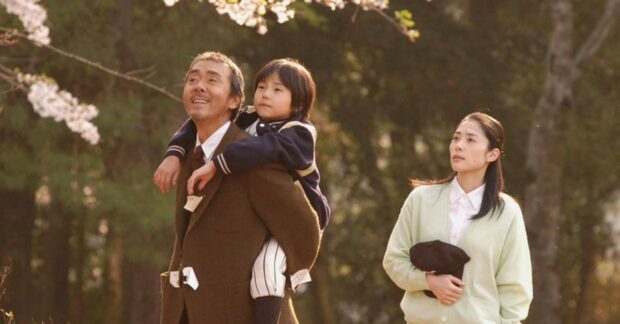
Engraved onscreen with the intense luminosity of a bright summer day, Hirokazu Kore-eda’s latest meditation on family drama is a quiet masterpiece that seems to originate from a deeply personal yet universal experience of regret. (Toronto Int’l Festival)
Still Walking conjugates the languages of poetry and documentary into a compelling account of modest joys and gentle resentments. Draped in the colours of memories that will not fade, the film keeps a slightly off-centre focus on echoes of the past, and concentrates on recording, with genuine simplicity, the mundane events of a family reunion.
I lost track of the number of times I smiled or laughed in recognition during Hirokazu Kore-eda’s latest film entitled “Still Walking”. (A review by Bob Turnbull )
Update: Hirokazu Kore-Eda’s “Still Walking,” from Japan, was selected as the best film at the Toronto International Film Festival in a poll of film critics and bloggers conducted this weekend by indieWIRE.
Ya ya ya yama yo – yama wa ikiteru (Mountains are alive)
The Taste of Tea – Mountain Song
A few weeks ago I saw Katsuhito Ishii’s 2005 Japanese cult classic The Taste of Tea, starring Tadanobu Asano and 2007 Oscar Nominee (for Babel) Rinko Kikuchi. A quirky film about the Japanese living in a countryside.
June 20 is the first day of Summer.
Summer Solstice in color.
Multimedia Tonight Sky – highlights of the June sky. (This is a delightful site, very soothing, makes you forget the staggering price of gas and food – almost)
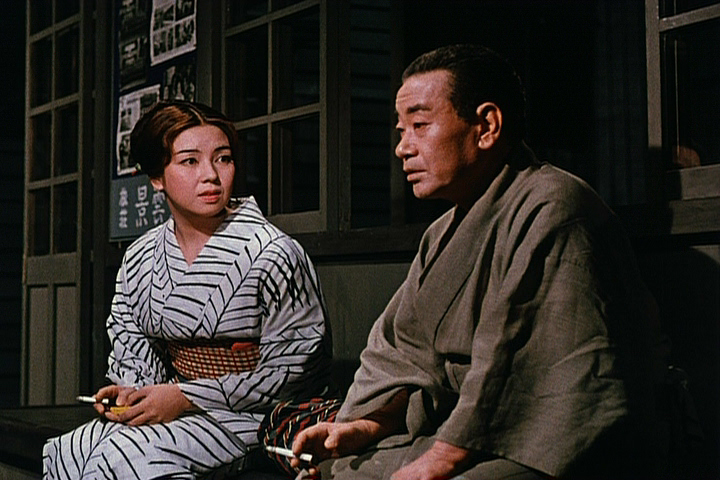
“I made ‘Yasukuni’ for both Japan’s sake and for my sake,” said Li, the director, a 19-year resident of Japan. It took him nearly a decade to complete the work, which won the best humanitarian documentary prize last month at the Hong Kong International Film Festival. The film received rave reviews when it was screened earlier this year at the Berlin and Sundance film festivals. (Herald Tribune)
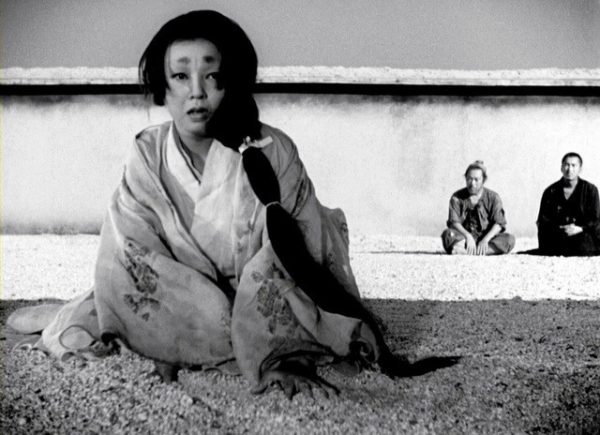
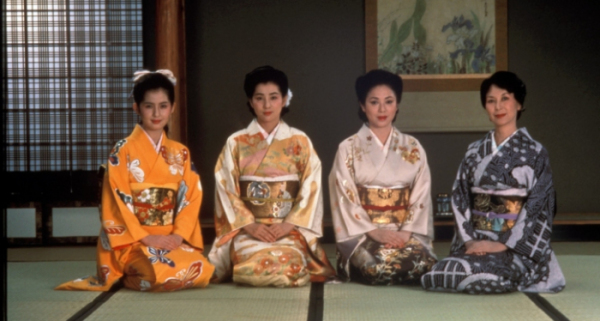
Sasame Yuki -(Makioka Sisters – adapted from a novel by Junichiro Tanizaki)
The great Japanese director, Kon Ichikawa, died today of pneumonia. He was the man behind such films as The Burmese Harp, Fires on the Plain, and Tokyo Olympiad. (via)
A place maker for a future review of Kon Ichikawa’s great funny poignant anti-imperialist film “A Billionaire”, as soon as I find a copy.
We screened a series of his films at Goldsmiths two years back. The big famous ones are deservedly praised, but A Billionaire was just great – especially the student who built her own atom bomb upstairs in her flat.
Happy Birthday Alan, how many beans will you be eating today?
Today is Setsubun. Previously on this day this blog has celebrated the birthday of Alan Sondheim, Gertrude Stein and Simone Weil. Recently Alan reminded me that February 3 is bean throwing day in Japan. Bean throwing sounded too matter of fact in English compared to the poetic sounding Setsubun. Setsubun was never used for a title or subject of any Ozu film (Ozu was not into exorcism) Ozu had Soshun, Bakushu and Banshun, all of which indicate changes of season.
Japanese Drive Out Devils in Spring Ritual
Setsubun Festival celebrated with a fanfare of bean-throwing exorcisms
Censer and censor Alan’s book review – (bio of Baudelaire the author of Flowers of Evil)
Keith’s book fascinates me, in particular because of the violence it does to the text, or at least what appears to me as a violence, and a ‘tenor’ in the translation that strikes me as Jon Stewart meets Bartok; it’s a kind of breeziness across what appears as the subterranean rootings of melancholy, a bridge across that, which is far too often, for me, the bridge of the fast read, which this translation is not. So a contradiction at the beginning. This is founded, for me, on the belief, that the unconscious plays an enormous role in FoE and that the unconscious is, in fact, not breezy, but on the order of the Kristevan chora – inchoate, dark, abject – the murmurings, not the signposts, of language.
Devils are out in the Arizona desert, fortune in and out – (the world needs plenty of luck these days).
Oni wa soto
Seihan Mori, the chief priest of Kiyomizudera temple in Kyoto, writes the kanji “nise” which means “disguise” or “fake,” on paper screen Wednesday. The Chinese character was chosen as most suitable in describing the year in Japan, which has been marked by scandals involving food mislabeling, missing pension records and falsified political fund reports, among other things. (Asahi)
90,816 people voted by internet, postcard and by attending the temple in person, and the top kanji chosen by them was 偽, nise, gi, meaning imitation, deception, or bogus. This year has been full of such stories; it started off with fake health benefits from natto, and continued with one scandal after another, from construction companies faking earthquake resistance to beef-free beef croquettes. This leads us to the number two choice, 食, shoku, food, where in addition to the ironically-named Meat Hope beef mentioned before, trusted souvenir brands Akafuku and Shiroi Koibito amongst others got caught reusing ingredients that had passed their expiry dates. To round out the bad news, third was 嘘, uso, lies, which claimed the life of one politician this year.
Inochi – life
These pessimistic characters are a marked contrast from the last two years; 2006 was 命, inochi, life, and 2005 was 愛, ai, love. (Via)
Filmmaker’s Scott Macaulay points to a couple of pieces by Leonis that address the concept of “filmanthropy.” It was Chang’s suicide in 2005, at the age of 36, that inspired Leonis to fund Nanking, Michelle Orange reminds us. (via)
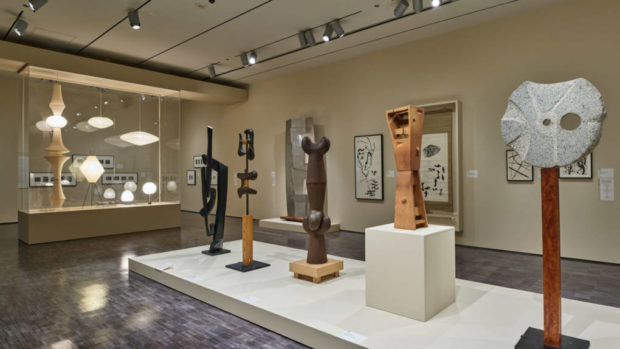
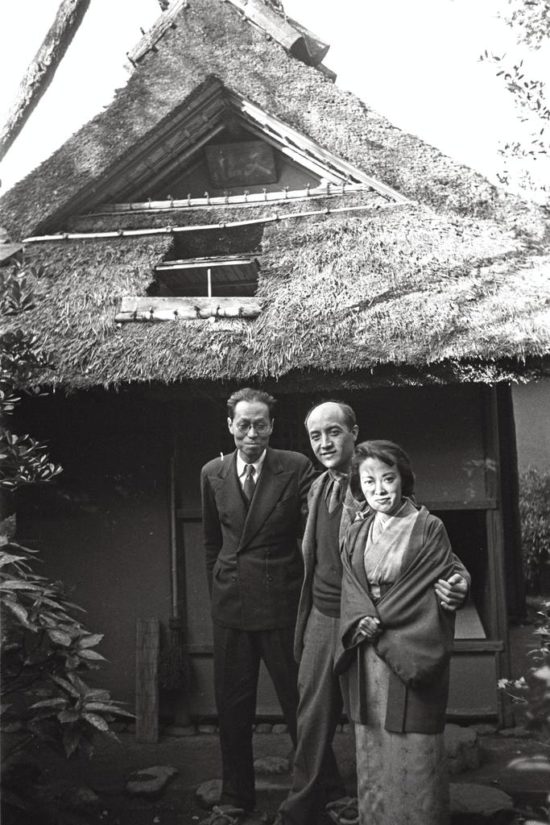
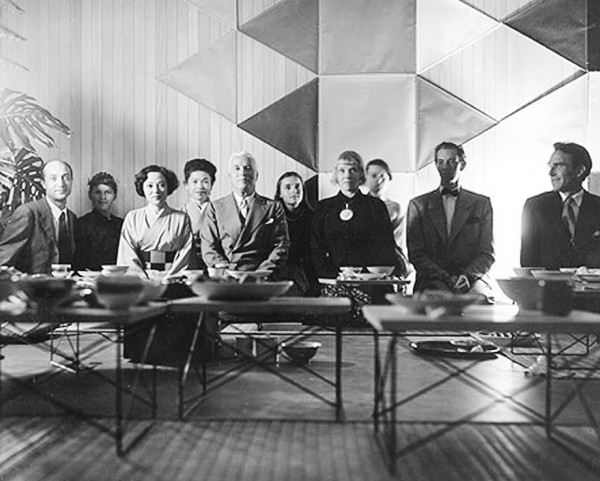
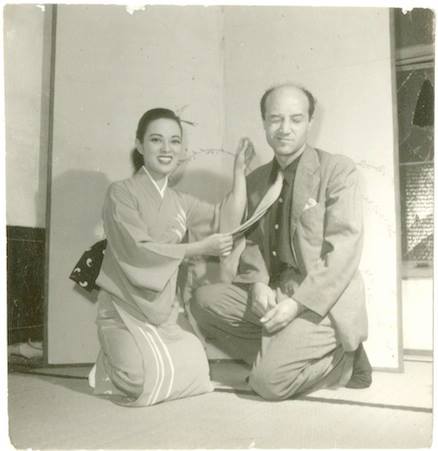
She met Isamu Noguchi in New York in the fall of 1950. They were married in Japan in May 1952 (From Noguchi org.)
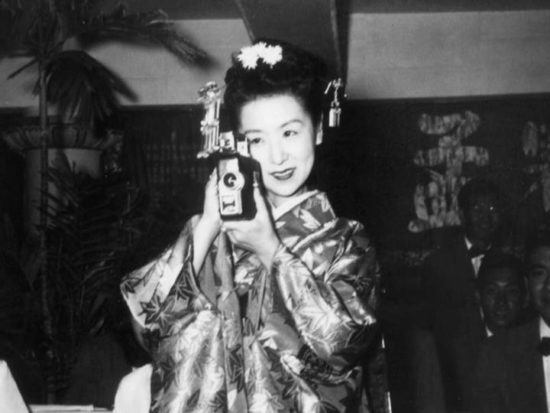
Yoshiko (Shirley) Yamaguchi (born 1920), is a noted Japanese film star, television reporter and politician. Yamaguchi’s parents were Japanese, but she was born and raised in Manchuria. After the Japanese invasion of Manchuria she adopted a Chinese name, Li Xianglan (in Japanese, Ri Ko Ran), and appeared in propaganda films and other movies produced by the Japanese for Chinese audiences. At the end of World War II she avoided execution for treason in China by revealing her Japanese identity, and then established a career as Shirley Yamaguchi in Hollywood and on Broadway.
She went through radical changes as she assumed new names, new locations and new professions.
As Lixiang Lang (fragrant orchid) she sung like Judy Garland. Persian bird(Перская птица) (ペルシャの鳥) sang by 李香蘭 (Interesting find from youtube – she appears in a Russian film)
Born in turbulent times, Li Xianglan lived a complex, controversial life in which everyone seemed to have experienced multiple identities.
“What was that war all about?” remains the fundamental question. For me, “Li Xianglan” often reminds me of my father and my mother, living in their memories that are an
integral part of their personal history. Telling the story of Li Xianglan is my personal tribute to the memory of my late parents (Kore eda from Night Fragrant Flower)
Fluent in Mandarin Chinese, she avoided being recognized as Japanese in Manchuria and when in Japan she hated to see the Japanese feelings of superiority to Chinese.
More here from an interview – Looking back on my days as Ri-kolan
As Yoshiko Yamaguchi she left the land where she grew up to start afresh in Japan.
As Shirley Yamaguchi she appeared in Hollywood films, one of them A House of Bamboo is a film noir directed by Samuel Fuller.
As Yoshiko Otaka, she ran for office and visited the Middle East and became an advocate for the Palestinian cause.
I went to Vietnam to report on the war. I saw the front lines in Vietnam, and next I became interested in learning what the Middle East War was all about. (Looking back on my days as Ri-kolan)
Here is her early years slide show on youtube interspersed with a story of Mao and Chang Ching.
I (this blogger) was in this film as a film extra with other Chinese classmates when I was around 7 years old. Every morning a bus from film studio came and pick us up from our school in Tokyo. We did lots of running around in Chinese orphan costumes. We even had a song to sing.
This was my mother’s favorite song which is banned by the Chinese government today.
Suzhou is the theme song of a sequel of the popular 1940 movie “Xina no Yoru” (China’s Night). The song’s lyrics depict the separation of two lovers — a Japanese sailor and a Chinese female guerrilla fighting against Japanese invaders.
Of her life with Isamu Noguchi, she was in awe and overwhelmed by his severity and steadfast dedication to his craft, to his art and his vision. (This I pulled from my memory from her old interview she did in a Japanese magazine. Frieda Kahlo had an affair with Noguchi. Compared to Frieda, Yoshiko seems more conventional.)
She visited the Middle East several times and in her report THE ARABS UNWRITTEN she wrote that she met a young Bedouin Sherif in Egypt whose uncle claimed that he had adopted T. E. as a son(!)
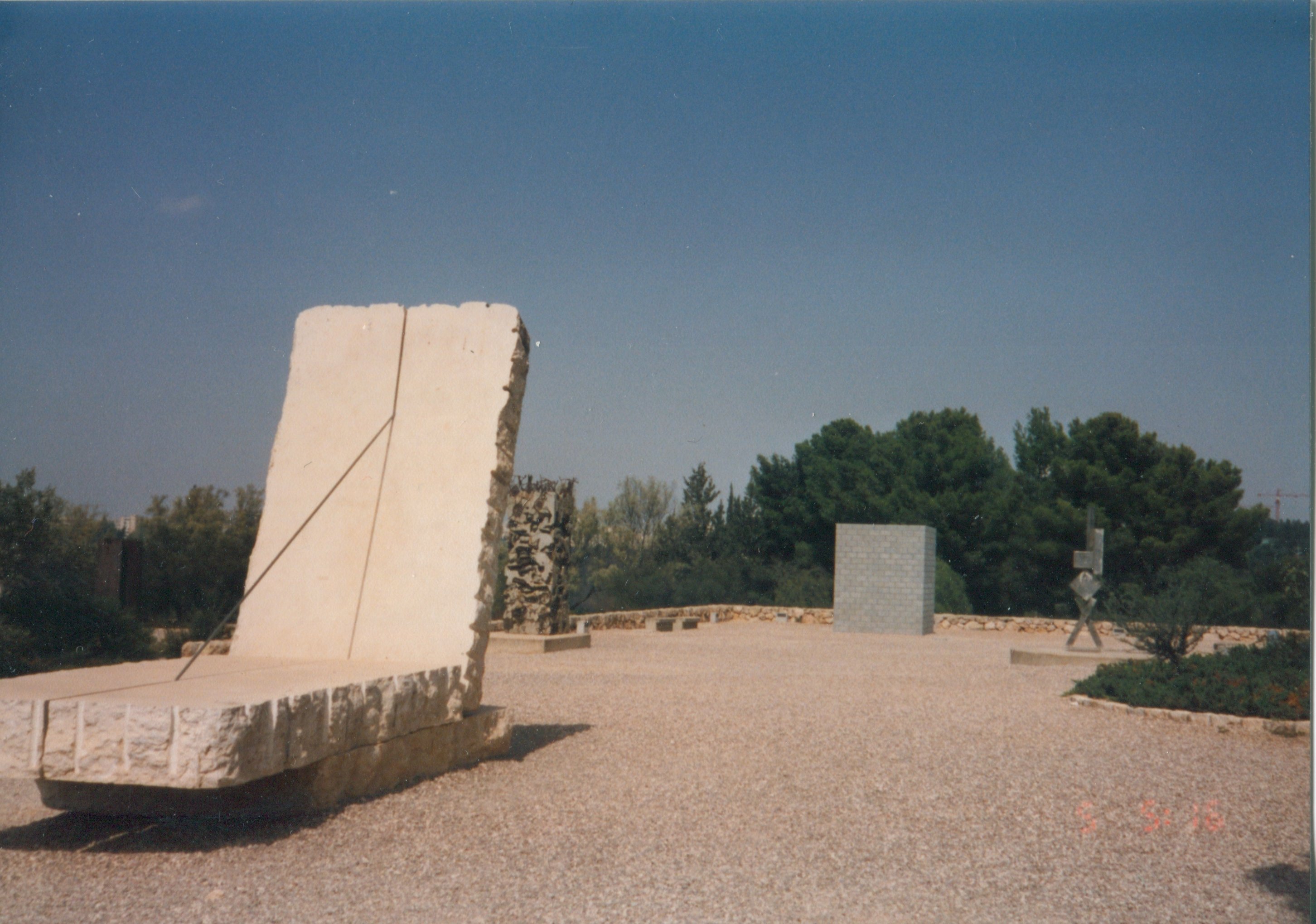
See Billy Rose Sculptural Garden designed by Noguchi in Jerusalem - one - two another side by side comparison to Yoshiko work as a politician for the Palestinians’ causes.
Edward G. Seidensticker, the renowned translator of Japanese literature , including Tales of Genji, Snow Country, Makioka Sisters and many more, has passed away on Sunday.
Donald Richie, who called “The Tale of Genji” Seidensticker’s best work, said the translation owes its beauty to Seidensticker’s phenomenal command of English.
Seidensticker’s experiences in Japan span over fifty years. He was a newly graduated English major from the University of Colorado at Boulder when World War II broke out. In June 1942, the Navy Japanese Language School moved to Boulder. Seidensticker enrolled immediately, graduating fourteen months later with a burgeoning command of Japanese that – unbeknownst to him – would become the basis of his academic career as a translator of Japanese literature, including Tanizaki, Kawabata, Mishima, Kafu and the arduous “The Tale of Genji.” (via)
Seidensticker’s translation of Kawabata Yasunari’s haunting novel of wasted love has been described as managing to capture the true voice of the author in the novel which was sighted as “outstanding” when Kawabata won the Nobel Prize for Literature.
Finding The Great Happiness Space
The phenomenon of the male host club has been sweeping Japan for some time now. These men in some instances have even become pseudo celebrities appearing on billboards and even on television shows. Simply put, women come to host clubs and pay for attention and affection, creating a fictional relationship with their host.
Jake Clennell
There were many men that came out of it from the cinema that were probably more teary eyed than women, which is something that I find very interesting. I think men really come out of it with a sense of despair.
Club Rakkyo where the action takes place, is a place of contradictions.(via)
3 love thieves
The star of the documentary actually works at “Club Clover”, where staff ranking is posted and you can see his profile. Issei’s (the love thief star) blog is here. (He has not dropped dead from a daily diet of champagne.)
In When a Woman Ascends the Stairs, Mikio Naruse draws us into a world often intimated in movies but rarely ever fleshed out: that of the Japanese bar hostess. A postwar offshoot of the Geisha tradition, these bars serviced men through the company of women and the comfort of drink. Forty years on, and the mizu shobai, or “water trade”, has come to evolve once more: catering exclusively for female clientele…
Mizu Shobai (water business) is a metaphor for floating, drinking and impermanence. . (Wikipedia)