The typical Miller film has a central figure under a lot of pressure, either self-imposed or coming from others. His is a cruel universe, created with great sensitivity and handled with astonishing ease, fluidity and economy.”
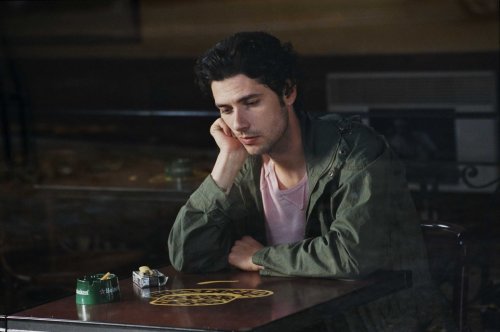
Mr. Rottiers’s strong, un-showy performance suggests that the circumstances of Thomas’s parentage can’t be blamed entirely for his troubles; they may go deeper. One of the film’s strengths is its detached, even-handed view of someone whose turbulence and fits of rage are ultimately inexplicable, as is often the case in real life. (NYtimes film review)
Alias Betty – very entertaining film
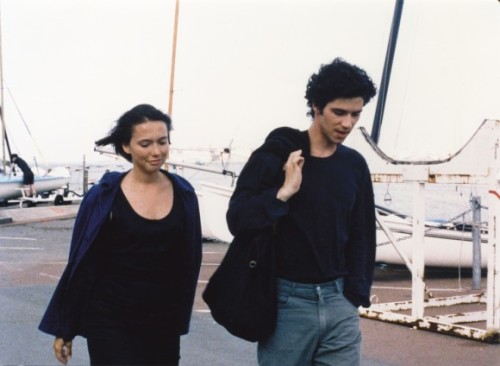
The Best Way – his debut film to world of cinema, a challenging subject on transgender.
Yasuhiro Ishimoto June 14, 1921 – February 6, 2012 was an influential Japanese-American photographer.
From 1942 to 1944, he was interned with other Japanese Americans at the Amache Internment Camp (also known as Granada Relocation Center) in Colorado. It was here that he began to learn photography
While still a student at the Institute of Design in the early 1950s, Ishimoto’s teacher Harry Callahan introduced his work to The Museum of Modern Art photography curator Edward Steichen, who would exhibit it in the seminal 1955 Family of Man group show and a later solo show in 1961.
Adrienne Rich, a pioneering feminist poet and essayist who challenged what she considered to be the myths of the American dream, has died. She was 82. via Jacket
She came of age during the social upheavals of the 1960s and ’70s and was best known as an advocate of women’s rights, which she wrote about in both her poetry and prose. But she also wrote passionate antiwar poetry and took up the causes of the marginalized and underprivileged.
For the Dead
I dreamed I called you on the telephone
to say: Be kinder to yourself
but you were sick and would not answer
The waste of my love goes on this way
trying to save you from yourself
I have always wondered about the left-over
energy, the way water goes rushing down a hill
long after the rains have stopped
or the fire you want to go to bed from
but cannot leave, burning-down but not burnt-down
the red coals more extreme, more curious
in their flashing and dying
than you wish they were
sitting long after midnight
Adrienne Rich :
“She was very courageous and very outspoken and very clear,” said her longtime friend W.S. Merwin, the Pulitzer Prize-winning poet. “She was a real original, and whatever she said came straight out of herself.”
As Merwin noted, Rich was a hard poet to define because she went through so many phases. Or, as Rich wrote in “Delta,” “If you think you can grasp me, think again.”
For Ms. Rich, the getting of literary awards was itself a political act to be reckoned with. On sharing the National Book Award for poetry in 1974 (the other recipient that year was Allen Ginsberg), she declined to accept it on her own behalf. Instead, she appeared onstage with two of that year’s finalists, the poets Audre Lorde and Alice Walker; the three of them accepted the award on behalf of all women.
In 1997, in a widely reported act, Ms. Rich declined the National Medal of Arts, the United States government’s highest award bestowed upon artists. In a letter to Jane Alexander, then chairwoman of the National Endowment for the Arts, which administers the award, she expressed her dismay, amid the “increasingly brutal impact of racial and economic injustice,” that the government had chosen to honor “a few token artists while the people at large are so dishonored.”
Art, Ms. Rich added, “means nothing if it simply decorates the dinner table of power which holds it hostage.”
“For me, socialism represents moral value — the dignity and human rights of all citizens,” she told the San Francisco Chronicle in 2005. “That is, the resources of a society should be shared and the wealth redistributed as widely as possible.”
The Spanish director Pere Portabella’s new film brings Bach’s music to life with a mysterious, magnificent blend of drama, documentary, and quasi-surrealist whimsy.
‘She accomplished more in 24 years than a lot of people do in a lifetime and she lived fully,’ Mr Holycross said.(read more )
She was just 80 miles short of becoming the youngest person in history to hike the Grand Canyon from end to end when tragedy struck, a loose rock some believe, tumbling her 300 feet below.
She trekked over 850 miles through the canyon’s trails while also ran in marathons, was literate in four languages and recently earned two degrees in biology and mathematics (see more photos here)
The young bride at 24 years old.
Immigrating to America with her mother and sister from Romania in 2002, she immediately fell in love with the canyons and hiked them as often as she could
Mr Holycross has since set up a scholarship in her name at Arizona State University titled the Ioana Elise Hociota Memorial Mathematics Scholarship Endowment which it is still receiving donations for.
It hopes to assist those by both need and merit base while also available to ‘immigrants who came to America with Ioana-sized dreams,’ it states.
King of Hearts (1966), French director Philippe de Broca’s comic anti-war fable, was not a commercial hit upon its release, but it soon became one of the most enduring cult favorites of its time, and its popularity continues in many circles to this day.
The genesis of the movie can be traced to de Broca’s experience serving as an army newsreel cameraman in the Algerian war. He later said it was his time in North Africa that shifted his focus to comedy, a reaction to the ugliness and brutality of the world around him.
The notion that those deemed insane by society may actually be saner than the people who put them away was, of course, a highly romanticized view that glided past the painful realities of mental illness. Still, the questioning of authority and senseless brutality was reflective of the counter-culture movement in much of the literature and drama of that era
This fast-moving spoof of Bond-type movies features striking location photography of Rio de Janeiro, Oscar Niemeyer’s nascent Brasília and Paris of the time. In 1964 the film was nominated for the Oscar for Best Writing, Story and Screenplay.
Birthday of George Delerue who did soundtrack for the Man from Rio. Born March 12 1925, Delerue was a great composer of film scores. Previous post -George Deleerue Youtube La Tendresse (4 clips from The Contempt, Two English Girls, Jules et Jim & Hiroshima Mon Amour linked)
He’s a friend of my friend Abigail, who knows everyone, and used to show up occasionally at various events. I gave Ornette a ride home from a dinner at Abigail’s place, probably mid 80s. He had an entire 5 story tall primary school on the Lower East Side at the time. He had bought it from the city and was way behind in paying for it and fixing it up and the city was trying to take it back, which eventually they did. I dropped him there and he gave me the record, or maybe autographed a copy that Abigail had at her house. I think I had offered to help him work it out with the city, I was pretty good at that back in the day, but he never followed up with me. Steven Schwartz
When David was born at Swedish Hospital in 1935, his mother died delivering him. With four other children at home, two daughters living with relatives in Japan, himself suffering from cancer and about to travel to Japan, Robbie Ishii was overwhelmed and decided to board the new baby at Swedish until he could sort things out. Incredibly, the arrangement was to last five years — the first three of which David spent living at the hospital, the last two largely with a Vashon Island family related to one of the nurses, Ruth Ulleland. “I was brought up by Norwegians,” David Ishii says now. “Boy, that was really something.”
Update: Hirokazu Koreeda’s new film is called Air Doll or Love will Tear us Apart via (Globus Film Series)
His 2009 film, Air Doll, examines loneliness through the eyes of a blow-up doll come to life. Bae Doona stars as Nozomi, a plastic sex toy owned by Hideo (Itsuji Itao), a restaurant worker who treats her like his wife, telling her about his day, sitting with her at the dinner table, and making love to her at night. But suddenly, one morning, Nozomi achieves consciousness, discovering that she has a heart, and she puts on her French maid costume and goes out into the world, learning about life by wandering through the streets and working in a video store, always returning home before Hideo and pretending to still be the doll.