
Minority Rule: The Right-Wing attack on the will of the the people and the fight to resist it, 2024, Ari Berman

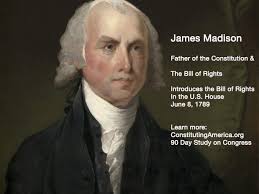
James Madison
Similarly, the level of inequality in the Senate right now—by far the worst among any advanced democracy—would have shocked the likes of (James) Madison. When the founders reluctantly decided to give each state the same number of senators regardless of population, the 1790 census showed that the country’s most populous state, Virginia, had twelve times as many people at its least populous state Delaware. Today, California has sixty-eight times the population of Wyoming. Fifteen small states with 38 million people combined routinely elect thirty GOP senators, California, with forty million residents, is represented by two democrats. This imbalance is getting worse; by 2040, roughly 70 percent of Americans will live in fifteen states with thirty senators, while the other 30 percent, who are whiter, older, and more rural than the country as a whole, will elect seventy senators. The structure of the Senate only magnifies the body’s unrepresentativeness; due to the filibuster, which is not in the Constitution, forty-one Republican senators representing just 21 percent of the population have been able to blocks bills supported by huge majorities of Americans on issues like gun control, abortion, and voting rights.
The reactionary conservatives behind the drive for minority rule claim to be the only legitimate heirs of representative government, but they’re seeking to delegitimize and warp the institutions created by the founders.

MItch McConnell
(Mitch) McConnell’s unprecedented blockade extended to the lower courts. In their last two years in office, Presidents Reagan, Clinton, and Bush II all faced a Senate controlled by the other party but got eighty-three, seventy-three, and sixty-eight district and appellate judges confirmed respectively. McConnell’s Senate, in contrast, confirmed only twenty Obama nominees in the last two years of his presidency, including just two appellate judges, the lowest number since Harry Truman denounced the “do-nothing Congress” in 1948. None of the seven circuit nominees—including Kallon– that Obama submitted in 2015 or 2016 were confirmed.
McConnell held open 105 judicial vacancies during the Obama era and then pledged “to move judges like they are on a conveyor belt” after Trump was elected. He took away the right to appoint judges from a president who won five million more votes and gave that power to a president who received three million fewer votes and a Senate GOP caucus that represented fifteen million fewer people than Democrats.
When he was confirmed to replace Scalia, Neil Gorsuch not only occupied a seat that Obama should have filled, but he had the distinction of being the first Supreme Court Justice nominated by a president who lost the popular vote and confirmed by senators representing a minority of Americans. That “super-minoritarian” exception soon became the norm, as Trump would go on to appoint a third of the Supreme Court and one-fourth of the federal judiciary. Sixty percent of Trump’s appellate picks-including Brasher—were confirmed by senators receiving fewer votes or representing fewer people than the senators opposing them. These products of minority rule brought an ideology of minority rule with them to the bench.
The demographics and ideology of the country were moving in one direction and the courts in another, setting up an inevitable clash between those subject to the law and those that made it.
The Supreme Court struck down this system of rural minority rule in a series of “one person, one vote” cases in the early 1960s, holding that state legislative and congressional districts must be roughly equal in population and “apportioned on a population basis.” This shift power from sparsely populated areas to the urban and suburban population centers where Americans increasingly lived.
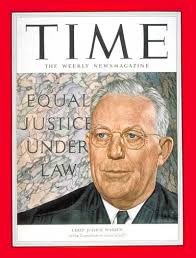
Chief Justice Warren
“The fundamental principle of representative government in this country is one of equal representation for equal numbers of people, without regard to race, sex, economic status, or place of residence within a State,” Chief Justice Earl Warren wrote in Reynolds v. Sims in 1964. “Legislators represent people, not trees or acres.” In tandem with the Voting Rights Act, the “one person, one vote” cases led to the “greatest peace-time change in representation in the history of the United States”, wrote Ansolabehere and Snyder. Of all his landmark rulings, Warren considered this democratic transformation his most important achievement on the Court.
2020 Census Trump Corruption
The release of the the census count in August 2021 showed what the Trump administration had been afraid of.
The white share of the country had fallen to 57.8 percent, the lowest in US history, with the white population declining for the first time on record since 1790. The country was more diverse than ever before: of the 23 million new residents counted over the past decade, all the growth had come from people who identified as Hispanic, Asian, Black or more than one race.
Georgia was on the verge of becoming a majority-minority state years earlier than expected, and whites had become the minority in six new metropolitan areas: Atlanta, Austin, Dallas-Fort Worth, New Orleans, Orlando and Sacramento.
Yet seven months later, when the bureau released a deeper analysis of the count, it became clear that Trump’s efforts to sabotage the census had at least partially succeeded.
The 2020 census had failed to count 18.8 million people–more than twice the size of New York City—the largest under count in three decades. Blacks, Latinos, and Native Americans, were all missed at higher rates than the 2010 census, while white residents were over counted at double the rate. The repeated attempt to obtain citizenship information had indeed skewed the final count: the Latino under count tripled in 2020 from 2010, depriving these communities of critical economic and political resources for the next decade.
Constitution Difficult to Amend – 50 years of failed attempts.
“It is clear,” President Franklin Roosevelt said in 1937, “That any determined minority group in the nation could, without great difficulty, block ratification by one means or another in at least thirteen states for a long period of time.” That was even more true in the present day, as the gap between large and small states widened and organized interest groups had more power than ever to sway minority forces.
In Congress, thirty-four senators from seventeen smallest states—representing as little as 7 percent of the nation’s population—could defeat a Constitutional amendment, while the smallest thirteen states—representing just 4 percent of the US population—could do the same.
By comparison to other countries and state constitutions, the founders made the federal Constitution much harder to amend. After the passage of the Bill of Rights in 1791, the Constitution has been altered only seventeen times in 230-plus years, mostly during periods of great upheaval, such as the 1860s, the Progressive Era, and the 1960s. Far from preserving key democratic institutions, this incapacity to change has destabilized them, trapping the founding document in an antiquated past and leading to a growing divide between elected leaders and the shifting demographics of the country. Public opinion polls show that huge majorities believe that abortion rights should be codified, gun regulation should be tightened, campaign spending limited, and the right to vote enshrined as a fundamental protection. But it is impossible to imagine any of these efforts, however popular, resulting in a successful Constitutional amendment any time soon.
The Michigan constitution, on the other hand, had been rewritten four times through state constitutional conventions since its drafting in 1835, most recently in 1963. That constitution reflected the values of civil rights movement, including protections against racial discrimination and safeguarding citizens’ civil and political rights.
Senate Rules and the refusal to eliminate or modify the Filibuster (Manchin and Sinema)

Filibustered!: How to Fix the Broken Senate and Save America, 2024 Sen Jeff Merkley and Mike Zamore
A detailed history of the Senate filibuster and the (failed) attempts of Sen Merkley to fix the broken Senate rules.

Senator Warnock
Warnock’s frustration boiled over a week later. He had been told for nearly a year that it was impossible to change the Senate’s rules to pass voting rights legislation, but on Dec 14 Republicans allowed Democrats to pass a bill to raise the country’s debit limit on simple majority vote to avoid an economic crisis. It was “a point of moral dissonance for me,” Warnock said on the Senate Floor, “to change the Senate rules only for the benefit of the economy when the warning lights on our democracy are flashing at the same time.” If Democrats could act alone to raise the debt ceiling, he argued, they could do the same for voting rights legislation. “How do we in good conscience justify doing one and not the other?”