They Poisoned The World: Life and Death in the Age of Forever Chemicals; Mariah Blake 2025


Manhattan Project: “The goal was to isolate a rare class of uranium atoms that were capable of producing nuclear chain reactions — the only process that could yield enough energy for an atom bomb…The most promising — gaseous diffusion — involved converting uranium into a gas called uranium hexafloride, or hex, and pumping it through a maze of porous barriers. Since the desired isotope, uranium-235, passed through the tiny pores, the rest of the atoms would gradually be filtered out, leaving only the prized nuclear fuel….If the project stood any chance of succeeding, the physicists needed materials that could stand up to both flourine and hex in some of the harshest conditions imaginable…As luck would have it, Dupont had already developed one that seemed to fit the bill: Teflon. The company hadn’t figured out how to make more than a few ounces at time, but it had a history of ramping up production fast…In the last two months of 1942 alone, the government contracted with Dupont to build two factories to produce flourocarbon lubricants and sealants based on research from university scientists, and a third facility to manufacture a chemical critical to the production of both flourocarbons and hex — which were now a matter of national security….To avoid being seen as a war profiteer, the firm agreed to limits its fee for the project to one dollar above costs and to turn all patents over to the US government. But it held on to its patent for Teflon, expecting the material would be key to the Columbia method for enriching uranium.”



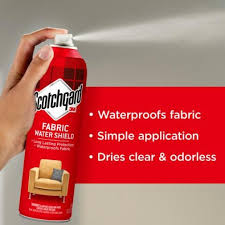
Post War Products: “The push by companies like 3M to turn wartime innovations into peacetime profits would transform American Life. After the conflict, manufactures began marketing these materials for every imaginable purpose. Poison gases found new life as pesticides. Explosives like ammonium nitrate were repackaged as chemical fertilizer, revolutionizing entire food systems. And plastics once reserved for military use were transformed into a cornucopia of goods. Polyethylene, which had been used to coat radar cables, were turned into Tupperware, Hula Hoops, and grocery bags. Vinyl, or PVC, became shower curtains, flooring, medical equipment, and a popular new household item call Saran wrap. Nylon, which had been used to make parachutes, flak jackets, and aircraft fuel tanks, returned to store shelves in the form of previously scarce run proof stockings.”

Rob Bilott and Mark Ruffalo
The book first focuses on PFOA (Perfluorooctanoic Acid C8HF15O2) which has a chain of 8 carbon atoms and were the first identified forever chemicals that do not break down. The book gives detailed histories of the long legal battles around the Dupont plant near Parkersburg, West Virginia, and the Dupont plant near Hoosick Falls NY surrounding Dupont’s production of PFOA chemicals. Cincinnati attorney Robert Bilott was involved in both battles. The 2019 Todd Haynes movie Dark Waters dramatizes the Parkersburg legal battle with Mark Ruffalo playing Robert Bilott.
Bilott first filed a Federal case in West Virginia in 1999 on behalf the Tennants, farmers whose cattle were dying as a result of Dupont hazardous substances being dumped into Dry Run near his farm. The case evolved into a class action suit with 3500 plaintiffs. Dupont reneged on their medical agreement forcing Bilott to file cases one by one. When the first few cases awarded millions in damages, Dupont settled with all plaintiffs for $671 million in 2017.
The Hoosick Falls case was settled for $27 million in 2025.
Dupont spun off its forever chemical division to Chemours Company in 2015.
Chemical companies continued development of forever chemicals in a new class of PFOS (Perfluorooctanesulfonic acid C8F17SO3H or C8HF17O3S ). Other new inventions were chemicals with carbon chains from 1 to 7 atoms and are identified as PFAS and include PFOA and PFOS. They all share the characteristic that they don’t break down so are forever chemicals. It has become next to impossible for governments or the EPA to regulate (like setting parts per billion limits in drinking water).
“It all began in the early 2020s, when a group of European researchers developed a technique to detect an elusive subset of forever chemicals that evaded other methods — specifically, those with three or fewer carbon atoms. After applying this technique for drinking water across Germany, they made a breakthrough discovery: All but 2 percent of PFAS detected were ultashort-chain substances, which up until that point had hardly registered on scientists’ radar.”
“One molecule turned out to be particularly abundant — triflouroacetic acid, or TFA, which is used to make pesticides, pharmaceuticals, and working fluids for heating and cooling systems. It is also a common breakdown product of other PFAS. The researchers found that this chemical alone accounted for 90 percent of forever chemicals detected in German tap water. Since then, TFA has been detected in alarming levels in beer, bottled water, tea, and baby food in a variety of countries. One survey found the TFA made up virtually all PFAS found in rivers and groundwater across Europe.”
“Similarly, when researches from Emory University measured the levels of various PFAS in tap water from homes in Indiana, they found that TFA accounted for 85 percent of the total. And the average concentration was orders of magnitude above the EPA’s safety limits for PFOA. Industry has long insisted that shorter chain chemicals are safer because they don’t build up in people’s bodies. But the Emory team found that the TFA levels in homeowner’s blood were even higher than the national average for PFOA at its peak. This wasn’t because the chemical had built up over time but because people were being exposed to such large qualities.”
“They (TFA) build up faster in crops, leading to enormous concentrations in the few foods that have been tested. And they’re virtually impossible to get out of drinking water. Not only do they pass right through the type of carbon filters used to remove legacy chemicals but they also foil newer treatment technologies that are meant to remove a broad range of PFAS.”
“So far, manufacturers like Dupont, Chemours, and 3M have been hit with roughly fifteen thousand legal claims, the lion’s share from municipalities, water districts, and residents of polluted communities, though more than thirty U.S.states have also brought cases. And the numbers are expected to rise sharply in the coming months and years.”
“While these (EPA) standards are a potentially important step, they do nothing to protect people from the thousands of other forever chemicals that are inundating their bodies. And there’s no telling whether they (EPA standards) will survive Donald Trump’s second presidency.”
“In the end, any federal action may prove less consequential than the aggressive measures cropping up in other places. In 2023, the European Commission introduced a wholesale ban on the production and sale of PFAS and products containing them, the most sweeping chemical regulation in the bloc’s history. Thanks to the tireless efforts of grassroots activists, many U.S. states are embracing similar measures.”
“Rob Bilott, the lawyer who brought these chemicals to the world’s attention, sees these developments as a testament to the power of ordinary citizens. “It shows just how much individual people and communities standing up and speaking out can do and the dramatic change they put in motion” he said. “It took us way too long get here, but its happening.””