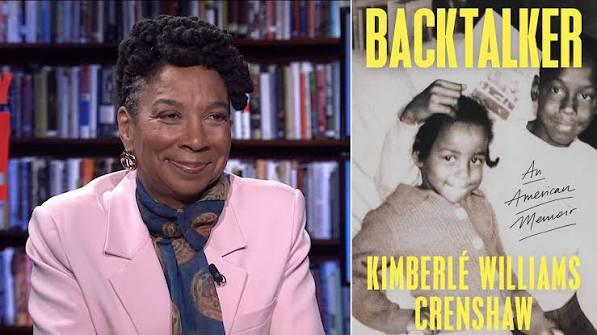
Backtalker; An American Memoir; Kimberle Williams Crenshaw, 2026
Overall, I’d say that in the 1960s most folks shared the belief that prejudice did play a significant role in racist conditions, and that there was hope that well intentioned people could actively diminish prejudice…Folks debated whether it was more important to just cut to the chase by creating the world that would have existed if anti-Blackness had not been a core set of ideas for so long in American History.
In fact, I was the one who was surprised when, on one occasion, the school (Heritage Christian, Canton Ohio) had the bright idea to reverse the bus route so that everyone could see where everyone lived. When we approached the homes of our rural neighbors, I was shocked to see ramshackle houses with abandoned vehicles strewn about, windows covered with plastic, and a tarp thrown over a partially covered roof. But this was nothing compared to what shocked my (white) fellow bus mates. They seemed far more curious about how my family had come to live in our home… (Her brother Mantel); “Oh, right–they think Mom is a live-in maid. So like, we couldn’t actually live here because Black people don’t live in anything white people would want! (A number of white families had moved out of the neighborhood when Kim’s family moved in.)
The Cherry-Market corridor was the center of Black Canton, the setting for virtually every event or story about us that was told by us–in living rooms, beauty parlors, barbershops, church pews, bars, social clubs–you name it.
Yet despite its centrality for us, despite the hopes and hard work and pride of ownership that so many had poured into their little piece of the American dream, nothing that flowed through the arteries of Black Canton prevented it from being slated for physical and psychological destruction. It was a destruction that began years before the bulldozers reduced it all to rubble. The process of draining this community of its blood before taking its life was done under a truly Orwellian misnomer: “urban renewal”…In the end, this long-term decapitalization-“misappropriation” would be more accurate–took such a toll on my mother’s real estate holdings that they were worth less in the 1970s than they had been when my grandfather purchased them in the 1930s.
It’s been estimated that between 1949 and 1973, 2,500 neighborhoods in 993 American cities were destroyed, dispossessing nearly one million people.
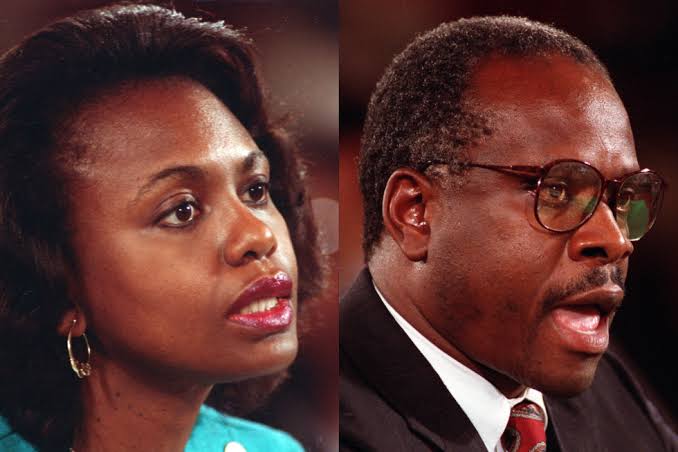
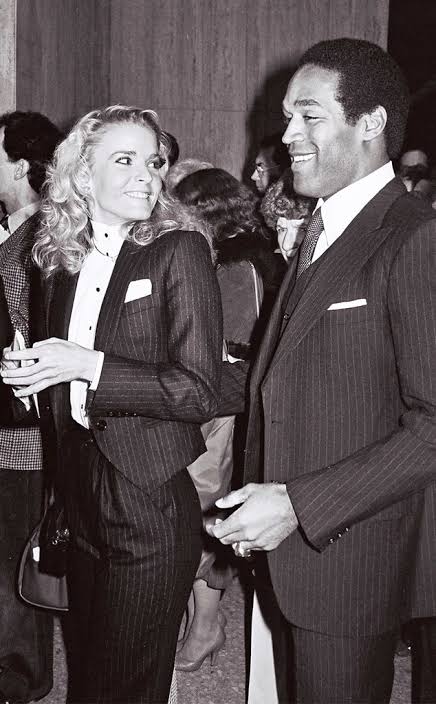
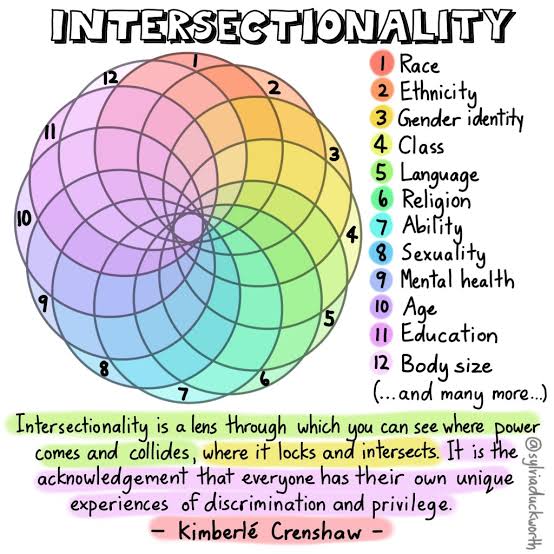
Two events, the Clarence Thomas Anita Hill hearings in 1991, and the O.J Simpson murder trial in 1994 where Simpson was acquitted led to Kim’s pioneering work on intersectionality.
I sought to articulate a both/and position; it was about race and it was about gender. Especially after the 1991 Thomas-Hill debacle; this was not an unfamiliar position for me. But something new was emerging that hadn’t fully taken shape in that earlier spectacle. Colorblindness was becoming a shared point of departure among mainstream pundits, reporters, feminists, and others who collectively repudiated any concerns about racism as a potential factor in the investigation and at Simpson’s trial…In a sense, colorblindness itself was on trial…Put together, these two moments further convinced me that racial justice could not be sustained without a thorough rethinking of patriarchy…In absolute numbers, there were more white men who supported O.J. than there were African Americans in the entire country.
The freedom to think, to learn, to agitate, and to talk back are essential to a free society. Yet these freedoms have always been contested, especially when exercised by those at the margins. That our government can appropriate law to banish critiques of the status quo, changing the rules about which racial histories can be taught and which experiences can be acknowledged, is not a healthy feature of a robust democracy. It is a sign of a dying one.
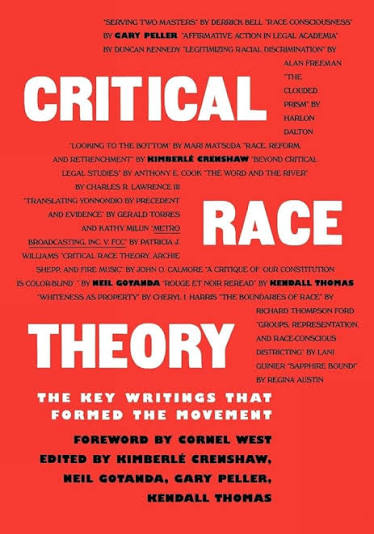
In the same way that we must bend the arc of the moral universe toward justice, legal education must grapple with the law’s role in creating the conditions that still hobble our efforts to stand together as a nation. It must equip future generations with the critical tools necessary to move us farther away from our troubled past, not doom us to repeat it.
But tension and contradiction abound throughout my life, reflecting a complex dance with the notion of “we”-of race, of gender, of nation, of humanity–that can never be complete, not ever fully abandoned.