
Valley of Death; How BIG TECH is fueling the Future of War, Sharon Weinberger, 2026

Even if the military wanted to work with Silicon Valley, tech workers weren’t exactly eager to work with the military.
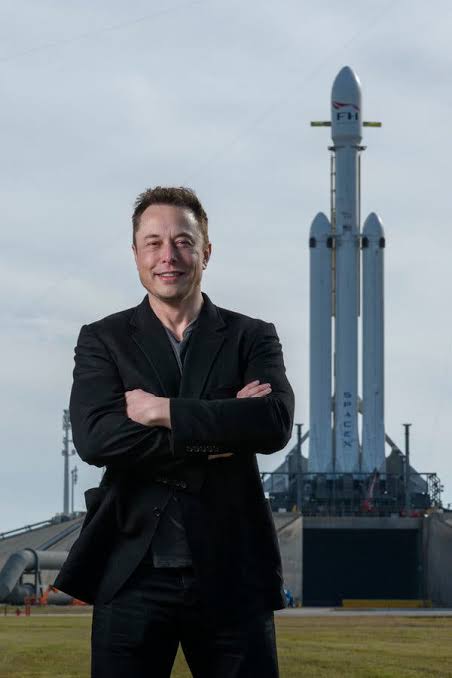
In a historic move, the Air Force in the spring of 2016 awarded SpaceX a contract worth about $83 million, to launch a satellite as part of GPS III constellation, the military-run navigation system that is also used in everything from agriculture to navigating city streets…SpaceX was launching satellites for almost half the price of United Launch Alliance, the joint venture that Boeing and Lockheed had initiated in 2006…Elon Musk, the founder of SpaceX, had sued the US Air Force in his quest to break into the market for military rockets.
The Court, rejected Palantir’s (Peter Thiel co-founder) “bad faith” allegations in November 2016 but ruled that the Army had erred in not allowing the company to compete for the DCGS (Distributed Common Ground System) contract.
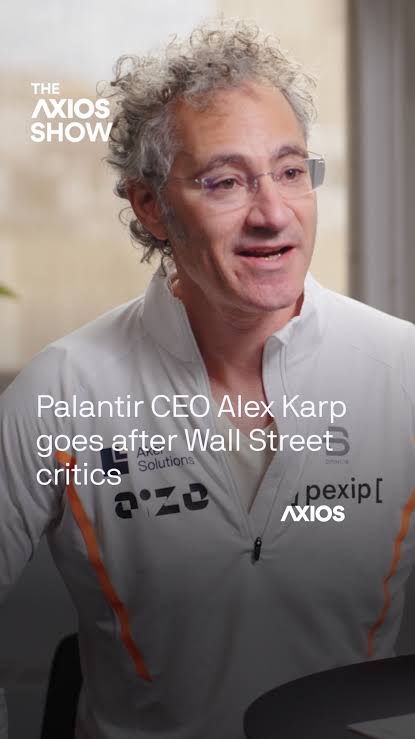
Palantir scored another, far more critical contract in 2018. Buoyed by its legal win against the Army, it won a ten-year contract for DCGS worth as much as $876 million. “Our victory in federal court,” (Palantir CEO Alex) Karp later wrote in the company’s filing to go public, “Is transforming the procurement of goods and services across the US federal government.”
Letting machines do the dirty part of warfare was not an argument likely to assuage the concerns of those opposed to AI weapons. And for Google, at a moment when workers were taking controversies from internal Slack channels to larger audiences on Twitter, the bad publicity didn’t seem worth it…Diane Greene, the head of Google Cloud, announced on June 1 (2018) that the company would not renew its Project Maven (Algorithmic Warfare Cross-Functional Team) contract when it expired the following year, and promised that Google would adhere to a new set of AI principles. This proved less than persuasive for Project Maven’s most ardent critics, some of whom resigned in protest.
It had been almost a decade since Edward Snowden handed over a trove of government secrets to journalists exposing the links between Silicon Valley and America’s national Security state. The outrage over Project Maven, just a few years earlier, was now almost forgotten. With Ukraine (2022), at least at the start of the war, many on the left and right found a military cause that united them. And tech companies were ready to help.
Karp’s visit demonstrated the way in which Ukrainian politicians were trying to leverage their predicament; wars were great laboratories for technology, particularly weapons. Accepting and even promoting that aspect of the war to the Western world could be an advantage, particularly if it attracted companies willing to donate equipment or invest in the country. After all, what better advertisement is there for weapons than having them used in a war.
Delta (Ukrainian homegrown software) was deployed extensively across Ukraine’s military forces, while Palantir’s footprint shrank. “It’s not used for routine targeting on the front..Absolutely not.”
While there had been only a handful of domestic drone producers in Ukraine at the beginning of the war, within a year that number had exploded to some 200 companies, which collectively produced hundreds of thousands of unmanned vehicles per year..By the end of 2024…more than 96 percent of all drones used by its military were domestically made…Engineers on the ground could quickly make changes to the technology; when Russian jamming started, for instance, they made fixes in hours or days…American companies, would typically need to send their products back to the United States — a process that would take weeks if not months.
“The entire model that the Silicon Valley successfully deploys in other domains is co-location of the maker with the end user. And this link is completely broken.”
SpaceX demanded that the Pentagon pay for the Internet service the company had been providing for free to Ukraine on tens of thousands of terminals it had donated, and to cover the cost of any additional terminals provided to Ukraine’s military. The demand set off panic in the Pentagon, where officials quickly realized the risk of Ukraine’s reliance on a single person — particularly if that person had strong views on the course of the war.
Musk had begun to openly express concerns about the war, floating his own idea for a peace plan that ceded territory to Russia…Musk appeared to also harbor concerns that Russia might attack his Starlink constellation in low Earth orbit.
In October 2022, Ukraine’s military had launched half a dozen kamikaze drone subs that were intended to strike Russia’s naval fleet in Crimea. But as the drones neared Crimea, they lost their connectivity to Starlink, which had been turned off in the region. Ukraine begged Musk to turn on Starlink, but Musk refused.
 Peter Thiel
The Taiwan Semiconductor Manufacturing Company (TSMC) is the world’s largest contract chipmaker and produces the vast majority of cutting-edge AI accelerators and GPUs for Western designers like Nvidia, AMD, and Broadcom. The state-of-the-art, cutting-edge processors for current-generation iPhones are made at TSMC’s advanced foundries in Taiwan, where local regulations keep the newest manufacturing processes.
The Pentagon is concerned that China will take back control of Taiwan by invasion and is war gaming a war with China over Taiwan that would start in 2027. The US would pay an enormous price (2 carriers and 10,000 sailors for a start) for this hypothetical war and most times the US loses.
For those investors and companies heavily invested in China but not seeking military work, like Apple, the Pentagon’s growing concerns about Beijing were not an immediate problem. For Musk, meanwhile, it was more complicated: SpaceX was a major defense contractor, but Tesla was not, and Tesla was producing hundreds of thousands of cars in its Giga-factory in Shanghai. Musk, for his part, showed no indication that he wanted to take sides.
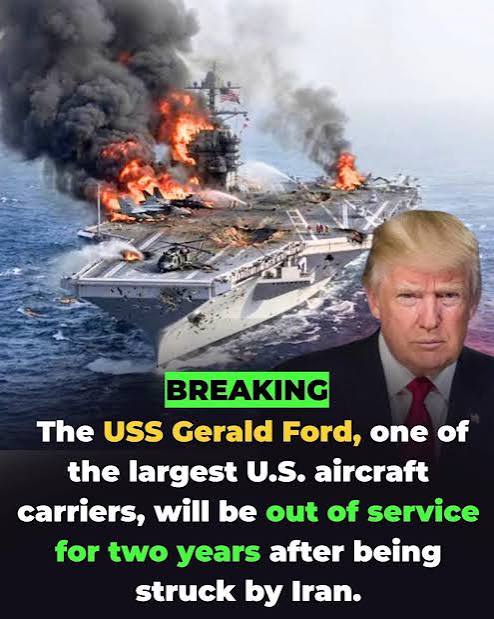
Those “shitty things” were the multibillion-dollar weapons systems produced by traditional defense companies under Pentagon specifications that took decades to develop. Sentinel, a program to replace the arsenal of land-based nuclear missiles, had skyrocketed in price to more than $140 billion. The USS Gerald R. Ford aircraft carrier (disabled supposedly by a “laundry fire” near Iran is now in San Diego undergoing repair) was estimated to cost about $13 billion; the additional carriers planned for its class were expected to bring the total price to $120 billion. And then there was the great white whale eating the Pentagon out of house and home: the F-35 Joint Strike Fighter, a stealthy multi-role aircraft that was once, almost laughably, billed as low-cost. Instead, it has morphed into the most expensive weapon in history, estimated to cost more than $2 trillion. (It has finally been cleared to fly when raining.)

During Hurricane Michael in October 2018, 17 F-22 Raptor fighter jets were left behind at Tyndall Air Force Base in Florida because they were unable to fly.
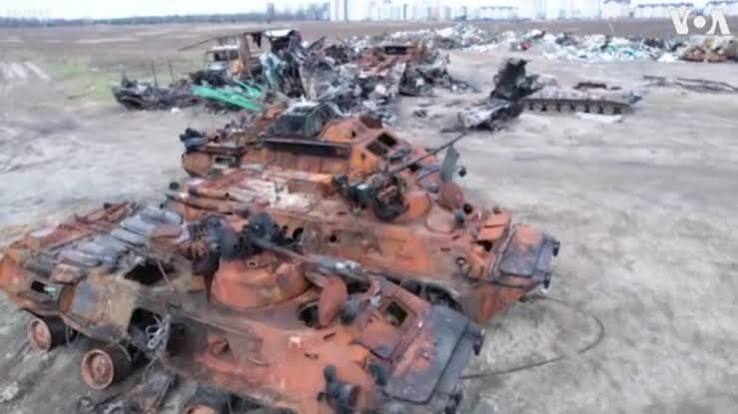
Military Watch Magazine / Russian Sources: Reports state that out of the initial 31 U.S.-supplied Abrams tanks, up to 27 vehicles have been destroyed, disabled, or captured (an estimated 87% loss rate of that specific batch).
Ukrainian crews and military analysts have expressed severe concerns about American-supplied M1 Abrams tanks on the modern battlefield, with some commentators and analysts describing them as potential “steel coffins” or mobile death traps due to intense drone warfare and top-attack threats.
“Ukrainian officials said the Americans didn’t seem to comprehend how attack drones and other technology had transformed the battlefield” Washington Post
The war in Gaza was arguably the first conflict where a powerful new wave of AI could be deployed on a large scale. “To put it in perspective, in the past, we would produce 50 targets in Gaza in a year. Now, this machine created 100 targets in a single day with 50 percent of them being attacked.”…”it essentially treated the outputs of the AI machine ‘as if it were a human decision‘”.
Israel had its own robust software industry that was heavily involved in defense. In fact, what Israel most needed from the United States during the war was a steady flow of precision weapons and bunker-busting bombs made by the traditional defense companies.
This (Palantir) strategy was called “The First Breakfast” — a nod to the famous “Last Supper” of defense company CEOs in 1993 that preceded their consolidation down to five major contractors. The First Breakfast was a blueprint for mobilizing the country’s defense-industry base — with Palantir (Thiel) at the center of it.
Seven of the top eight defense companies bought back their stock in 2024 — all except Boeing, whose commercial side was suffering…liberal lawmakers like Elizabeth Warren and Bernie Sanders accused them of “war profiteering”.
Boeing’s total financial resolution and settlements tied to the 737 MAX crashes (Lion Air Flight 610 and Ethiopian Airlines Flight 302, which killed 346 people) have reached approximately $3.64 billion.
The fundamental difference in the business model of Anduril, Palantir, and other defense startups was that they developed technologies with their own money…They owned the technology, not the federal government…These companies owned their technology and could decide, within the limits of the law, what to do with it. They could, as Musk did, make decisions about when and where Ukraine could use Starlink.
The strategy made sense, at least for Palantir and Anduril, neither of which developed its own AI models. But the companies that did work on AI were now eager to get Pentagon contracts, and working with a defense firm gave them the best opportunity crack the military market…OpenAI and Anduril announced they would be teaming up on national security, using AI models to identify drones and other aerial threats…Anthropic, another leading AI company, said it was partnering with Palantir and Amazon Web Services for the defense and intelligence market, which would involve bringing Anthropic’s “Claude models to classified environments.”
f
Musk acolytes — some barely out of their teens — demanded access to computer systems and other records as they hunted for government waste. Resistance quickly proved futile; after a tense standoff between DOGE members and federal employees of the US Agency for International Development, or USAID, the Trump administration effectively shuttered the agency almost overnight.
Until there is an investigation we don’t know how much data DOGE stole from government computer systems across several departments or where Musk stores the stolen data. No one in DOGE had any government security clearance at any level. In ordinary times, this would be a crime of epic proportions.
In the end the Pentagon claimed that DOGE had identified $80 million in wasteful spending, though it never released an accounting of that number. If accurate, however, it means that DOGE had saved about one hundredth of a percent of the Pentagon’s $850 billion budget — roughly the cost of one of Musk’s hated F-35 fighters.
…after Musk criticized a Republican tax bill, Trump retaliated by threatening to end government contracts with Musk’s companies — a move that would mostly hurt SpaceX. Musk responded by saying that SpaceX would “begin decommissioning its Dragon spacecraft immediately” effectively cutting off American access to the International Space Station. At the time, Dragon was the only operational space vehicle capable of taking astronauts and cargo to the orbiting station.
Both men eventually backed down, but Musk’s response sent shock waves through NASA and the Defense Department. Officials realized that Musk’s threat to decommission Dragon highlighted the government’s dependence on a mercurial billionaire for its access to space.
At the time (2024), the company’s (Palantir) market capitalization was hovering around $200 billion, almost twice that of Lockheed Martin…It was a remarkable disparity, particularly given that Lockheed’s revenue was $71 billion, while Palantir could only boast less than $3 billion over the same period. On October 2, 2025, Palantir’s stock closed at a high of $187 per share, making the company worth a staggering $435 billion…It had become, some people argued, a meme stock.
…(in 2025) the Army announced a contract for Palantir worth as much as a staggering $10 billion. Karp was right. The Pentagon-Silicon Complex had arrived, and they were winning everything.
Private funding for defense startups was set to be $50 billion for the year.(2025)..Defense startups weren’t just the hot new thing in VC funding — they were, along with AI, becoming the thing.
The valuations for many of the startups didn’t make sense, but they were following in the footstep of Tesla, a company which in October 2025 had a $1.45 trillion valuation, but revenues of around $95 billion…By contrast Toyota…had sales of $326 billion, and Volkswagen around $350 billion, but they were valued at just a fraction of Tesla’s market capitalization. Tesla, of course, had Musk…

SpaceX just went public at astronomical valuation. Anthropic is planning an IPO at even higher valuation. Michael Burry the real world model for the character in “The Big Short” who shorted sub prime mortgage derivatives prior to the 2008 crash is now actively shorting Big Tech.
Burry is also short or has been on Palantir, Nvidia, and Micron. He also warns that the proposed Anthropic IPO is vastly overpriced. Bubble anyone?