Heartsick Breakup With the West

One Day, Everyone Will Have Always Been Against This, Omar El Akkad, 2025
It is pointless, even, to make the obvious analogies, to imagine the response had almost any other country on earth killed hundreds or thousands of civilians on a hostage rescue mission, or flattened every hospital in a city on the hunt for a terror group, and then bragged about its success. Pointless because such things assume a conversation anchored in facts or reason or even the thinnest presupposition that the people being killed, like those killed on October 7 (2023), are human beings, their loss an utter indictment of the systems and leaders and world that allowed it. Instead, as the scope and scale of annihilation intensifies, an opposite presupposition becomes necessary, one that imposes on the dead the appropriate mendacity to justify their killing. A few weeks in, the notion that Palestinians deserve to die because some of them voted for Hamas becomes insufficient to hold up the body count. Soon Palestinians become indistinguishable from Nazis, and then worse than Nazis. As their eradication continues, they must be transformed into the worst human beings on earth, the weight of their deaths only then sufficiently lightened.

Everyone involved–the dead, their killers, the arbiters of the exchange rate–knows this for what it is. In 2014, when an Israeli newspaper runs an opinion piece in which the writer describes Palestinian children as “the explosives of the future,” there’s no ambiguity as to what is happening, what is desired to happen. Seven months before the Hamas attacks of October 2023, when the same newspaper publishes and then quickly deletes a post titled “When Genocide Is Permissible,” the bedrock of polite intellectual discourse that liberalism so desperately and invariably see as a hallmark of its own enlightenment is shown to be a phantom thing–a premise that, when most needed, cedes the floor to the concrete vocabulary of violence.  And then following the attacks, when Israeli defense minister Yoav Gallant says Israel is fighting “human animals,” it is not a statement of belief so much as permission. When those dying are deemed human enough to warrant discussion, discussion must be had. When they’re deemed nonhuman, discussion becomes offensive, an affront to civility.

…Tomorrow, more Palestinians will die, but in the places where the bombs are built and launched it will have no bearing on mortgages, bills, employment. Indeed, in many of these places, what will have a real economic effect is if the bombing stops. In social and professional circles there will be limited tolerance for any talk about the fortunes of some exotic, dangerous-sounding people. In the context of self interest–and maybe there never was any other context–it is utter madness to risk one’s own prospects standing up for people who can offer nothing in return. Tomorrow more Palestinians will die, but the unsaid thing is that it is all right because that’s what those people do, they die. Just for a moment, cease to believe that this particular group of people are human.

Two Parties in America

And yet there is a deranged honesty about the cult to which the likes of Pence–and former South Carolinian governor Nikki Haley, who signed her own message, “Finish Them!,” to similar bombs belong. American liberalism demands a rhetorical politeness from which the fascistic iteration of the modern Republican Party is fully free. There is something stomach-churning about watching a parade of Biden administration press secretaries offer insincere expressions of concern for Palestinians as the same administration bankrolls their butcher. It is a reminder that the Democratic Party’s relationship with progressivism so often ends at the lawn sign: Proclaim support for this minority group or that. Hang a rainbow flag one month a year from some White House window. Most important, remind everyone at every turn of how much worse the alternative would be.

Against such hollow gesturing, even the most unhinged Republican will always be able to say: Look, these people have no interest in your suffering, only in empty gestures. I’ll do away with gestures, and make the right people suffer. It is an astonishingly effective technique, but would not be if the leadership of the Democratic Party had come to realize that sloganeering without concrete action means nothing.

Don’t let the Biden administration’s endorsement of mass murder distract from the reality that a Trump administration would be so much worse.

…It can’t be the case that the Supreme Court is an unaccountable neoconservative body intent on rendering the whole country unrecognizable and that there’s simply no way to do anything significant about it. It can’t be that climate change is the single most important issue facing the world, with our entire species at risk, and drilling licenses need to continue. It can’t be that innocent Palestinians have faced unbearable suffering and we care very deeply about their plight, and absolutely nothing will stop the arming of the nation responsible. It can’t be both rhetorical urgency and policymaking impotence.

…Suddenly an otherwise very persuasive argument takes on a different meaning: “Vote for the liberal though he harms you because the conservative will harm you more” starts to sound a lot like “Vote for the liberal though he harms you because the conservative might harm me too.”..Want my vote? Be less monstrous than the monsters.

To preserve the values of the civilized world, it is necessary to set fire to a library. To blow up a mosque, To incinerate olive trees. To dress up in the lingerie of women who fled and then take picture. To level universities. To loot jewelry, art, banks, food. To arrest children for picking vegetables . To shoot children for throwing stones. To parade the captured in their underwear. To break a man’s teeth and shove a toilet brush in his mouth. To let combat dogs loose on a man with Down’s syndrome and then leave him to die. Otherwise, the uncivilized world might win.

written at Guantanamo Bay in 2008.

No, there is no terrible thing coming for you in some distant future, but know that a terrible thing is happening to you now. You are being asked to kill off a part of you that would otherwise scream in opposition to injustice. You are being asked to dismantle the machinery of a functioning conscience.  Who cares if diplomatic expediency prefers you shrug away the sight of dismembered children? Who cares if great distance from the bloodstained middle allows obliviousness. Forget pity, forget even the dead if you must, but at least fight against the theft of your soul.

A few months into the genocide, protestors are regularly interrupting Democratic Party events, Dozens of major universities across the country come to a standstill as students build encampments to protest the killing. It harkens most clearly to the anti-apartheid movement of the eighties and the antiwar and civil rights protests of the sixties–all of them, too, led overwhelmingly by young people and derided as naive and inconsequential until they weren’t, until they became central facets of the story the United States tells itself about how, inevitably, justice prevails.

It’s difficult to live in this country in this moment and not come to the conclusion that the principal concern of the modern American liberal is, at all times, not what one does or believes or supports or opposes, but what one is seen to be.

Whatever derangement currently occupies conservative American politics is, at least, something of very real consequence: the minority groups they want to legislate out of every facet of society, the books they want to ban, the mechanisms of democracy they want to subvert–none of it is hypothetical…every Republican will always be able to say, truthfully: At least there’s no contradiction between what I am, what I claim concerns me, and what I plan to do.

A growing number of people ask a different question; the world asks a different question, The world, full of people who factor not one iota in the calculus of those morning meetings (Democratic Party talking points of the day), looks upon this and asks, simply: Beyond self interest, what do you believe in? And every morning the answer, dressed up in anesthetic euphemism and dependent on our collective capacity for resignation to lessor of two evils, is: Nothing.

How empty does your message have to be for a deranged right wing to even have a chance of winning? Of all the epitaphs that may one day be written on the gravestone of Western liberalism, the most damning is this: Faced off against a nihilistic, endlessly cruel manifestation of conservationism, and somehow managed to make it close.

Imperialism

Maybe the real fear is that, when one begins to consider the root systems of small-scale, sometimes state supported, but often stateless evil, there’s an obligation to apply the same rigor to the large scale machinery of imperial evil. And in doing so, one might find that what drives and absolves the state of so much evil isn’t the fear that not doing so will allow some terrorist to destroy the fabric of free society. But rather that the evil itself is necessary to the system it protects. That in the end there is no international rules-based order, no universal human rights, no equal justice for all, simply fleeting arrangements of convenience in which any amount of human collateral is deemed acceptable so long as it works in the empire’s interest.

Leavetaking – Death in Palestine

In a hospital, In a refugee camp. In their beds. While make dinner for their children. While holding their siblings. While cycling. While playing on a beach. In a Market. In an incubator. Struggling to breathe, under the rubble. While trying to drag a loved one from the middle of the road. While burying the dead. While scavenging for food. While selling vegetable. While swimming in the sea, trying to catch fish. While playing soccer. While waving a white flag. With their hands raised in surrender. With their hands tied. While running away. At a checkpoint. In a torture camp. In a safe zone. In a school. While delivering aid. While waiting on aid. While performing surgery. While sitting down in a chair. By drone, from the safety of a great distance. Live on air. Away from sight.

Human Rights Watch – a reflection

Righting Wrongs; Three Decades on the Front Lines Battling Abusive Governments, Kenneth Roth, Former Executive Director of Human Rights Watch, 2025

At 325 dense pages, this book is not easily summarized or digested. Human Rights Watch early on developed a strategy that focused on Shaming the governments perpetuating human rights violations. This required extensive and meticulous research and documentation of the abuse, gaining a reputation for the accuracy and reliability of the reports generated, and perfecting the process of publicizing, circulating, and gaining widespread governmental and popular attention to these reports.

The table of contents gives a quick look at the focus of the book: China, Russia and Syria, Saudi Arabia, War Crimes, Israel, The United Nations, Rwanda and the Democratic Republic of Congo, Hungary and Poland, The United States. For each focus, the book highlights the process of research and data collection, preparing reports, meeting key influential government and non government players, pressuring for changes, shaming through publication and pressure.

Karim Khan ICC Chief Prosecutor Putin, Netanyahu, Gallant

For this reader, the most interesting chapter was International Criminal Justice. Here is a detailed discussion of the development of international law and institutions to define global standards for the conducting of war, genocide, suppression of minorities and apartheid. Starting with post WWII Nuremberg and Tokyo tribunal trials conducted by the victors of the war, to the Universal Declaration of Human Rights, to the development of a consent of universal jurisdiction (jurisdiction that can involve a single nation or a coalition of nations or an international body) to bring legal cases against violators of human rights anywhere in the world. Included are the histories of the development of the ICC (International Criminal Court) and the ICJ (International Court of Justice), the International Covenant on Civil and Political Rights, the International Covenant on Economic, Social and Political Rights.

Interested readers are encouraged to read in its entirely this thoughtful, humane, optimistic work.


From the Enlightenment to the Present AGE OF ANGER

Age of Anger; A History of the Present, Pankaj Mishra, 2016

Friedrich Nietzsche and Marx

Voltaire

Jean-Jacques Rousseau

Nietzsche Appeared to be building on this contrast when he claimed to identify in the battle between Voltaire and Rousseau the ‘unfinished problem of civilization’. On one side stood the ‘representative of the victorious, ruling classes and their valuations’; on the other, a vulgar plebeian, overcome by his primordial resentment of a superior civilization.

One doesn’t have to subscribe to Nietzsche’s dichotomies to see that the disagreements between Voltaire and Rousseau illuminate some of the perennial questions: how human beings define themselves, what holds societies together, and divides them, why the underprivileged majority erupts in revolt against the privileged few, and what roles intellectuals play in these conflicts.

Alexis de Tocqueville

But as Tocqueville shrewdly pointed out, determined to ‘rebuilt society according to a entirely new plan, which each of them elaborated by the light of reason alone’, these men of letters (Voltaire and Rousseau) developed

“a taste for abstract, general theories of government, theories in which they trusted blindly. Living as they did almost totally removed from practical life, they had no experience that might have tempered their natural passions. Nothing warned them of the obstacles that existing realities might pose to even the most desirable reforms. They had no idea of the perils that invariably accompany even the most necessary revolutions.  Indeed, they had no premonition of them because the complete absence of political liberty ensured that they not only failed to grasp the world of affairs, but actually failed to see it. They had nothing to do with that world and were incapable of recognizing what others did within it.”

V.S. Naipaul                          Salman Rushdie

Many of them also became members, like Naipaul and Rushdie, of what  the philosopher Kwame Anthony Appiah calls a ‘comprador intelligentsia’: ‘a relatively small, Western-style, Western-trained group of writers and thinkers who mediate the trade in cultural commodities of world capitalism at the periphery’. Some other began to think, after close observation of European and American politics and history, that Voltaire and Kant, after all, might not hold the key to redemption, which may lie closer to home, in indigenous religious and cultural traditions.

John Maynard Keynes

The triumphs of capitalist imperialism in the nineteenth century had fulfilled on a grand scale Voltaire’s dream of a worldwide materialist civilization knit together by rational self-interest…A typical later example was the inhabitant of London, who in 1914, as John Maynard Keynes wrote, could ‘order by telephone, sipping his morning tea in bed, the various products of the whole earth…he could at the same moment and by the same means adventure his wealth in the natural resources and new enterprises of any quarter of the world’. This blessed citizen of an empire, who was best positioned to make money in globalized markets, regarded this state of affairs as normal, certain, and permanent, except in the direction of further improvement’. To him, ‘the projects and politics of militarism and imperialism, of racial and cultural rivalries’ seemed to have no influence on social and economic life. The extensive conflagrations of the early twentieth century, during which racial and national identity was repeatedly valued more than economic rationality, shattered this illusion. As Keynes wrote, with devastating understatement, “The age of economic internationalism was not particularly successful in avoiding war”.

But Nietzsche seemed to answer most thrillingly, as the (nineteenth) century ended, a general feeling of malaise: he seemed best able to discern, as Lu Xun, China’s iconic modern writer, claimed, ‘the falsity and the imbalances’ of nineteenth-century civilization. He confirmed the sense that old practices and institutions were failing to respond to the imperatives of development and progress, but he also seemed to amplify a widely felt need for a New Man and New Order.

To his youthful followers across the world he (Nietzsche) provided the intellectual framework for several quintessentially modern and pressing projects: the radical trans-valuation of inherited values, the revolt against authority and its shibboleths, the creation of new forms of superabundant life, and politics in the grand mode.

However, men like (Timothy) McVeigh, (Ramzi Ahmed) Yousef and (Omar) Mateen challenge the assumption that a freely willing human subject is motivated by certain desires, beliefs and perceived benefits, and has an omelette in mind — a New Man or a New Middle East — when he breaks eggs. For them the act of violence is all; they have no vision of an alternative political reality on a global or even local scale, like the one of a classless society or an Islamic nation state offered by communist and Iranian revolutionaries in the past and cultural supremacists and enthno-nationalists in the present. Pierre-Joseph Proudhon once defined this particular kind of revolutionary:

“Neither monarchy, nor aristocracy, nor even democracy itself, insofar as it may imply any government at all, even though acting in the name of the people, and calling itself the people. No authority, no government, not even popular, that is the Revolution.”

And now with the victory of Donald Trump (2016) it has become impossible to deny or obscure the great chasm, first explored by Rousseau, between an elite that seizes modernity’s choicest fruits while disdaining older truths and uprooted masses, who, on findings themselves cheated of the same fruits, recoil into cultural supremacism, populism and rancorous brutality. The contradictions and costs of a minority’s progress, long suppressed by historical revisionism, blustery denial and aggressive equivocation, have become visible on a planetary scale

They encourage the suspicion — potentially lethal among the hundreds of millions of people condemned to superfluousness — that the present order, democratic or authoritarian, is built upon force and fraud; they incite a broader and more apocalyptic mood than we have witnessed before. They also underscore the need for some truly transformative thinking, about both the self and the world.

Why does US authoritarian right mythologize history and attack education?

Erasing History; How Fascists Rewrite the Past to Control the Future, Jason Stanley, 2024

What does history do that is so disruptive of authoritarian goals? Perhaps most importantly, it provide multiple perspectives on the past. Authoritarianism’s great rival, democracy, requires the recognition of a shared reality that consists of multiple perspectives. Through exposure to multiple perspectives, citizens learn to regard one another as equal contributors to a national narrative. And they learn, we learn, to accept that this narrative is open to continued collective reflection and re-imagination, constantly taking into account new ideas, new evidence, new perspectives and theoretical framings. History in a democracy is not static, not mythic, but dynamic and critical.

…fascist education works by strategically erasing accounts of history and current events that include a diversity of perspectives, narrowing the scope of what can be taught until students are presented with a single viewpoint, which is formulated specifically to justify and perpetrate a hierarchy of values between groups. This narrowing is inconsistent with multi-racial democracy, antithetical to egalitarianism, and carries the possibility to conjuring mass violence.

They also sometimes employ an even more scorched earth strategy, destroying any common reality that could serve as the basis for a broad alliance between citizens against power. They seek to accomplish this by destroying the institution of public education itself.

The institution of slavery is a relatively ubiquitous feature of human societies. But perhaps there is a distinctive type of dehumanization emerging from the Enlightenment that results in particularly brutal forms of slavery and genocide. Mills, in this reading, is suggesting that we can understand the brutality of the version of slavery that emerged during the Enlightenment by reflecting on the very notion of Enlightenment personhood. In this form of slavery, the enslaved are regarded as non-persons, even in a very expansive notion of personhood. If so, the Enlightenment ideals of personhood have a central role to play in explaining the brutality of radicalized colonialism, and the underlying systems of white supremacy.

An organization like the Zinn Education Project (Howard Zinn) is on the front lines of the war to defend progressive education, seeking to preserve the history of resistance against hierarchies of class, race, and gender against those who aim to erase it. It also seeks to call attention to these attacks, and the larger anti-democratic movement of which they are a part. Even in these grim times for democracy, there remains ample room for hope.

No one thinks that Russia’s election of 2024 was free. The people of Russia have been lied to. Their acceptance of these lies is not accidental to their unfreedom. Their acceptance of these lies constitutes their unfreedom. Ignorance too hinders free, informed action. Without knowledge we cannot act. Battles over education are battles over freedom.

Living in a democracy means considering replacing traditions with new ones. Education in a democracy is an exercise for agency, for self-rule. And part of an ethic of self-rule is a refusal to be ruled by the dead…When traditions are inflated and exaggerated, and critical inquiry into them threatens to expose myths that justify power, it gives the authoritarian an excuse to crack down on democracy, via its institutions, the schools.

When we understand the mechanisms by which democracy is attacked, the way myths and lies are used to justify actions such as wars, and the scapegoating of groups, can we defend against these attacks, and even reverse the tide. This struggle is part of the action of democracy itself. If we weren’t having this struggle, we wouldn’t be living in a democracy.

Authoritarianism thrives off inequality and myths that support it. Monarchy survived by a myth of divine selection. Dictatorships survive on the myth that one single leader defines and embodies the nation. Fascism survives off myths that create an outgroup, who are relegated to second-class citizenship, at best. Schools and universities allow for critical inquiry into these myths, and so attacks on them are always the canaries in the coal mine of authoritarianism. There is a reason there are no American-style liberal arts colleges in authoritarian countries.

Need to Reform Corporate Democratic Party

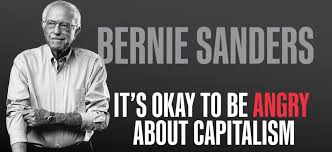
It‘s OK to be Angry about Capitalism, Bernie Sanders with John Nichols, 2023

2020 Campaign Task Forces of Sanders and Biden

Should we raise the federal minimum wage to $15 an hour? Agreement

Should we have Medicare negotiate prescription drug costs? Agreement

Should we be aggressive in combating climate change and create a Civilian Climate Corps?Agreement

Should we lower the age of Medicare eligibility to sixty? Agreement

Should we end private prisons and detention centers? Agreement

Should we move toward a Medicare for all single-payer program? Disagreement

Should we legalize marijuana? Disagreement

Should we forgive all student debt? Disagreement

Should we make public colleges and universities tuition-free? Disagreement

Should we impose a wealth tax on billionaires? Disagreement

Oligarchs and those bought by oligarchs are not good

Greed is not good.

Massive income and wealth inequality is not good.

Buying elections is not good.

Profiting from human illness is not good.

Charging people the highest prices in the world for prescription drugs is not good.

Exploiting workers is not good.

Monopolization of the economy by a handful of corporations is not good.

Ignoring the needs of the most vulnerable among us – children, the elderly, and people with disabilities — is not good.

Racism, sexism, homophobia, and xenophobia are not good.

For profit prisons that make money by locking up poor people are not good.

Wars and excessive military budgets are not good.

Carbon emissions that destroy our planet are not god.

Bernie’s Events contrast with State Democaratic Party Events

Our (Bernie’s) events usually brought out diverse, raucous crowds of thousands of people. There were a lot of young people. The people who showed up were mostly working-class. Some were in college, some had degrees, but most did not. What united them was a dissatisfaction with the status quo and a fervent desire for change. They wanted the government to work for them, not just for the people on top.

The state Democratic Party events were pretty much the opposite. The turnouts were small and the people who attended were older, whiter, and wealthier. A significant number of them – lawyers, professionals, and business people were “major donors.” Compared to our campaign rallies, the energy level was almost nonexistent.

The key question facing the Democratic Party is not complicated. Does the party want to open its doors and welcome into its ranks working class Americans, people of color, and young voters who could shake things up? Is it the party willing to listen to people who want to fight for fundamental change? Is it ready to be the party that demands that the promise of economic and social and racial justice be made real? Or does it want to maintain a tired status quo that poses no real threat to politics as usual? In other words, does it want to be a working-class party fighting for change, or a corporately dominated party protecting the well-off?

FDR in 1937:

In this nation I see tens of millions of its citizens—a substantial part of its whole population—who at this very moment are denied the greater part of what the very lowest standards of today call the necessities of life.

I see millions of families trying to live on incomes so meager that the pall of family disaster hangs over them day by day.

I see millions whose daily lives in city and on farm continue under conditions labeled indecent by a so-called polite society half a century ago.

I see millions denied education, recreation, and the opportunity to better their lot and the lot of their children.

I see millions lacking the means to buy the products of farm and factory and by their poverty denying work and productiveness to many other millions.

I see one-third of a nation ill-housed, ill clad, ill nourished.

Democrats should be making it absolutely clear that the people the Republicans take their money from, and the people whom the Republican policy serve—the very rich and the very powerful individuals who seek an America where uber-capitalism defines every aspect of our economy and of our society—are the problem…Democrats should be making it clear that they are prepared to challenge the rich and powerful on behalf of the working class. This will resonate with the American people in ways that the GOP lies never could.

Unfortunately, this economic justice message is rarely if ever delivered by the Democrats. And that has a lot to do with our broken campaign finance system and the Democrats’ dependence on campaign contributions from the wealthy and powerful.

There is no hiding from reality. Despite and lot of rhetoric, which fewer and fewer people believe, Democrats have not fought hard enough, or consistently enough for working people. And this failure has cost Democrats at election time. The simple truth is that, as Democrats have turned their backs on working families, millions of working-class voters have turned their backs on a Democratic Party that their parents and grandparents strongly supported.

Bernie’s bullet prescription

  • Transform the Democratic National Committee from a corporate-dominated fundraising apparatus into a source of support for grassroots activism and working-class struggles.
  • Make certain that primaries are open, fair, and well run.
  • Democratize the nominating processes.
  • Restructure debates between contenders for the presidential nomination so that they are serious examinations of the issues.
  • Make conventions genuine convenings of the party membership, as opposed to choreographed media spectacles.

Abolish the Prison Industrial Complex

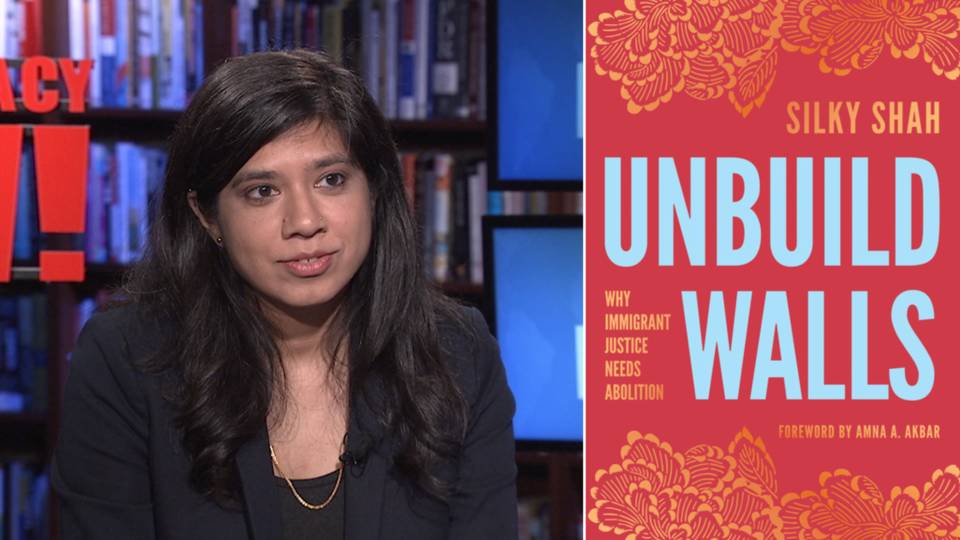
Unbuild Walls; Why Immigrant Justice Needs Abolition, Silky Shaw 2024

The title of this book, Unbuild Walls, references a quote from Ursula K. Le Guin’s 1874 sci-fi classic The Dispossessed. In the story, the “walls” are both the physical wall that exists between the two societies and the invisible walls we put up that constrain us and prevent human connection. This book is about breaking down the literal prison, jail, and detention center walls as well as the border walls, whether tangible, imaginary, or digital. But it is also about unbuilding the walls between our movements for social change. These walls are often intentional; we are fighting for a specific cause and must make that special case. Inadvertently, the divisions and lack of shared analysis because of these walls have resulted in harm to other causes and movements. Abolition helps us better understand that the struggle for immigrant justice is also a fight for racial, gender, and economic justice. By embracing abolition, maybe we can finally begin to bring the walls down.

The “nation of immigrants” incarcerated more immigrants than anywhere else in the world. Major milestones dot the history of the contemporary immigrant detention system in the United States. In 1980, when detaining immigrants was a rare practice, the arrival of Cuban and Haitian refugees by boat in the Cold War led to the birth of the modern system with the opening of the Krome Detention Center in South Florida. Later, during the height of the war on drugs, mandatory detention became law, stripping certain immigrants of due process rights. In 1996, the passage of two draconian immigration bills under president Bill Clinton expanded the grounds for deportation and doubled the existing detention capacity. But it was 9/11 that made immigrants an unequivocal target of the government in the name of protecting the “homeland”, after which billions of dollars were funneled into the deportation machinery. In recent memory, Trump’s wholesale attack on immigration led to a considerable expansion of the system, reaching a peak of half a million people detained in 2019.

But beneath these common points of departure lies another aspect of immigrant detention’s history; the rise in mass incarceration. In 1970, the United States incarcerated less than two hundred thousand people; three decades later, that number had risen to over two million. The prison boom that took place over the last half century is central to the story of immigrant detention in the United States. Critical Resistance defines the prison industrial complex (PIC) as “the overlapping interests of government and industry that use surveillance, policing, and imprisonment as solutions to economic, social, and political problems”. As the PIC was fortified through various developments, including increased funding for law enforcement, harsher sentencing laws at the state and federal levels, and the promise of jobs and revenue derived from a growing prison economy, the response to unnaturalized immigrants living in the United States, and those arriving at our borders increasingly took on a carceral logic. Since the 1980s, a combination of economic restructuring and increasingly tough-on-crime policies have produce devastating results; the highest rates of incarceration in the world and the greatest number of deportations in US history.

The restrictions on the number of visas due to Hart-Celler (1965) coupled with the end of the Bracero Program in 1964 resulted in an unprecedented rise of unauthorized migrations. At the time, some 200,000 Mexicans were coming to the United States for work annually. Now the first 20,000 immigrants from Mexico could be issued visas, but the 20,001 immigrant would not be; if they had to cross for work , they would be considered illegal. Immigration related apprehensions increased rapidly each year after the law passed, from 44,000 arrests in 1964 to over a million in 1977.

Contrary to popular thinking on the issue, the expansion of immigrant detention was not merely a xenophobic response to increasing undocumented immigration. It was a direct outgrowth of the rise of mass incarceration in the United States…Immigrant detention is part of the broader carceral landscape in the United States, and thus abolition of immigrant detention must be seen as concurrent with the demand to abolish the prison industrial complex.

Advocates and the Obama administration affirmed the idea that immigration was a “public safety” issue, reinforcing the narrative of immigrants as criminals. Our experience during the Obama years underlined for me the way that reformist reforms
setting out to “improve” prison and detention actually serve to expand it. This is a critical lesson to carry forward that explains why we must redirect our movement energy to abolitionist and decarceral reforms that dismantle and defund the system rather than try to make it “more human”…Ultimately, the intention to improve conditions only served to expand detention, consolidate the system, and benefit private prison corporations. The implementation of a risk classification assessment tool did little to release people from detention and reinforced existing racist frameworks. Along with ATDs (alternatives to detention), such reforms have repeatedly failed at reducing the number of people incarcerated or improving the lives of those subject to incarceration…Obama accepted nativist arguments that immigrants were threats to national security and public safety and enabled racial profiling through strengthening the ties between immigration enforcement and the criminal legal system, just as Clinton had done before him. In doing so, he not only oversaw more formal deportations than any other president, but likewise gave credence to Republican attacks on immigrants.

As outrage over family separations escalated that summer (2018), the call to abolish ICE gained steam among activists and even some politicians, who introduced legislation to do away with the agency. Family separation had become a flashpoint that exposed the harms of the system, leading many to focus on the agency that carries out mass deportations. What the demand to abolish ICE failed to acknowledge, however, was that the zero-tolerance policy went far beyond ICE’s purview.
Family separation under Trump emerged directly from a long-standing strategy aimed at deterring immigration through use of the criminal legal system to punish people for the act of immigration itself…In the process, and unbeknownst to most Americans, immigration became to most commonly prosecuted crimes in US federal courts. As a result, a parallel system of prisons and jails arose to to incarcerate immigrants serving criminal sentences…While the family separation policy under Trump rightly provoked significant outrage, what it revealed most was the complete moral bankruptcy of the institutions that implements it. Often the liberal critique of Trump’s immigration policy sees him and his administration as an aberration, a departure from the basic norms of governing. This perspective ignores the fact that many of his policies were continuations and expansions of what previous administrations, especially since Clinton, had been seeding; the use of the criminal legal system to punish immigrants as a tool for deterring future migration.

Closing Private Prisons

In the short time between AB32’s (California act to force closing of private prisons used by ICE) passage in October and when it became law, ICE accelerated the process and entered into fifteen-year contracts at the remaining private detention centers in California…Biden phased out private prisons for DOJ while simultaneously defending their use by another branch (ICE) of the federal government…Learning from the efforts in California, organizers and advocates in several states (Colorado, Illinois, Maryland, New Jersey, Oregon, and Washington State) have been successful at passing legislation ending detention contracts or preventing new expansion, and others are considering similar legislation…By December 2022, the Biden administration had ended contracts at five detention centers, siting concerns about conditions. Three of the five detention centers had been included on DWM’s (Department of Migrant Workers) First Ten to Committees Not Cages list…The belief that detention was necessary had started to lose its hold on advocates and politicians alike…But the reduction in the system during these years and the end of contracts at numerous facilities were important movement victories that would not have been possible without the demand for abolition.

“Many remedies proposed for the all-purpose use of prisons to solve social, political, and economic problems got caught in the logic of the system itself, such that reform strengthens, rather than lessons, prison’s hold. In a sense, the professionalizaton of activism has made many committed people so specialized and entrapped by funding streams that they have become effectively deskilled when it comes to thinking and doing what matters most.”
Ruth Wilson Gilmore, Golden Gulag

On the Rightward ideological trend of the Supreme Court

Howard Zinn made this point many years ago; “It would be naive to depend on the Supreme Court to defend the rights of poor people, women, people of color, dissenters of all kind.”

On Abolition movement building

It’s about doing the work, not just making a demand. Yes, the demand is important – it helps clarify where we’re going and opens up space for us to make our case to reduce the harm caused by the prison industrial complex. But our ability to create change is dependent on the power that we have. It requires building a base, identifying targets, developing strategies, waging campaigns, deploying various tactics, and harnessing our power when there are openings. That is the work. That is abolition.

The moral panic around the border now drives most policy decisions on immigration. In our work for migrant justice, it is critical that we challenge the right-wing fearmongering about the border in order to create safer conditions for people wanting the migrate. The immigrant rights struggle is inherently an intersectional struggle. People migrate for a variety of reasons. Global inequality as a result of capitalism and US empire has created unstable, impoverished, and often violent conditions across the world. Climate catastrophe has only exacerbated these conditions. As more migrants seek safety, the tools the federal government uses to deter migration, including prisons, police, and the military, will continue to be lifted up as necessary for preventing the “surge” or “flood” or whatever the disaster metaphor of the day is.

The intersectional nature of the immigrant rights struggle should not be seen as a challenge, but as an opportunity to bridge issues and connect the dots to imagine another world in which everyone can thrive.

In 2019, the Poor People’s Campaign, which is rooted in civil rights—era demands, released a moral budget, arguing that “the abundance of our society will grow even greater when we stop investing in maintaining injustice to benefit the few, and turn instead to policies based on the needs of the many.”

For example, NPP (National Priorities Project) points out that in 2023 “the average taxpayer paid $298 to the top five military contractors, and paid just $19 for mental health and substance abuse programs.” On immigration “T,he average taxpayer paid $70 for deportations and border control, versus just $19 for refugee assistance.”

The Minority Republic

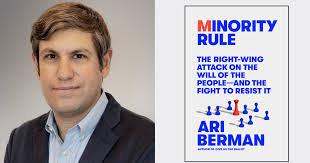
Minority Rule: The Right-Wing attack on the will of the the people and the fight to resist it, 2024, Ari Berman


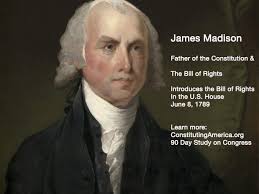
James Madison

Similarly, the level of inequality in the Senate right now—by far the worst among any advanced democracy—would have shocked the likes of (James) Madison. When the founders reluctantly decided to give each state the same number of senators regardless of population, the 1790 census showed that the country’s most populous state, Virginia, had twelve times as many people at its least populous state Delaware. Today, California has sixty-eight times the population of Wyoming. Fifteen small states with 38 million people combined routinely elect thirty GOP senators, California, with forty million residents, is represented by two democrats. This imbalance is getting worse; by 2040, roughly 70 percent of Americans will live in fifteen states with thirty senators, while the other 30 percent, who are whiter, older, and more rural than the country as a whole, will elect seventy senators. The structure of the Senate only magnifies the body’s unrepresentativeness; due to the filibuster, which is not in the Constitution, forty-one Republican senators representing just 21 percent of the population have been able to blocks bills supported by huge majorities of Americans on issues like gun control, abortion, and voting rights.
The reactionary conservatives behind the drive for minority rule claim to be the only legitimate heirs of representative government, but they’re seeking to delegitimize and warp the institutions created by the founders.


MItch McConnell

(Mitch) McConnell’s unprecedented blockade extended to the lower courts. In their last two years in office, Presidents Reagan, Clinton, and Bush II all faced a Senate controlled by the other party but got eighty-three, seventy-three, and sixty-eight district and appellate judges confirmed respectively. McConnell’s Senate, in contrast, confirmed only twenty Obama nominees in the last two years of his presidency, including just two appellate judges, the lowest number since Harry Truman denounced the “do-nothing Congress” in 1948. None of the seven circuit nominees—including Kallon– that Obama submitted in 2015 or 2016 were confirmed.
McConnell held open 105 judicial vacancies during the Obama era and then pledged “to move judges like they are on a conveyor belt” after Trump was elected. He took away the right to appoint judges from a president who won five million more votes and gave that power to a president who received three million fewer votes and a Senate GOP caucus that represented fifteen million fewer people than Democrats.
When he was confirmed to replace Scalia, Neil Gorsuch not only occupied a seat that Obama should have filled, but he had the distinction of being the first Supreme Court Justice nominated by a president who lost the popular vote and confirmed by senators representing a minority of Americans. That “super-minoritarian” exception soon became the norm, as Trump would go on to appoint a third of the Supreme Court and one-fourth of the federal judiciary. Sixty percent of Trump’s appellate picks-including Brasher—were confirmed by senators receiving fewer votes or representing fewer people than the senators opposing them. These products of minority rule brought an ideology of minority rule with them to the bench.
The demographics and ideology of the country were moving in one direction and the courts in another, setting up an inevitable clash between those subject to the law and those that made it.

The Supreme Court struck down this system of rural minority rule in a series of “one person, one vote” cases in the early 1960s, holding that state legislative and congressional districts must be roughly equal in population and “apportioned on a population basis.” This shift power from sparsely populated areas to the urban and suburban population centers where Americans increasingly lived.


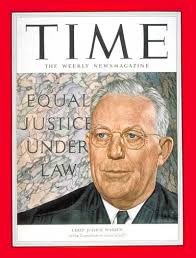
Chief Justice Warren

“The fundamental principle of representative government in this country is one of equal representation for equal numbers of people, without regard to race, sex, economic status, or place of residence within a State,” Chief Justice Earl Warren wrote in Reynolds v. Sims in 1964. “Legislators represent people, not trees or acres.” In tandem with the Voting Rights Act, the “one person, one vote” cases led to the “greatest peace-time change in representation in the history of the United States”, wrote Ansolabehere and Snyder. Of all his landmark rulings, Warren considered this democratic transformation his most important achievement on the Court.

2020 Census Trump Corruption

The release of the the census count in August 2021 showed what the Trump administration had been afraid of.
The white share of the country had fallen to 57.8 percent, the lowest in US history, with the white population declining for the first time on record since 1790. The country was more diverse than ever before: of the 23 million new residents counted over the past decade, all the growth had come from people who identified as Hispanic, Asian, Black or more than one race.
Georgia was on the verge of becoming a majority-minority state years earlier than expected, and whites had become the minority in six new metropolitan areas: Atlanta, Austin, Dallas-Fort Worth, New Orleans, Orlando and Sacramento.
Yet seven months later, when the bureau released a deeper analysis of the count, it became clear that Trump’s efforts to sabotage the census had at least partially succeeded.
The 2020 census had failed to count 18.8 million people–more than twice the size of New York City—the largest under count in three decades. Blacks, Latinos, and Native Americans, were all missed at higher rates than the 2010 census, while white residents were over counted at double the rate. The repeated attempt to obtain citizenship information had indeed skewed the final count: the Latino under count tripled in 2020 from 2010, depriving these communities of critical economic and political resources for the next decade.

Constitution Difficult to Amend – 50 years of failed attempts.

“It is clear,” President Franklin Roosevelt said in 1937, “That any determined minority group in the nation could, without great difficulty, block ratification by one means or another in at least thirteen states for a long period of time.” That was even more true in the present day, as the gap between large and small states widened and organized interest groups had more power than ever to sway minority forces.
In Congress, thirty-four senators from seventeen smallest states—representing as little as 7 percent of the nation’s population—could defeat a Constitutional amendment, while the smallest thirteen states—representing just 4 percent of the US population—could do the same.
By comparison to other countries and state constitutions, the founders made the federal Constitution much harder to amend. After the passage of the Bill of Rights in 1791, the Constitution has been altered only seventeen times in 230-plus years, mostly during periods of great upheaval, such as the 1860s, the Progressive Era, and the 1960s. Far from preserving key democratic institutions, this incapacity to change has destabilized them, trapping the founding document in an antiquated past and leading to a growing divide between elected leaders and the shifting demographics of the country. Public opinion polls show that huge majorities believe that abortion rights should be codified, gun regulation should be tightened, campaign spending limited, and the right to vote enshrined as a fundamental protection. But it is impossible to imagine any of these efforts, however popular, resulting in a successful Constitutional amendment any time soon.
The Michigan constitution, on the other hand, had been rewritten four times through state constitutional conventions since its drafting in 1835, most recently in 1963. That constitution reflected the values of civil rights movement, including protections against racial discrimination and safeguarding citizens’ civil and political rights.

Senate Rules and the refusal to eliminate or modify the Filibuster (Manchin and Sinema)

Filibustered!: How to Fix the Broken Senate and Save America, 2024 Sen Jeff Merkley and Mike Zamore
A detailed history of the Senate filibuster and the (failed) attempts of Sen Merkley to fix the broken Senate rules.


Senator Warnock
Warnock’s frustration boiled over a week later. He had been told for nearly a year that it was impossible to change the Senate’s rules to pass voting rights legislation, but on Dec 14 Republicans allowed Democrats to pass a bill to raise the country’s debit limit on simple majority vote to avoid an economic crisis. It was “a point of moral dissonance for me,” Warnock said on the Senate Floor, “to change the Senate rules only for the benefit of the economy when the warning lights on our democracy are flashing at the same time.” If Democrats could act alone to raise the debt ceiling, he argued, they could do the same for voting rights legislation. “How do we in good conscience justify doing one and not the other?”

Pentagon Militarizes Climate Change

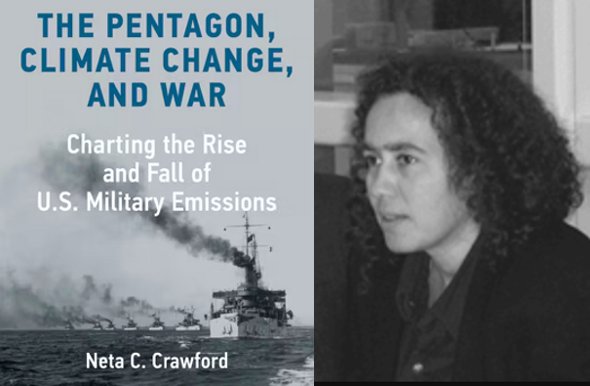
The Pentagon, Climate Change, and War; Charting the Rise and Fall of U.S. Military Emissions, Neta C. Crawford, 2023

For most of the last 250 years humans have carried on with making “progress”–industrialization in the service of the good life—assuming that fossil fuels were an essential ingredient in shaping the world we were certain would be better than the one we were leaving behind. Our grand strategy for security took for granted that we would need fossil fuel for industry and fossil fuel for war. Only in the last fify years or so has it become clear that burning all that fuel and at the same time destroying the forests and the wetlands that take up the carbon released by the fire, is not just leaving the past behind, but destroying the possibility of preserving what is increasingly– in essential life giving respects—understood as a better world.

In sum, the economy, foreign policy beliefs, and military doctrine institutionalized greater demand for fossil fuels. The deep cycle of oil demand, consumption, militarization, and conflict begins with demand for oil and increasing consumption. Then, when U.S. policy makers feel anxious about guaranteeing oil supplies in the face of dependency, or are concerned about the price of oil, they back allies in the Persian Gulf and greater Middle East, as occurred in 1946 and 1949, in 1957. in 1973, in 1980 and 1990. The United States played favorites within the states that had large oil reserves, even if some of those government leaders were autocratic, such as the Shah of Iran, Saddam Hussein, and the leaders of Saudi Arabia.
Yet, the risk of supporting authoritarian regimes is that those regimes are increasingly unstable as the citizens who demand more say in their government push back against authoritarian kings, emirs, and shahs. When challenges to the undemocratic, autocratic or kleptocratic rulers within states with large oil supplies occurred, or there were external challenges, the United States sometimes backed the leaders or system that is thought could bring stability. Thus with the Eisenhower Doctrine, the United States backed Saudi Arabia’s King Saud and Crown prince Faisal as a way to balance against Egyptian leader Gamal Abdel Nasser. At times, as in the case of backing the Shah of Iran in the 1970s and Saddam Hussein in Iraq in the 1980s, these alliances backfired…This in turn increases the sense among U.S. Elites that the Middle East is a volatile region that needs U.S. Intervention to remain stable.

The military has understood the science and the consequences of global warming quite well for decades. They paid for much of that research. National security strategists have sounded muted alarms, the Pentagon has adapted some of their equipment and operations, and experts have imagined scenarios of increasingly dire complex emergencies and catastrophes and climate-caused wars.
Pentagon leaders have been farsighted and tactically flexible. Some of the smartest, best-trained and most determined people on the planet, given the resources of the richest nation on earth, the people at the Pentagon are trying to make things better…They have developed better batteries, put up solar arrays at bases, and even thought about moving some bases.


Camp Lejeune Hurricane Destruction 2018

Camp Lejeune (North Carolina) was hit by Hurricane Florence in September 2018 and suffered $3.6 billion worth of damages. In October 2018 , Michael, a category 5 hurricane devastated much of Tyndall Air Force Base in Florida, including F-22 aircraft, damaged beyond repair or destroying hundreds of buildings…Estimated to cost $4.9 billion to repair and reconstruct the base, the rebuilding was expected to last as long as five to seven years.

TYNDALL AIR FORCE BASE, Florida — Hangers once used to keep aircraft out of the elements now lie scattered across the flight line following Hurricane Michael on October 10, 2018. Hurricane Michael is the third largest hurricane to make landfall in the United States, reaching peak winds of 155 miles per hour.

Tyndall Hurricane 2018

And yet at the same time, the Pentagon has been strategically inflexible and blind…For the most part, the armed forces, and our political leaders, have not put away the tools and habits of mind that got us here in the first place. Our grand strategy for national security has not fundamentally changed. In some ways it can’t, because it is premised on the anticipation and fear of war—the idea that for us to be safe, we have to be prepared to meet every threat anywhere at any time with overwhelming force. The national security strategy is also premised on the idea that force works, that the threat of coercion and the actuality of destruction can get us what we want. So once we believe those things—that war is possible and may be imminent, that we must have a capacity to make war that far exceeds our enemy’s abilities, and that coercion and destruction are effective—it seems that the only way to deal with the threat of climate change-caused war is to prepare for more war. Of course, in preparing for more war, governments give the armed forces everything they need: money, weapons, people, bases, and fossil fuels. We defend and protect the oil we think we need to defend ourselves…At the same time that we are making our weapons more energy efficient and the installations more resilient, we scarcely question whether war is inevitable or in fact made more likely by our bases and our burning fuel to be the most powerful nation on earth…The military is inadvertently or perhaps deliberately militarizing climate change.

Billionaire libertarians, Empirical free Economics and Ideologically driven Law attempt to destroy Democracy

Democracy in Chains; The Deep History of the Radical Right’s Stealth Plan for America, Nancy,MacLean, 2017

Started immediately after the end of WWII with the founding of the “think tank” the Mont Pelerin Society in Switzerland in 1947 and the influence of the Austrian school of economics via Ludwig von Mises and Friedrich Hayek on the economics department at the University of Chicago, a radical right movement that is best known as “neoliberalism” rose in America. Neoliberalism seeks to privatize all government run programs to reduce the state’s influence on capitalism by eliminating price controls, deregulating capital markets, and lowering trade barriers.


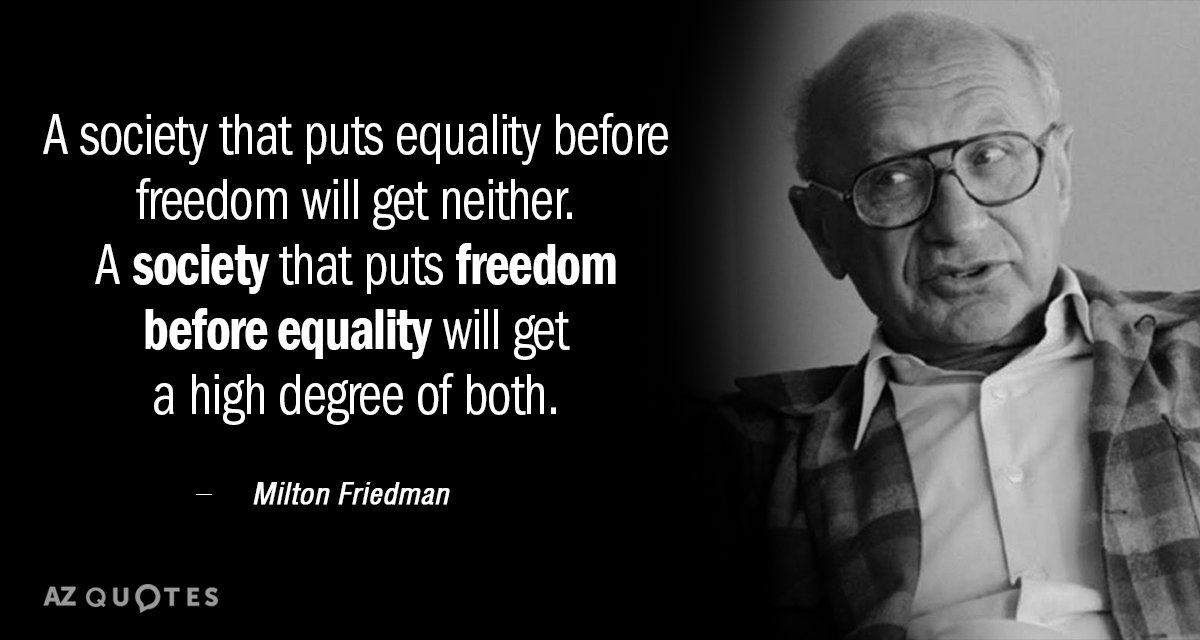
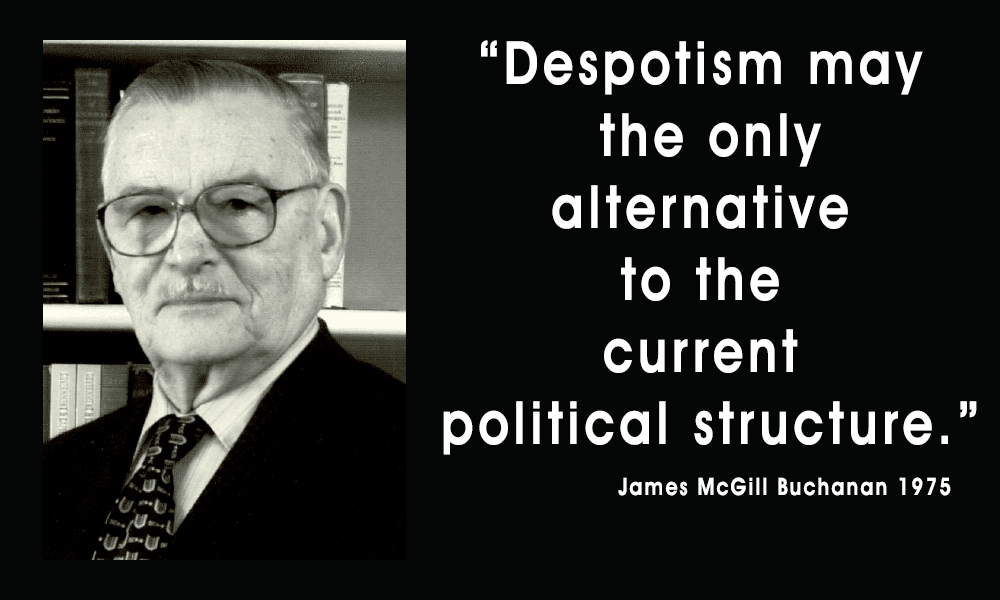
The most influential economists of this movement are the well known Milton Friedman and the little known James Buchanan both Chicago school of Economics trained and both of whom won Nobel prizes for their work. To best appreciate the dangers to democracy of their fact free, empirical free ideologies one need only look at the experience of Chile after the CIA assisted overthrow of the democratically elected government in 1973, the death of President Allende and the long disastrous Pinochet dictatorship. Friedman advised the coup government on the privatization of public government programs including the national retirement program. Friedman’s reputation was badly tarnished by these efforts. Buchanan’s influence was most felt in the creation of a new democracy free constitution for Chile which has yet to be replaced. Buchanan’s reputation was largely unaffected by his work in Chile.

“…for Buchanan, the end justified the means. Chile emerged with a set of rules closer to his ideal than any in existence, Built to repel future popular pressure for change. It was “a virtually unamendable charter,” in that co constitutional amendment could be added without endorsement by super majorities in two successive sessions of the National Congress, a body radically skewed by the over representation of the wealthy, the military, and the less popular political parties associated with them. Buchanan had long called for binding rules to protect economic liberty and constrain majority power, and Chile’s 1980 Constitution of Liberty guaranteed these as never before.

From its founding, some in the the US have been obsessed with protecting the rights of minorities – slave owners til the Civil War and the 19th Century robber barons thereafter. Central to all these efforts is the advocacy of states rights. The confederation of states failed because the central government was too weak. In negotiating the new Constitution, Madison fought hard with slave owning southerners. The result is the current division of powers between the executive, the legislative, and the judiciary. The senate was created with 2 senators per state serving 6 year terms. This equality of all states regardless of population was an attempt to protect the smaller southern states from the political influence of the larger. Slave owners also negotiated that the millions of slaves should have 3/5 vote each (to be exercised by the owners). Then whenever civil rights issues came before the senate, the filibuster was invented and built into the system to assure that a minority of senators could stop any legislation. Not satisfied, the minority continues effort to disenfranchise voters to protect their power.

<> <> Harry Flood Byrd Sr. <>John C Calhoun

Maclean spends some time recounting the history and influence of slavery defender John C. Calhoun, 1782-1850, who can justifiable be considered the father of the radical right in America. Calhoun forged the filibuster as a senate tool in 1841. The supreme court ruled in Brown v. Board of Education in 1954 that all schools must be racially integrated. Senator Harry Flood Byrd of Virginia who politically ran Virginia was determined that Virginia’s schools would never be integrated. To get around the Federal ruling. Byrd offered a plan that all public schools in Virginia would be sold to private owners who would continue to operate then as segregated schools and that the state would offer vouchers to parents to pay for the new private schools. When parents, business owners, and other Virginia residents realized the potential impact of this plan on Virginia’s future they rose up to defeat the plan. Byrd reign as power broker for Virginia ended with this debacle. Buchanan arrived to head the economics department of the U of V in 1956, while this battle was ongoing. Buchanan favored the failed private school plan.

Enter billionaire Charles Koch:

The sense of intellectual and even ethical superiority to others may help explain why Charles Koch bypassed Milton Friedman to make common cause with the more uncompromising James Buchanan. Koch referred to Friedman and the rest of the post-Hayek Chicago school of economics he led, as well as to Alan Greenspan, as “sellouts to the system”. Why? Because they sought to “make government work more efficiently when the true libertarian should be tearing it out at the root.” They actually tried to help government deliver better results, which could only prolong the disease. Koch believed that only in its “radical, pure form,” without compromise, would the ideas “appeal to the brightest, most enthusiastic, most capable people.”

The Koch focus introduced heavily deceptive practices such as the crab walk to confuse, dividing constituencies to target groups that might be more open to deceptive tactics like pretending changes are needed to preserve a program when the goal is actually to eliminate the program altogether – social security, medicare, etc. Lying is now acceptable behavior if it advances your goals.

We just need to look at Citizen’s United – corporate spending on elections is free speech, Voting Rights Act of 1965 – Section 4 is unconstitutional – Section 5 requires re authorization, repeal of Roe V Wade – States rules apply to see that the focus on appointing ideological judges to federal courts is paying big dividends to the radical right. One former judge says recent pro corporate decisions amounts to a “privatization of the Justice System“.

Defund the Pentagon – From War to Defense to National Security to Irrelevance

After the Apocalypse; America’s Role in a World Transformed, Andrew Bacevich, 2021

Created near the end of the Vietnam War, the All-Volunteer Force has since entrenched itself as a permanent feature of American life…it belongs to the category of arrangements that citizens and elected officials alike tacitly treat as sacrosanct. Yet as the wars in Afghanistan and Iraq demonstrated, the All-Volunteer Force is out of sync with U.S. global ambitions. Even so, as if enshrined in the Constitution, the post-Vietnam military system remains fixed in place. As a consequence, the problem of too much war and too few soldiers eludes serious scrutiny. Expectations of technology bridging that gap provide an excuse to avoid asking the fundamental question: Does the United States possess the military wherewithal to oblige adversaries to endorse its claim of being history’s indispensable nation? And if the answer is no. as the post 9/11 wars in Afghanistan and Iraq suggest, wouldn’t it make sense for Washington to temper its ambitions accordingly?

As national security supplanted national defense, protecting the American people was demoted to the status of a lessor concern. When it came to designing and deploying U.S. forces, other priorities took precedence. The perceived imperatives of national security during the Cold War provided a rational for raising up immense nuclear forces, permanently garrisoning Western Europe with large troop contingents, and fighting costly wars in Korea and Vietnam. Mere national defense would never have sufficed to justify the many billions expended on each of these undertakings. Each was sold as contribution to a broader purpose.

“Forward Presence” and “Crisis Response” comprised the cornerstones of this new (post Cold War) strategy. Keeping U.S. forces “deployed throughout the world” would demonstrate “commitment, lend credibility to our alliances, enhance regional stability, and provide a crisis response capability.” Forward presence and crisis response went hand in glove. Taken together, they would enable the United States to deal with any problems that might crop up anywhere on the planet, keeping Americans safe and enabling them to enjoy freedom. While the disappearance of the Soviet Empire made it difficult to identify those threats with any specificity, the NMS (National Military Strategy) pointed to “the intensification of intractable conflicts between historic enemies” as a concern, along with nuclear proliferation, drug trafficking, and the “continuing struggle to improve the human conditions throughout the world”. “The real threat we now face is the threat of the unknown, the uncertain.” In sum, as it ventured into that uncertain future, the U.S. military would surely have plenty of work to do.
The 1992 NMS did not mention the possibility of nature itself posing a problem. In the Pentagon, Dr. Hansen’s warning went unheeded, as it did again in the 1995 NMS, that document made passing mention of disease, but without proposing a plan of action. Climate per se went unmentioned, as it would in the subsequent editions of the National Military Strategy published in 1997, 2004, and 2015.

On occasion,the United States has found itself face-to-face with threats that did not conform to the profile of Pentagon-preferred adversaries. On each such occasion, with the American people gripped with fear, the existing national security paradigm was found wanting.
The first occasion was the Cuban Missile Crisis, the second 9/11, and the third the coronavirus pandemic of 2020. Seemingly unrelated, these three episodes lay bare the inadequacies of the prevailing national security paradigm.


Coronavirus Puts the USS Theodore Roosevelt out of action

It remained for COVID-19 once and for all to truly drive home the shortcomings of the existing national security paradigm. In 2020, pursuant to that paradigm, the United States was spending approximately a trillion dollars per year. As the coronavirus pandemic ravaged the nation, that lavish expenditure of resources was all but irrelevant to the problem at hand.