The Value of Everything: Making and Taking in the Global Economy; Mariana Mazzucato, 2018

Scarcely a day goes by without politicians, the media or experts opining on the state of a country’s GDP — the measure used to calculate the production of goods and services in an economy: the ‘wealth of nations’. Success or failure — real or imagined — in managing GDP can make or break governments and careers. If GDP falls for more than two consecutive quarters, there are cries of ‘recession’. If the fall is sustained over a year, it’s a depression. But where does this measure come from?
So GDP can be looked at through production (all goods and Services produced), income (all income generated), or demand (all goods and services consumed, including those in inventory).
So which industries add value? Following marginalist thinking, the national accounts today include in GDP all goods and services that fetch a price in the market. This is known as the ‘comprehensive boundary’…according to marginalism the only economic sectors outside the production boundary are government — which depend on taxes paid by the productive sectors — and most recipients of welfare, which is financed from taxation…(GDP) throws up some real oddities which call into question the rigour of the national accounting system. These oddities include how government services are valued; how investments in future capacity, such as R&D, are measured; how jobs earning high incomes, as in the financial sector , are treated; and how important services with no price (such as care) or no legal price (such as the black market) are dealt with.
During the Second World War the government bought an astonishing half of national output…government value added has hovered between 11 and 15 percent of GDP for the post war period. As a comparison, the finance industry adds 4 percent of GDP in the US and 8 percent in the UK. It (Figure 8 Chart pg 86) shows that government expenditure has been consistently higher than government value added, at between 20 and 25 percent GDP…Given these lower prices, the usual way of calculating value added for a business doesn’t work with government activities…However it makes no sense to say that teachers, nurses, policewomen, firefighters and so on destroy value in the economy. Clearly a different measure is needed.
The International System of National Accounts (SNA) tweaks with inclusions (in-house business R&D, home ownership,banking intermediation fees), exclusions (housework).
The redrawing of the production boundary to include finance was in part a response to banks’ lobbying, which was itself a feature of their market power and influence. By showing finance as a large and growing source of national output, it threw out the logic of previous financial regulation. Where before, such regulation had been seen as a safeguard against reckless and rent-seeking behavior, it was now portrayed as a shackle suppressing a valuable trade in money and risk.
That banks create money is still a highly contested notion. It was politically unmentionable in the 1980s America and Europe, where economic policy was predicated on a ‘monetarism’ in which governments precisely controlled the supply of money, whose growth determined inflation…If banks’ gambles ever endangered their solvency, the government would have to rescue them with public money. This implicit guarantee of a public bailout lowered the biggest players’ cost of raising capital, which further cemented their market power.
For centuries, income earned by charging interest had been viewed as a subtraction from productive enterprise rather than a symbol of it. This was both a moral and an economic judgement. As we have seen, the Roman Church banned the charging of interest for most of the Middle Ages, while Enlightenment philosopher such as John Locke, writing in 1692, saw bankers as middlemen, ‘eating’ up a share of the gains of trade rather than creating any gains themselves. Even before the formal study of economics began in the late eighteenth century, many intellectuals and writers had concluded that banks did not produce value and often did not operate in the public interest at all.
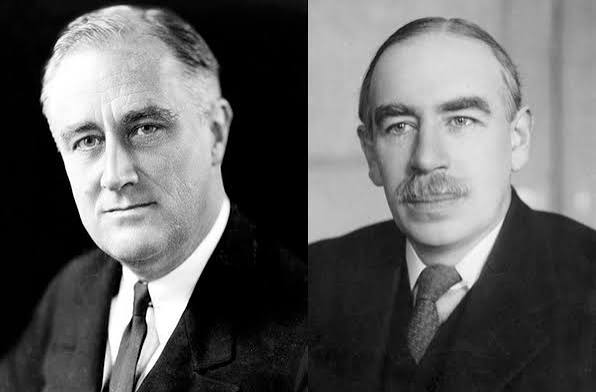
Writing in the 1930s, one of the most influential critics of finance, John Maynard Keynes, was upfront about what financial speculation entailed. In his lifetime he observed how financial markets and public attitudes to financial trading were changing, becoming ends in themselves rather than facilitators of growth in the real economy. When speculation spread from a rich leisure class to the wider population it drove the stock market bubble that ushered in the Wall Street Crash and 1930s depression; but as public spending helped restore people’s jobs and incomes, those with money again began to gamble it on stocks and shares. Wall Street was, he said, ‘regarded as an institution of which the proper social purpose is to direct new investment into the most profitable channels in terms of future yield.’ By this measure, Keynes commented, Wall Street could not ‘be claimed as one of the outstanding triumphs of laissez-faire capitalism — which is not surprising, if I am right in thinking that the best brains of Wall Street have been in fact directed towards a different object.
That ‘different object’, in Keynes’s view, was not a form of production, but ‘betting‘ — and the profits of the bookmaker were ‘a mere transfer’, a transfer which should be limited lest individuals ruin themselves and harm others in the process…Any reference to skill — or productiveness on the part of speculators — were a sign that somebody was trying to trick somebody else.
The great bulk of these banks’ (Goldman Sachs J.P. Morgan) profits comes from activities such as underwriting the initial public offerings (IPOs) of corporate bonds and shares, financing mergers and acquisitions, writing futures and options contracts that take over risk from non-financial businesses, and trading in these and other financial instruments for capital gains…In the UK the ‘customer funding gap’ between loans advanced and deposits from households (traditionally viewed as the most stable form of bank financing) widened from zero in 2001 to more than £900 billion ($1,300 billion) in 2008, before the crisis cut it to less than £300 billion in 2011.
By 2016, total cumulative household borrowing in the UK had reached £1.5 trillion — about 83 percent of national output, and equivalent to nearly £30,000 for each adult in the land – well above average earnings.
Sustaining economic growth through household borrowing has been aptly defined as ‘privatized Keynesianism’, because ‘instead of governments taking on debt to stimulate the economy, individuals did so’. But it was an unsustainable solution to the lack of wage-led demand growth. Aided and abetted by government policy, central banks, instead of being the lenders of last resort, became the lenders of first resort to the financial sector, cutting interest rates to avert financial crisis. But this policy drove up the price of assets such as shares and houses and further encouraged households to borrow…that left many ever more impoverished and indebted.
“Rather than the financial conservatism that pension funds, mutual funds and insurance companies were supposed to bring, money manager capitalism has ushered in a new era of pervasive casino capitalism.” Hyman Minsky, 1992
Between 2003 and 2012, 449 companies listed in the S&P 500 index deployed $2.4 trillion in buying back their own shares, mostly through open market purchases. That sum constituted 54 percent of their collective earnings. Add in dividends, which took out a further 37 percent, and only 9 percent of profits were available for capital investment. Over the same period, the ten biggest re-purchasers in the US shelled out a staggering $859 billion on share buy backs. equivalent to 68 percent of their combined net income…seven of those companies committed more than 100 percent of their net income to buy backs and dividends.
If the influence of PE (private equity) on the productive economy seems exaggerated, consider this; Blackstone, one the largest PE companies, has a portfolio of over seventy-seven companies, which together generate over $64 billion in combined annual revenues and employ more than 514,000 people globally.
The cases of care homes and water in Britain are not a blanket argument against PE or financialization. But they do illustrate how financial engineering of socially essential services can change the nature of an industry.
Tax policy could be changed to encourage truly dynamic links between the different participants in innovation, for example by bringing the rewards and tax breaks that venture capitalists enjoy more into line with the risks they actually take compared with other stakeholders. Understanding that the state’s role is to do what the business sector is not willing to do — engage in high-risk early-stage development and fundamental research — also means that particular policies such as R&D tax credits must be devise so that the subsidy encourages investment in needed innovations over and above random potentially profitable ones.
But achieving innovation-led growth and innovation of a particular type (e.g. green innovation) will require not leveling but tilting the playing field. And furthermore, this requires not only a different policy mindset but also a different organizational structure: the ability to explore, experiment and strategically deliberate inside the public sector.
“The important thing for Government is not to do things which individuals are doing already, and to do them a little better or a little worse; but to do those things which at present are not done at all.” John M. Keynes, The End of Laissez-Faire (1926)
Throughout the history of economic thought, government has long been seen as necessary but unproductive, a spender and regulator, rather than a value creator…Silicon Valley have been particularly vociferous in their self aggrandized claims about wealth creation, using these claims to lobby for favorable treatment that has in turn enabled them to reap rewards disproportionate to the value they actually created. By the same token, others have widely but mistakenly been regarded as ‘unproductive’.
But government is totally missing from what in microeconomics is known as the ‘production function’: the relationship between the quantity of outputs of a good and the quantity of inputs needed to make it, or, to put it simply, the analysis of how firms behave. And thus it is assumed that it is only in firms that value is created. Government is left outside the production boundary.
Magic Numbers
The current debate about austerity has avoided any mention of public value. Neither budget doves nor budget hawks have seriously questioned the theory of value that underpins much ‘common-sense’ understanding of market processes. A major reason for this lack of curiosity is that both camps seem to have been in thrall to the so called ‘magic’ numbers which have framed the debate.
When, in 1992, European integration came into being through the Maastricht Treaty, there were various obligations that the signatory countries signed up to, one of which was to keep spending in check. Total public debt was to be limited to 60 percent of GDP, and annual deficits, (debt is the accumulation of deficits) not larger than 3 percent of GDP. These numbers purport to set objective limits to government indebtedness. But where do they come from. You might imagine they are arrived at through some kind of scientific process — but if so, you’d be wrong. These numbers are taken out of thin air, supported be neither theory nor practice.
A study published in 2010 by two Harvard economists claimed that when the size of government debt as a proportion of GDP is over 90 percent, economic growth falls. “The results showed that rich countries whose public dept exceeded that percentage (90) experienced a sharp drop in growth rate for the period 1946-2009” Thomas Herndon, a twenty eight year old student ( at U Mass 2013)…couldn’t replicate their (Harvard 2010) results; his calculations showed no steep drop in growth rates when debt was high. Herndon found a simple spreadsheet error.
According to IMF data the US dept/GDP ratio stood at 64 percent in 2007, and 105 percent in 2014. For the UK the equivalent numbers were 44 percent in 2007 and 88 percent in 2014,
In line with the Maastricht criteria, bailouts for countries like Cyprus, Greece, Ireland, and Portugal have been conditional on their cutting spending. If that spending goes above 3 percent of GDP than bailouts are jeopardized. Between 2010 and 2017, Greece receives £260 billion in bailout aid, in exchange for cutting state expenditure. However, since its problems were too structural to be solved by a simple ‘austerity’ measure, the cuts pitched it into a deep recession, turning into full-blown depression. And rather than decreasing Greece’s debt, the lack of growth has caused the debt/GDP ratio to rise to 179 percent. The cure is killing the patient.
However, recent research into the impact of government size on economic growth has found almost unanimously that small government is ‘bad’ if, for example, it cannot even maintain basic infrastructure, rule of law (e.g. funding of police) and the educational needs of the population. Conversely, the same research concludes that bigger government might be ‘bad’ if it is a result of activity that ‘crowds out’ (reduces) the private sector or unduly restricts private-sector activity and interferes too much in people’s lives. But within these rather obvious limits, the ideal size of government is hard to quantify — not least because it depends heavily on what you want government to do and how you value government activity. And here we have a problem; there has been a dearth of thinking by economists — both historically and in recent decades — about the value created by government.
To the humble citizen, however, it might not be so obvious that government does not create value. We have already seen three ways in which it does so; bailing out the banks, investing in infrastructure, education and basic science; and funding radical innovative technologies which are transforming our lives.
The crucial point is that many of these activities involve taking risks and investing — exactly what austerity doesn’t do — and in so doing they create value. But that value is not easily visible, for the simple reason that much of it goes into the pockets of the private sector.
When in 1929 the global economic crisis struck, recovery seemed elusive. The Great Depression shattered the idea of unbounded economic progress because, contrary to the prevailing theoretical consensus, the economy did not recover by itself. (John M.) Keynes explanation for this was a radical departure from the conventional wisdom of the time. Markets, he claimed, are inherently unstable and, in a recession, may remain ‘in a chronic condition of sub-normal activity for a considerable period without any marked tendency, either towards recovery or towards complete collapse’. In these circumstances, he stressed, the role of government is crucial; it is the the ‘spender of last resort’.
Let’s remind ourselves that Keynes was concerned in his General Theory to explain how an economy might find itself in a state of ‘involuntary unemployment’ due to insufficient demand — that is, workers who wanted work would not be able to find it. This, he argued, would produce a low level of GDP, compared to a situation in which the economy would be running at full capacity and full employment. Neoclassical economic theory is ill suited to explain this situation because it assumes that people choose what they prefer, including how much labour they ‘supply’ to the market at a given price (the wage), and that the market makes sure to sort things out so that everyone gets the maximum utility out of it. In such a view, unemployment becomes voluntary.
Keynes disposed of the assumption that supply creates its own demand. He argued instead that producers expectation of demand and consumption determine their investment and consequently the employment and production that follow from it; therefore, low expectations could lead to underemployment. This he called the ‘principle of effective demand’: investment can fall as a result of expectations or bets on the future — and we know, not least from the 2008 financial crisis, that such bets can go horribly wrong.
On the back of this theory, Keynes proposed a new role for government. When the private sector cuts production in times of downbeat expectations about demand, he argued, government could intervene positively, increasing demand through additional spending, which in turn would lead to more positive expectations of future consumption and induce the private sector to invest, with higher GDP as a result.
In Keynes’s macroeconomics, therefore, government creates value in that it allows the economy to produce more goods and services than it would without government involvement. This was a pivotal shift in the way we regard government’s role in the economy. For Keynes, government was in fact essential because it could create value by reviving demand — precisely when demand might be low, as in recessions, or when business confidence is low.
Of course, government would have to borrow to finance this spending, which means bigger government dept in a recessionary economy. But higher debt is a result of a crisis, not its cause. Keynes argued that this increased debt should not overly worry the government. Once the recovery was under way, the need for big deficits would pass and the debt could be paid off.
Keynes’s concept of a deficit-led recovery quickly won over governments. It was applied most intensively at the end of the 1930s to stimulate post-depression growth, and at the beginning of the 1940s as wartime spending. Spreading rapidly after the Second World War, Keynes’s ideas were widely credited with generating the unprecedented prosperity of the three post-war decades.
In the end however, Keynes only went part of the way. He changed our thinking about how government can create value in the bad times, through counter-cyclical policies; but he, and his followers, had much less to say about how it can do so in good times as well.
The new classicals, however, misunderstood how interest rates affect investments. First, interest rates are not a market phenomenon determined by supply and demand. Rather, they are set and controlled by the central bank through monetary policy, and an increase in government expenditure financed by the deficit does not raise the interest rate. Second, lower interest rates do not necessarily lead to more investment, since firms tend to be less sensitive to interest rates and more sensitive to expectation of where future growth opportunities lie. And it is precisely these opportunities that are shaped by active government investment.
But of course vital government investments abound; obvious examples include infrastructure projects like the Federal interstate highway system in the US or motorways in the UK. It makes no sense simply to assume that the return on enormous government investments is zero, when similar investments by the private sector do produce a return. One way of doing this is to assume a market rate of return such as the yield on municipal bonds –the overall return on bonds issued by cities. The crucial point here is that zero government return on investment is a political choice, not a scientific inevitability.
Third, to assume that the value of government output equals the value of input means that government activities do not increase the economy’s productivity in any meaningful way…In 1998, the UK’s Office for National Statistics began to measure public-sector output by deploying different physical indicators, for example the number of people benefiting from public services (in areas such as health, education, and social security) for every £ spent…Austerity aimed to cut back the inputs (government spending) while producing the ‘same’ outputs. It is hardly surprising that this kind of productivity ‘improvement’ does not result in better services — we only have to look at the long NHS waiting times to see this.
Fourth, governments often own productive businesses such as railways, postal services, or energy providers. But by accounting convention, state-owned enterprises that sell products at market prices are counted as private enterprises in the value added of the relevant sector; public railways are part of the transport sector, not the government sector. Even though state-owned corporations earn profits (and in the stats, higher profits mean higher value added), their profits are accounted for in the industrial sector they work for, not the ‘government’ sector…Only government owned entities that don’t sell at market prices are by definition included in the government sector…All of which means that government can only increase its value added with non-market production, thereby obscuring the true importance of government in the economy: value that government businesses do add is not shown in official statistics, nor is the value that education or health generate…It underpins the theory of austerity. And it is a consequence of fables about government told over several centuries.
Although reaching a more efficient provision of healthcare services for a lower cost has always been the stated purpose of outsourcing in the NHS, recent evidence seems to suggest that this might just be the second phase of what Noam Chomsky has called the ‘standard technique of privatization’: ‘defund, make sure things don’t work, people get angry, you hand it over to private capital’.
So the crucial question is not just about accounting for government value but also rewarding it: how should rewards from investment be divided between the public and private sectors.
As Robert Solow showed, most of the gains in productivity of the first half of the twentieth century can be attributed not only to improved education and infrastructure, but also, ,,. to the collective efforts behind some of the most radical technical changes where the public sector has historically taken a lead role — ‘the entrepreneurial state’.
Ostrom shows how the crude state-private divide that dominates current thinking fails to encapsulate the complexity of institutional structures and relationships — from non partisan government regulators to state funded universities and state run research projects — that span the divide. Rather, she emphasizes common pooled resources, and the shaping of systems that take into account collective behavior.
Today, these ways of thinking could significantly benefit many crucial institutions which are neither fully private nor fully public. Universities could proudly promote the pursuit of knowledge, without having to worry about generating immediately profitable patents and spin-off companies. Medical research institutes could expect strong funding, with much less pressure to fight for attention. Think tanks could shake off the taint of lobbying, once they present their work as being supportive of common values. And co-operative, mutual and other not-for-profit enterprises could flourish without having to decide which side of the great private-public divide they are really on.