
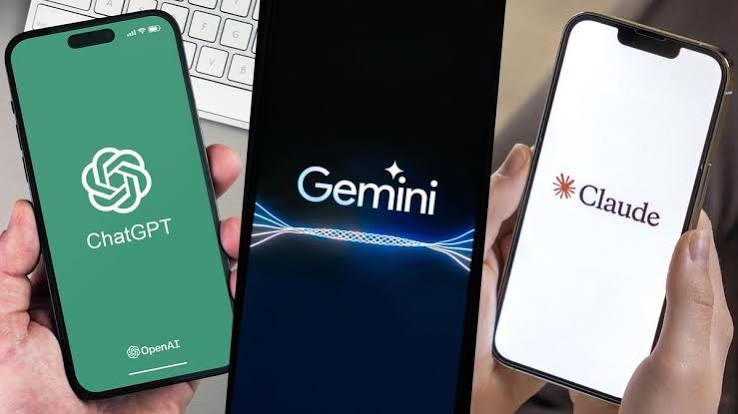
The following are summaries of Google Searches done in AI mode to understand the evolution of hyper-scale data centers, Large Language Models (LLMs), and their relation to Chatbots. and how Googles Search AI mode combines traditional Google search results as inputs to Gemini to improve and focus the results.
Modern cloud data centers do contain Graphics Processing Units (GPUs), particularly those operated by major cloud providers like Amazon Web Services (AWS), Google Cloud (GCP), and Microsoft Azure, as well as specialized cloud and AI infrastructure hosts like OVHcloud.
Key Details About Cloud GPUs
- Workloads: Cloud data centers deploy GPUs to accelerate artificial intelligence (AI) training and inference, large language models (LLMs), machine learning, video rendering, and high-performance computing (HPC).
- Hardware Types: Rather than consumer gaming cards, these facilities use enterprise-grade data center GPUs—such as NVIDIA’s A100, H100, H200, and Blackwell (B100/B200) series, alongside alternatives from AMD and Intel.
- Scale and Density: While not every single server rack in every data center has a GPU, large-scale AI data center clusters house tens of thousands to over 100,000 linked GPUs per facility, requiring specialized high-power racks and liquid cooling.
- 2019–2020 (Infrastructure & Early APIs): Microsoft partnered with NVIDIA in 2020 to build massive cloud supercomputers on Azure specifically for training large AI and transformer models like NVIDIA Megatron. OpenAI also released GPT-3 as a cloud-hosted API via Microsoft Azure in 2020.
-
- 2021–2022 (Native Cloud LLMs): Google and other cloud players integrated proprietary LLMs directly into cloud ecosystems—such as Google’s LaMDA (2021) and PaLM (2022).
- Late 2022–2023 (Mainstream Cloud AI Rollout): Following the public launch of ChatGPT in November 2022, major cloud platforms universally embedded LLMs into enterprise services. This included Microsoft launching Azure OpenAI Service widely and Google rolling out generative AI tools like Duet AI in Google Workspace.
- Hard Disk Drives (HDDs) and Solid-State Drives (SSDs): These are packed tightly into metal frames called server racks.
- Storage Arrays (SANs and NAS): Specialized high-capacity storage networks combine thousands of individual drives so they function as a single, massive pool of memory.
- Backup Media: Many facilities also maintain automated tape libraries or off-site mirrored backups for disaster recovery.
-
- The LLM is the Engine: An LLM is a massive neural network trained to predict the next word or token in a sequence. By itself, a raw LLM is just a predictive text generator—it completes text or answers prompts, but it hasn’t necessarily been shaped to chat politely or follow multi-step instructions.
- The Chatbot is the Interface: A chatbot is the application or user-facing wrapper (like ChatGPT, Claude, or Gemini) that packages the LLM, handles conversation history, formats inputs and outputs, and connects the model to external tools (like web search or calculators).
- Chatting Doesn’t Train in Real-Time:
- A common misconception is that talking to a chatbot trains it on the fly. In reality, deployed LLMs are static files; your chat sessions do not update the core neural network weights in real time unless explicitly saved for offline dataset curation or fine-tuning by developers (and enterprise users or opt-outs block this entirely).
Transforming a raw LLM into a conversational chatbot requires specific phases of training and refinement:- Pre-training (Building the Foundation):
-
- The LLM ingests trillions of tokens from books, websites, and articles to learn general language patterns, grammar, and world knowledge. At this stage, it is not yet a chatbot; it just guesses what word comes next. (stochastic parrot)
-
- Supervised Fine-Tuning (SFT):
-
- To turn a text-completer into a chatbot, developers use supervised fine-tuning with high-quality conversational datasets and prompt-response pairs. This teaches the model the back-and-forth structure of a dialogue rather than just finishing an essay or document.
-
- Alignment and Feedback (RLHF / Constitutional AI):
-
- Chatbots must be helpful, safe, and honest. During Reinforcement Learning from Human Feedback (RLHF), human reviewers (or AI judges) rank different chatbot responses. The model is then fine-tuned so it prefers safe, helpful, and polite answers over toxic, confused, or unhelpful ones.
Google’s AI Search mode interacts with a large language model (LLM)—specifically a custom, fine-tuned version of Google’s Gemini (such as Gemini 3 or Gemini 3.5 Flash)—by acting as an intelligent reasoning and synthesis layer on top of Google’s massive real-time index and traditional search ranking systems.How the Interaction Works
- Query Interpretation: When you type a long, conversational, or multi-part prompt into AI Mode, the Gemini LLM first analyzes your intent beyond simple keywords to figure out what you are actually trying to accomplish.
- Query Fan-Out: For complex questions, the system uses a “query fan-out” technique. The LLM automatically splits your main question into multiple smaller, related sub-queries and issues them concurrently across different data sources (the live web, Google’s Knowledge Graph, Google Maps, Shopping data, YouTube, etc.).
- Retrieval-Augmented Generation (RAG): Instead of relying purely on its internal training memory (which can become outdated or hallucinate), AI Mode pulls the most relevant text chunks, data, and web pages from Google’s search index. These retrieved real-time sources are fed directly into the Gemini LLM’s context window as grounded facts.
- Synthesis & Formatting: Gemini reads the retrieved live information and synthesizes it into a coherent, conversational, and structured answer. It then attaches clickable source links so you can verify the information or explore further.
- Multimodal & Interactive Loop: Because it is tightly coupled with Gemini, AI Mode allows you to upload images or files for direct analysis, run continuous back-and-forth follow-up questions, and connect personal data (such as Gmail or Google Photos) on an opt-in basis.
- Chatbots must be helpful, safe, and honest. During Reinforcement Learning from Human Feedback (RLHF), human reviewers (or AI judges) rank different chatbot responses. The model is then fine-tuned so it prefers safe, helpful, and polite answers over toxic, confused, or unhelpful ones.
-