
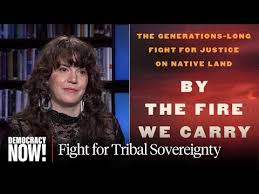
By the Fire We Carry; The Generations-Long Fight For Justice on Native Land, Rebecca Nagle,2024
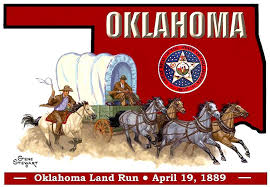
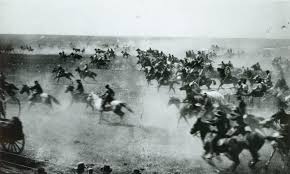
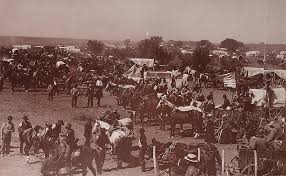
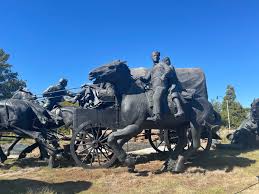
Oklahoma Land Runs 1883 – 1889
We know we belong to the land
And the land we belong to is grand!
And when we say, yeeow-a-yip-i-o-ee ay!
We’re only sayin’ You’re doin’ fine, Oklahoma! Oklahoma, okay
Songwriters: Oscar Hammerstein Ii / Richard Rodgers

Neil Gorsuch
The McGirt (McGirt v Oklahoma 07/09/2020) decision was historic, but it was not groundbreaking. In his opinion, Justice Gorsuch did not create new rules for lower courts to determine whether or not a reservation still exists. He merely followed the existing rules set by earlier decisions. Yet that outcome was still radical. Throughout US history, when laws protecting Indigenous nations are inconvenient for states or a broad base of non-Native constituents, the US government does not follow the law. But this time it did.
The McGirt Supreme Court decision resulted in the largest restoration of Indigenous land in US history. After it was denied for over a century, the court ruled Muscogee Nation still had a reservation. Subsequently, eight other reservations, covering nearly half the land in Oklahoma, were upheld. Including my own (Cherokee).
The historic status of the McGirt decision is ironic when you understand what happened legally. The Supreme Court didn’t overturn anything, strike down anything, or change their own precedent. All the court did was follow the law. Yet still, that was radical.
When it comes to tribal sovereignty, the US government is spineless. Most often when states or non-Native people want something that belongs to a tribe – whether it’s gold, oil, land, or power – they get it. Even when the law clearly protects the tribe. Sometimes our government simply looked the other way. Other times settlers wanted so much that our government remade the law to fit their demands. Greed –not justice – has governed more of our history than we are willing to admit. Oklahoma’s greed in McGirt was refusing to give up an ounce of power – even when exercising that power was illegal.
To avoid calling it greed, lies are told. The land belonged to Georgia. Illegal squatters in Indian Territory deserved property rights. There were never reservations in Oklahoma. McGirt caused chaos and crime. Often, the lies are about indigenous peoples ourselves; we are backward, corrupt, lawless, unworthy. The most persistent lie by far is that policies which obviously harm us are somehow for our benefit.
Indigenous nations have been governing ourselves since before the country was founded – since before it was even an idea. As the United States was built around us, we shaped it. Since the founding, tribal leaders, Indigenous intellectuals, Native diplomats, warriors, lawyers, and advocates carved out a space in American law through which our inherent sovereignty was recognized. Over the generations, we continue to leverage the legal foothold our ancestors created.
Federal Indian law today is not all good or all bad – rather it is the totality of our history. Embedded in American law are the victories and defeats of our ancestors, and the unimaginable compromises they were forced to make The legal terrain with which we are left is tricky: the protections Indigenous nations have under US law are not enough; yet we have to constantly fight for those protections to remain and be followed.
We demand the US government fulfill its legal obligations to us, knowing it often will not. Native nations don’t have a constitutional amendment or Supreme Court decision that ended our legal subordination. What we are left with is a government that still contains both impulses: The impulse to uphold the inherent and legally recognized sovereignty of Indigenous nations. And the impulse to railroad tribes because it can.
The lesson of McGirt is not that when the law is on our side and we fight hard, justice prevails. The lesson is that although justice for Indigenous nations is rare, in our democracy, it is possible.
The Founding Fathers wanted a democracy that, unlike the king of England, would derive its power from “the consent of the governed”. But they also wanted an empire. And so they built both: a democracy that at its center gave every citizen a voice and a vote, and an empire that, as it constantly expanded, controlled the lives and the lands of people who had no say. While over the centuries who was included in that center of democracy changed, the edge of empire never went away. From Indigenous nations, to Guam and Puerto Rico, to migrants detained at our border, there have always been people who lived under the raw power of our government but without the liberties and privileges of our Constitution. Our inheritance as American citizens is a democracy that is often wildly antidemocratic – a government that rules by both consent and by conquest.