Becoming a Distinguished Black Female Law Professor; a Memoir

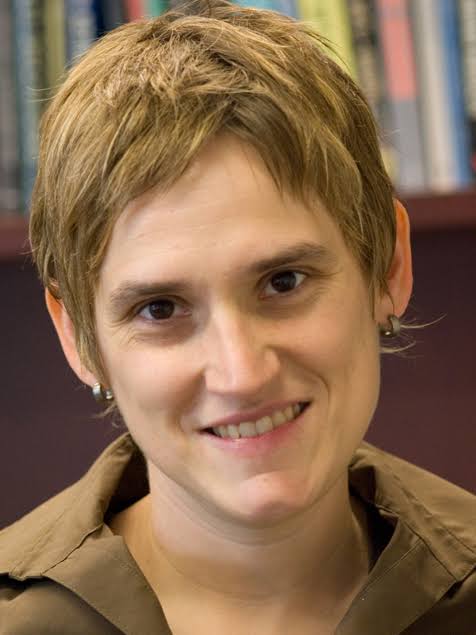
Backtalker; An American Memoir; Kimberle Williams Crenshaw, 2026

Overall, I’d say that in the 1960s most folks shared the belief that prejudice did play a significant role in racist conditions, and that there was hope that well intentioned people could actively diminish prejudice…Folks debated whether it was more important to just cut to the chase by creating the world that would have existed if anti-Blackness had not been a core set of ideas for so long in American History.

In fact, I was the one who was surprised when, on one occasion, the school (Heritage Christian, Canton Ohio) had the bright idea to reverse the bus route so that everyone could see where everyone lived. When we approached the homes of our rural neighbors, I was shocked to see ramshackle houses with abandoned vehicles strewn about, windows covered with plastic, and a tarp thrown over a partially covered roof. But this was nothing compared to what shocked my (white) fellow bus mates. They seemed far more curious about how my family had come to live in our home… (Her brother Mantel); “Oh, right–they think Mom is a live-in maid. So like, we couldn’t actually live here because Black people don’t live in anything white people would want! (A number of white families had moved out of the neighborhood when Kim’s family moved in.)

The Cherry-Market corridor was the center of Black Canton, the setting for virtually every event or story about us that was told by us–in living rooms, beauty parlors, barbershops, church pews, bars, social clubs–you name it.

Yet despite its centrality for us, despite the hopes and hard work and pride of ownership that so many had poured into their little piece of the American dream, nothing that flowed through the arteries of Black Canton prevented it from being slated for physical and psychological destruction. It was a destruction that began years before the bulldozers reduced it all to rubble. The process of draining this community of its blood before taking its life was done under a truly Orwellian misnomer: “urban renewal”…In the end, this long-term decapitalization-“misappropriation” would be more accurate–took such a toll on my mother’s real estate holdings that they were worth less in the 1970s than they had been when my grandfather purchased them in the 1930s.

It’s been estimated that between 1949 and 1973, 2,500 neighborhoods in 993 American cities were destroyed, dispossessing nearly one million people.

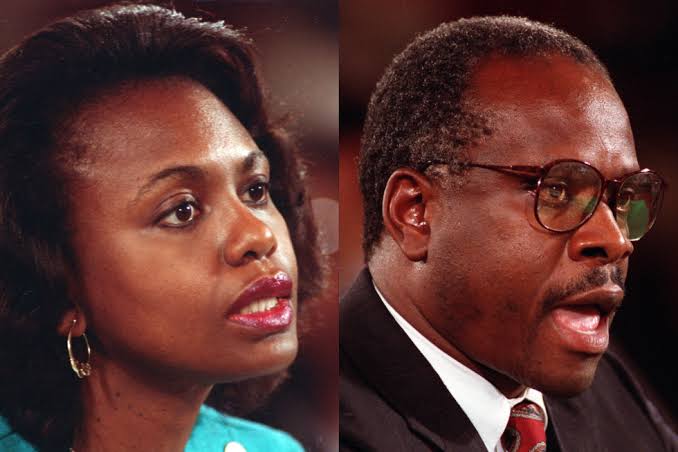
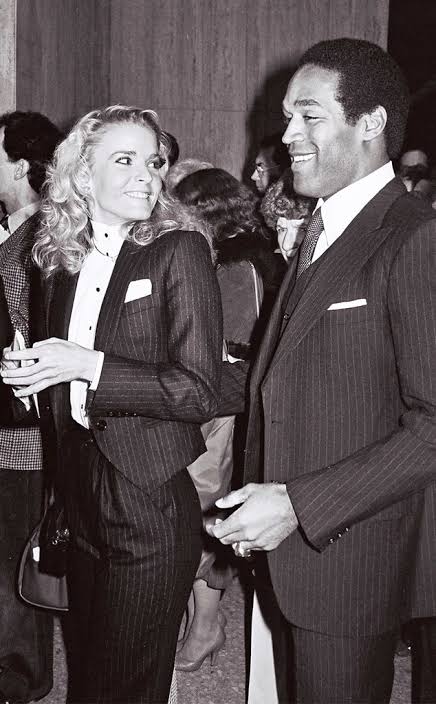
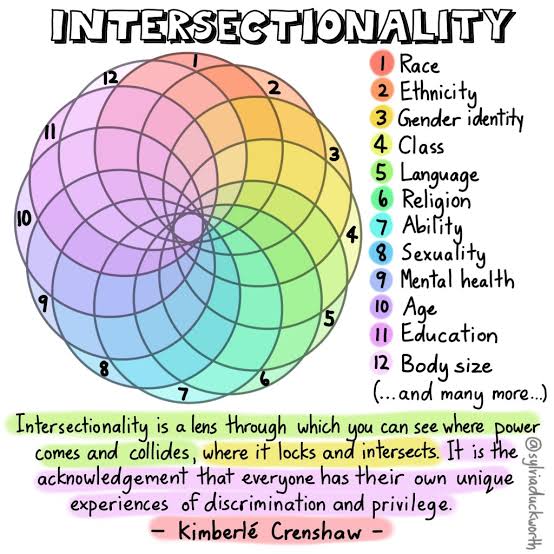
Two events, the Clarence Thomas Anita Hill hearings in 1991, and the O.J Simpson murder trial in 1994 where Simpson was acquitted led to Kim’s pioneering work on intersectionality.

Democratic Senators Who Voted “Yes” for Thomas who was confirmed 52-48: David Boren (Oklahoma) John Breaux (Louisiana) Dennis DeConcini (Arizona) Alan Dixon (Illinois) J. James Exon (Nebraska) Wyche Fowler (Georgia) Ernest Hollings (South Carolina) J. Bennett Johnston (Louisiana) Sam Nunn (Georgia) Charles Robb (Virginia)

I sought to articulate a both/and position; it was about race and it was about gender. Especially after the 1991 Thomas-Hill debacle; this was not  an unfamiliar position for me. But something new was emerging that hadn’t fully taken shape in that earlier spectacle. Colorblindness was becoming a shared point of departure among mainstream pundits, reporters, feminists, and others who collectively repudiated any concerns about racism as a potential factor in the investigation and at Simpson’s trial…In a sense, colorblindness itself was on trial…Put together, these two moments further convinced me that racial justice could not be sustained without a thorough rethinking of patriarchy…In absolute numbers, there were more white men who supported O.J. than there were African Americans in the entire country.

The freedom to think, to learn, to agitate, and to talk back are essential to a free society. Yet these freedoms have always been contested, especially when exercised by those at the margins. That our government can appropriate law to banish critiques of the status quo, changing the rules about which racial histories can be taught and which experiences can be acknowledged, is not a healthy feature of a robust democracy. It is a sign of a dying one.

In the same way that we must bend the arc of the moral universe toward justice, legal education must grapple with the law’s role in creating the conditions that still hobble our efforts to stand together as a nation. It must equip future generations with the critical tools necessary to move us farther away from our troubled past, not doom us to repeat it.

But tension and contradiction abound throughout my life, reflecting a complex dance with the notion of “we”-of race, of gender, of nation, of humanity–that can never be complete, not ever fully abandoned.


July 4 – 250 Years of White Celebration

America, U.S.A.; How Race Shadows the Nation’s Anniversaries: Eddie S. Glaude Jr. 2026

The Nation (March 21, 1872 and July 6, 1871) celebrated the death of Reconstruction and declared  that “the ‘negro’ will disappear from the field of national politics. Henceforth, the nation as a nation, will have nothing more to do with him”. Black people would be banished, made invisible. They would not be imagined as Americans but, rather as problems that America had to address: either wards, victims, or mindless creatures destined to toil.

To be seen as a problem, to be approached as an object of charity, and to be managed by the state — this made of Black people empty vessels to be filled with the musings and terrors of those who lived among them but who did not really see or know them. And when the actual lives of Black people intruded upon the fantasies of white America — when the demands to be treated as human beings exposed the lies at the heart of the nation — the response, again, shifted from sentimentality to rage, one easily becoming the other. The whip of the whirlwind.

As those who had rebelled and lost used violence to regain control of the South, many of (Frederick) Douglass’s so-called white liberal friends now sought some kind of conciliation. Disremembering justified their capitulation to the violence. The purposeful forgetting of the reasons for the war and need for Reconstruction allowed them to blot out what the past revealed. Douglass understood that this disremembering made space for reunion Between Americans from the North and South struggling with a sense of national identity in the aftermath of a war that baptized the country in blood. But in the dismembering, Black people were cast aside and made the repositories of our national fears of the dark. Such a partition allowed for white Americans a retreat into the comfort of illusions — the storybook that affirmed the goodness of the country despite the evils right under our noses.

Douglass was speaking some eighty years later. Slavery was no more. The Civil War amendments had been ratified. That much was true. But the fever dream had spiked again, and Black people were subject to unimaginable violence as the nation turned its back and prepared to celebrate its freedom. Douglass had to refute and refuse the illusion.

He reached for words to encourage a different kind of refusal than the one Moses Gordon chose. We could not abdicate our responsibility to one another, no matter how much white Americans in the South raged or how passively others stood by and let them do it. He reached for the Revolution of 1776, not to celebrate or glorify its heroes, but to call out an analog to what Black people now faced as the country prepared a centennial celebration that would cast aside any pretense to racial justice.

“The fathers of this Republic, as I have said, had their trial ninety-nine years ago. The colored citizens of this Republic, are about about have their trial now. How we shall stand that trial, how we shall pass through it, how we shall come out of it, is to me a matter of great solemnity. The men of the Revolution went through the furnace, and came out pure gold. Shall we, the colored people, present a similar example?” …”We are the creatures of a conflict of social elements which we did but little to create. The white people of this county quarreled and came to blows, and it was our lot to be on the side of the victorious party…Men cannot, ought not and will not quarrel and fight forever.”

He understood what was happening: the (1876) centennial celebrations would tell a story of the nation that rejoiced in reunion, and that reunion required the erasure of Black people. The event would be a national affair in which the “silvery notes of peace and unity” from sacred places in our national history would render the true cause of the Civil War invisible in a national ritual of disremembering. The country would revel in its technological advancements, as capitalists celebrated America’s economic resolve despite the Panic of 1873, and as white people reasserted superiority of white Anglo-Saxon blood. An idea of America, alabaster white, would arise from the ashes of war and Reconstruction.

Douglass was clear: “Peace among the whites” means horrors for us. Politically, culturally, and existentially. This was not an abstract conclusion. The violence in the South, the active indifference to that violence in the North, and the dead bodies left in the wake made it real.

Philadelphia journalist J.W. Forney; “that the great show of the American peoples industry and independence will close with one link in the chain of its complete history left out. Although the chains of slavery have been broken…,the prejudice against him…have prevented him from taking any part or having a prominent part of this marvelous undertaking in celebration of one hundred years of American independence.”

Historian Eric Foner: “What remains certain is that Reconstruction failed, and that for blacks its failure was a disaster whose magnitude cannot be obscured by the genuine accomplishments that did endure…If racism contributed to the undoing of Reconstruction, by the same token Reconstruction’s demise and the emergence of blacks as a disenfranchised class of dependent laborers greatly facilitated racism’s further spread, until by the early twentieth century it had become more deeply embedded in the nation’s culture and politics than at an time since the beginning of the antislavery crusade and perhaps in our entire history.”

In 1975, white America was in full retreat from the gains and promises of the civil rights movement. Proponents of Black Power and activist groups had concluded that the country refused to change–that it could not change without revolution.

Bicentennial Blues by Gil Scott-Heron and Brian Jackson;

  • America has got the blues and it’s a bicentennial edition
  • America has got the blues
  • It’s got the blues because of partial deification
  • Of Partial accomplishments
  • Over partial periods of time
  • Halfway justice
  • Halfway liberty
  • Halfway equality
  • It’s a half-ass year

Your country? Your history? No. It is ours. Our sweat and tears have shaped this land. You feel us in the music; our sound rolls off your tongue. Our presence fills your classic literature. Our wails and moans, our joys and laughter, make this place swing. Your country? No. The bars of music that begin each chapter of this book suggest otherwise. And no matter your efforts to make us invisible or to deny the history of the country that unravels your myths and legends, we know America would not be America without us.

Investment Bubbles always Burst (Life after AI)

The Reverse Centaur’s Guide to Life After AI; How to Think About Artificial Intelligence — Before it’s Too Late, Cory Doctorow, 2026

A reverse centaur is a machine that uses a human conscripted to serve as a biological appendage for a machine working at an inhuman pace.

The fact that there’s a low probability that an AI will be able to do your job doesn’t change the fact that there’s a high probability that an AI salesman will convince your boss to fire you and replace you with an AI that can’t do your job.

Never forget that you aren’t the target for AI hype — investors are…If you drive 101 of 280 past (SFO) or San Jose (Airport) , you’ll pass gigantic electronic billboards, pumping out ten of thousands of ANSI lumens that glow even at high noon, seen by thousands of commuters but there to pitch only a couple dozen VCs and executives at major firms.

If you want to puncture the AI bubble, you should train your fire on the applications that are used to justify the massive investment in data centers and training.

The workers who are dead center in the crosshairs of AI bosses are programmers. Google, Amazon, Microsoft, Apple — over and over,  we hear announcements from tech bosses about how many of their coders they plan to fire once the AI works, or (even more ominously) how many coders they’ve already fired because AI works so well.

The reason tech workers are able to command all these on-the-job goodies is down to an accident of history: when computers were absorbed into every kind of industrial and personal activity, the supply of trained coders was nowhere near high enough to meet the demand for their obscure, hard-to-master skills.

This meant that coders could demand all kinds of concessions from their bosses because there were always high-paying jobs with gobs of perks going for anyone who knows how to turn out reliable code on deadline, and bosses could afford to meet those demands and still turn gigantic profits.

In 2018, Google workers by the tens of thousands, walked off the job, kicking off a series of confrontations that forced the company to abandon a censored search engine for the Chinese market, a $10 Billion  military project…The exec in charge of the military contract resigned…In the space of just a few months Google declared its first dividend, fired twelve thousand workers (including many of its most senior–and thus most mouthy–technical staff), and declared a $70 billion stock buyback, which would have paid those workers wages for the next twenty-seven years.

One Google engineer relates his experience with AI in the workplace: “I have been a software engineer at Google for several years. With the introduction of generative AI-based coding assistance tools, we are already seeing a decline in open-source  code quality (defined as ‘code churn’ how often a piece of code is written only to be deleted or fixed within a short time). I am also starting to see a downward trend of (a) new engineer’s readiness in doing this work, (b) engineers willingness to learn new things, and (c) engineers effort to put in serious thoughts in the work.”

For AI companies to make back the hundreds of billions, their investors have entrusted them with, they will have to displace a hell of a lot of high-waged labor. That’s displace, not augment. AI companies are selling the replacement of workers with chatbots, but chatbots just can’t do workers’ jobs. To sell hundreds of billions of dollars worth of AI, you need a killer demo.

During the drafting of this book (2026), an MIT study found that 95 percent of commercial AI deployments fail, with “no measurable impact on profit.” The news sparked a panicked sell-off of AI related stocks, though whether this is the pin that pricks the bubble remains to be seen.

Its essential that we never stop reminding people that the current, actually existing lucrative uses for AI are terrible and should be banned.

In 2025 builder.ai (once valued at more than $1 billion) collapsed…In reality, builder.ai was a secret employment agency, farming out the work of building its customer apps to eight hundred to one thousand low waged Indian programmers. Wags said the “GPT” in ChatGPT stands for “Gujarati People Typing”.

Tech bubbles are surprisingly easy to generate, thanks to something economists call “the Byzantine premium.” That’s the extra value that investors place on an asset that they don’t understand.

Every bubble is a transfer of wealth from savers to crooks. Every bubble is bad. We shouldn’t have bubbles…Regulators should intervene to prevent bubbles in the first place. ..Some bubbles pop and leave nothing behind. These are the pure fraud bubbles.

The crypto bubble keeps getting reinflated, not least because the literal president of the United States issued his own shitcoin…But eventually the crypto bubble will burst (again) (and permanently) and when it does what will be left?

The environmental costs of the “compute” is off the charts. Even if you stipulate that the world will benefit from having some giant “advanced” AI tools, there’s no rational case for endangering the planet and the lives of millions of people to make several redundant AI tools that are functionally indistinguishable, with each consuming so much energy that they wipe a substantial share of the gains made from solarization and the broader switch to renewables.

Remember: seven giant AI companies account for 35% of the U.S. stock market. Amputating 35% of the market is going to destroy a ton of innocent bystanders, including people whose retirement savings are invested in index funds, considered the safest of all safe bets. We’re talking about a crash that will put 2008 in the shade and meet or exceed the pandemic selloff.

What’s more, that AI center is literally incinerating million dollar GPUs all the time and these have be be constantly replaced.

You can’t give a third of the S&P 500’s value over to seven money losing AI companies that energetically pass the same $100 Billion IOU around and around without creating the conditions for a prolonged, brutal global crash.

Hangzhou DeepSeek Artificial Intelligence Basic Technology Research Co., Ltd., doing business as DeepSeek, is a Chinese artificial intelligence company that develops large language models. Based in Hangzhou, Zhejiang, DeepSeek is owned and funded by High-Flyer, a Chinese hedge fund.

The release of Deepseek in 2025 sent shock waves through AI investors. Deepseek laid bare the incredible laziness of the giant U.S. AI companies, who solved all their scaling issues by throwing money at their problems rather than by applying their ingenuity to them. Deepseek’s debut sent a cold chill up the spine of every investor in a big U.S. AI company. If their $100 billion models can be bested by a model that cost a reported $6 million to create and can run on commodity hardware, what future do these top-heavy AIs have?

But they (AI companies) haven’t invented an intelligent being. They haven’t set in motion the tools to conjure up a new god or demon. They haven’t even invented a tool that can do your job for you.


Trump Administration’s Cruelty and Indifference is Forecast to Result in 14 Million Deaths by 2030

Into The Wood Chipper; A Whistleblower’s Account of How the Trump Administration Shredded USAID, Nicholas Enrich, 2026

Atul Gawande, Biden’s Assistant administrator for global health, USAID:

“Established in 1961, and championed by President John F. Kennedy, USAID has been created by Congress to provide sustained, expert support for the advancement of human survival, economies, and democracy in order to foster peace and stability and to counter the adversaries of freedom. There is no such thing as a temporary pause in such work. It soon became clear that hundreds of thousands would die.”

“But the new administration only doubled  down, turning the pause into a wholesale dismantling of USAID. The toll since has been staggering. Boston University researchers have conservatively estimated that, one year later, the shutdown has already killed at least three-quarters of a million people, most of them children.”

“Into the Wood Chipper is a remarkable, devastating insider account of exactly how this was able to occur. The agency was brought to its knees in a matter of a few weeks, despite being established in law. Nick Enrich was a civil servant at USAID during four  administrations, two Democratic and two Republican, and as USAID’s last acting head of global health, he was a witness to the pivotal events. He makes painfully clear that, in order to destroy the agency, people at the highest levels made choices to ignore the law, the procedures, and the harm to people’s lives. Others — in Congress, the courts and in the agency itself, including Nick — were confronted with what they would do in the face of these choices. And what you encounter in this account of this tragedy is a Shakespearean range of human behavior and emotion: deceit, indifference to harm, bloodlust, thirst for power, incompetence, fear, accommodation, self-delusion, and at all too few moments, courage.”

New York Times

A Timeline of Cuts, Legal Orders and Chaos at U.S.A.I.D.

“For more than five weeks, the Trump administration has been working to take apart the United States Agency for International Development, through layoffs and contract terminations. On Wednesday, the Supreme Court weighed in on a piece of those efforts, rejecting President Trump’s emergency request to freeze nearly $2 billion in already completed foreign aid work.”

“Here are the major actions by the administration and the courts, as well as their effects on the agency’s work force, since Mr. Trump took office.”

“For now, the case over frozen aid payments will proceed in the lower court, which the Supreme Court said should clarify what the government must do while taking into account what is feasible. Those instructions suggest the case could return to the Supreme Court.”

“But much of what undergirds the practical future for the agency remains in limbo: Most of the agency’s workers are on leave or fired, as are staff workers at many of its partner organizations. And a majority of its contracts and awards have been terminated, leaving only about one-tenth of its former total number intact.”

Nick Enrich:

“However, some researchers began to get a sense of the scale of the devastation, confirming the impacts that I had forecasted in my memo. In a study published in June 2025 in The Lancet, a comprehensive forecasting analysis estimated the impacts of the cuts to USAID on mortality in low and middle-income countries by 2030. The findings were staggering. If not reversed, the study concluded, the dismantling of USAID will in five years result in 14 million  unnecessary deaths, including 4.5 million children under the age of five.”

Trump Political Appointees

Joel Borkert: Acting chief of staff, USAID

Meghan Hanson: Director of Policy, USAID

Ken Jackson: Acting deputy administrator Jan 23 to Feb 3, then acting deputy administrator for management and resources and “senior bureau official” USAID

Adam Korzeniewski: USAID White House Liason

Mark Lloyd: Assistant to the administrator for conflict prevention and stabilization USAID

Timothy Meisburger: Assistant to the administration for humanitarian assistance USAID

Laken Rapier: Senior advisor for communications USAID

Marco Rubio, Secretary of State and acting administrator of USAID starting Feb 3

Russel Vought: Director White House Office of Management and Budget

Cartwright Weiland USAID transition landing team lead

Department of Government Efficiency (DOGE)

Edward Coristine, Clayton Cromer, Luke Farritor, Gavin Kliger, Jeremy Lewin

Elon Musk Head of DOGE

No DOGE member had security clearance to access USAID computer systems

Saving American Democracy Will Require Major Structural Reforms

The Blind Spot; How Oligarchs Dominate Our Democracy, Jeffrey Winters, 2026
For oligarchs, voting is meaningless compared to how their wealth influences politics and society literally all the time…They fund candidates that protect the rich, fund think tanks to produce ideas justifying oligarchic agendas, and buy up the media that pump those ideas into society…And, as we will see, there is no area where this power is more impactful than in the epic fight over progressive taxation–the primary tool that democracies around the world use as they try to stem rising inequality. Heavy taxes on the ultra-rich, both individually and on the corporations they own, are the last chance we get to keep extreme inequality in check…Forbes reports that the US was home to about 900 billionaires in 2025, with $6.8 trillion in combined net worth. Most of that had never been taxed.

A small cushion of wealth provides an elevating safety net to fall back on; it allows for choices, buys precious time in difficult moments, and is fortifying psychologically. It must be viewed as absolutely necessary for all human beings. The problem is that most people in the world have no access to this most basic form of security; while a few are mindlessly hoarding everything they can and gearing up for an oligarchic transfer of tens of trillions of dollars tax-free to their immediate heirs.

The Gini index is reported on a scale between 0 and 100, where 0 means prefect economic equality across the population and 100 means perfect inequality — that is, everything has somehow been grabbed by a single person. (The wealth Gini for the world is 88; Sweden is 87, the USA is 83, Europe is 81.)

For the years 2014 to 2018, the 25 wealthiest American families paid a mere 3.4 percent. Warren Buffet paid 0.1 percent, Jeff Bezos paid 0.98, and Michael Bloomberg paid 1.3. Across half a century, these relentless oligarchic victories over taxation have fueled an epidemic of inequality in America and the related descent into open political warfare.
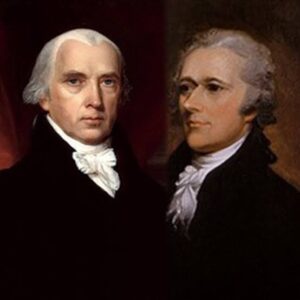
Alexander Hamilton James Madison

The converging crisis of the mid 1870s taught the (Constitutional) convention (1787) delegates two kinds of lessons reflecting two kinds of fear. One was that too much democracy and empowerment of the people could produce policies unacceptable to oligarchs. The other was that too little democracy could result in mass protests that could become volatile. What was especially worrying about all the debt relief and paper money legislation was that so many state senates had failed the test of protecting the rich…Randolph argued that, at the state level, senates were too close to the masses and too easily intimidated by unrest. Control had to shifted upward within a steep pyramid of power.

The result of 1787 was the Constitution (less all the amendments) we have today with a national senate, a president with veto power, and a high court that can override federal laws.

In 2006 Congress passed a whistleblower law for revealing tax fraud that offered a reward of up to 30 percent of the funds the IRS collects. In 2007, Bradley Birkenfeld, a UBS (Union Bank of Switzerland) employee, came forward with incrimination information. “Without Mr. Birkenfeld walking in the door of the Department of Justice in the summer of 2007,  I (Kevin Downing) doubt as of today this massive fraud scheme would have been discovered by the US government.”

Birkenfeld received $104 million but spent thirty months in prison for his efforts.

Charles P. Rettig, who was the IRS commissioner in 2023, said that the actual number was “about $1 trillion in unpaid taxes every year.”..For perspective, the tax gap in 1974 was only $40 billion…With Rettig’s estimated $1 trillion in taxes going unpaid every year, it means the very rich are constantly adding hundreds of billions to their wealth through non-compliance and defeating the tax system.

We’ve arrived at a paradox where oligarchs are more visible than they’ve been in 150 years while their wealth is more invisible than ever…As we’ve seen, three of the most important weapons in the oligarchic arsenal are complexity, secrecy, and infiltration. Complexity, created deliberately be the Wealth Defense Industry, is deployed as a squid deploys ink. The secrecy that hides wealth and financial dealing is a core concession to oligarchs by governments–most evident in their reluctance to demand an answer to the most basic political-economic question: who owns an asset? And infiltration is the placement of oligarchic foot soldiers in strategic government offices to ensure key regulations tilt strongly in favor of the rich.
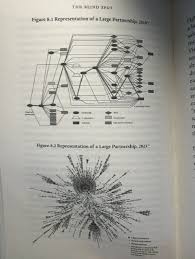
With multi tiered (20 or more) partnerships with half a million partners or more and pass throughs replacing corporations, driven entirely by tax advantages for oligarchs, tax collection is virtually impossible. Two Congressional efforts to reign in this chaos The Enablers Act and the Corporate Transparency Act (CTA) both failed. 

The ENABLERS Act (Establishing New Authorities for Businesses Laundering and Enabling Risks to Security Act) is proposed, bipartisan U.S. legislation designed to close major loopholes in the country’s anti-money laundering (AML) framework. While U.S. banks are required to investigate their clients’ wealth and block illicit funds, the ENABLERS Act aims to extend these same “know-your-customer” (KYC) rules to a broader group of professional “gatekeepers”. The Enablers Act was never enacted.

The CTA had a very simple goal — to document “beneficial ownership.” By now, it is apparent that, in the hall of mirrors that is the world of assets, income, and ownership, there are scores of entities that range from actual people to creations on paper that can, at least financially, do everything an actual person can do except have a heartbeat. All of these constructed substitutes for persons–companies, shell corporations, shelf corporations, trusts, foundations, and so on — ultimately represent, somewhere, buried under multiple layers and tiers of concealment, real breathing persons who are the owners, the beneficiaries, the controllers and deciders, beyond whom there is nothing else. Sometimes there are so many hidden intermediaries that there is a need to refer to the “true” beneficial owners.

The CTA was the US government’s attempt to find out who owned what, their names, and where they were. Having that information makes it far easier to confront threatening groups or actors, discover how trillions of dollars in illicit funds are hidden, moved, and laundered, and sometimes intercept dangerous peoples before they can do great harm. On this occasion (the 2021 Defense Authorization Act), oligarchs were late to the game, in part because wealth defense specialist hadn’t been paying attention…It was a costly oversight… The CTA became law on 1 Jan 2021 with strong bipartisan support.

It was in March 2025 that the bombshell hit…the executive branch was now under the control of a new administration with no interest in corporate transparency…”All entities created in the United States — including those previously known as ‘domestic reporting companies’–and their beneficial owners are now exempt from the requirement to report beneficial ownership information.“..By executive fiat, over 99 percent of all companies that had been required to register no longer had to do so….The law was still there, but it had been completely gutted.

The politics of preparation

The second level of our challenge to oligarchy (after progressive taxation) is deeper, focusing on changes that become possible only during the politics of crisis, when oligarchs are at their weakest. During ruptures, the decision-makers oligarchs rely on face pressure to focus their priorities on stabilizing the society. That certainly can included default responses that shore up oligarchy itself, but that is not necessarily the case. It is in the nature of crises that those in charge become far more willing to consider policies and solutions that would be unthinkable during the politics of the ordinary. They can do this because emergencies often require extreme actions and because they are less afraid of the ways oligarchs can punish. After all, oligarchs themselves are in disarray during these ruptures and also want restabilization, even if that means significant concessions they would ordinarily oppose bitterly…When a rupture happens. two things matter most; how well organized citizens are to pursue their interests, and what major changes are prepared to be implemented. A high state of readiness in such moments enables change that is transformative and lasting.

Wealth inequality arises at two sites. The first is the labor market, where inequality unfolds at our places of employment. Many impactful things can be done there to constrain oligarchs–enacting laws that facilitate rather than block unionization, raising minimum wages, having employees own significant shares of their workplaces, and indexing compensation of employees to compensation for the highest levels of management and ownership, just to start.

The other site is after the dust has settled on these income, compensation, and wealth gains. This is where we address inequality through redistribution. Confronting political structures that uphold oligarchy– like unrepresentative lower houses, senates, supreme courts, and presidential vetoes–is unusually hard. Enacting policies for the redistribution via the tax system has not only been a realm of great success but one where the victories has been so substantial that oligarchs were forced to retreat into tax evasion as they fought to reduce the tax rates. There are two large lessons to draw from this; the progressive tax victories of the past must be won again and stronger, and the maneuvers of the Wealth Defense Industry has devised to subvert redistribution must be answered. That means dismantling the mazes of complexity the industry has built, forcing an end to ownership secrecy, and closing the industry’s revolving door with government.

There is no greater threat to oligarchy than transparency…This extreme secrecy can be defeated. In the US, enacting policies like the Enablers Act and Corporate Transparency Act will deal a major blow. We must also turn the Wealth Defense Industry against its creators by forcing its many branches to monitor and report suspicious financial activity–with stiff penalties including imprisonment for failing to do so.

Although it’s a tough sell, democratic populations around the world must support dramatically stronger tax agencies. Larger budgets, more auditors, and more technology will only hurt oligarchs.

In 1922, American oligarchs faced fifty-six brackets. After the Second World War, the highest bracket was over 90 percent. By 2026, there were just seven brackets with the highest rate being 37 percent. Having two or three dozen tax brackets, with the highest being over 80 percent is an important goal.

The immediate goal must be to impose two kinds of taxes on oligarchs–a true income tax on annual gains in the value of oligarchic fortunes, and wealth tax on the total current value of those riches.

Oligarchs enjoy substantial annual increases on their assets, but this income is rarely taxed unless it is “realized” by selling the assets. This is a pure concession to the rich that fuels inequality and serves no positive social purpose.

As I’ve mentioned, this agenda is only a start–there are many more reforms that could be attempted. Still, while achieving them would be great progress, they are not enough to end participatory inequality. That requires deeper and harder changes of a constitutional or semi-structural kind. This moves us into the realm of the politics of preparation. These proposals are grand in scale and significantly more impactful in making political power more equally shared. They are conceivable only under conditions of severe crisis.

Three of these ideas are a direct reversal of oligarchic safeguards created by the Philadelphia (1787) delegates. Such antidemocratic features have been replicated in many countries since, especially in presidential systems. The first one requires little elaboration. The veto powers of the executive branch should not exist. A single person should not be able to cancel the will of the people expressed through the legislature’s deliberations and votes. The purpose of an executive branch is the execution of laws and policies from the legislature not the making or blocking of policies from that powerful office. If there is a need to check or slow certain sensitive decisions, it would be fine to grant limited powers to the executive branch to delay implementation to allow for further national debate or to send a law back to the legislature for a confirming simple majority vote.

The second proposal concerns constitutional courts, which are everywhere made up of just a few judges whose primary function is to constrain democracies composed of millions of voting citizens, represented by many hundreds of legislators (or thousands if state or provincial legislatures are included). In the US, it takes just five judges to block the will of the people, even a super majority. Supreme courts and the constitutions they interpret have served to sustain oligarchy in the face of democracy. The only compelling justification for concentrating so much power in so few hands is to protect the the weak from the powerful. It certainly is good to prevent a “tyranny of the majority” when this means mostly actions taken democratically against the vulnerable, especially when those actions trample important principles of fairness and justice.

The problem is that in democracies dominated by oligarchs high courts have spent most of their time doing the opposite–defending the powerful few against the vulnerable many. The justification for constitutional courts collapses once it is recognized that their main obsession has been to support oligarchy against democracy.

One solution is to have our constitutional courts be much larger and more representative of average citizens.

Beyond the size of the court, it is important to change how justices are chosen. The current American system of presidential nomination and Senate confirmation was created in Philadelphia (1787) to preserve oligarchy. We can democratize that process using sortition. Half of the justices on the enlarged bench should be appointed by lottery from a pool of citizens who have a law degree, having served as a judge for at least three years at any level, and have a clean criminal record. Congress should vote on the remaining judges, but neither the legislature nor the executive  should be involved in those appointed through random selection. Sortition will ensure that the overall panel of judges on the Supreme Court has a broader diversity of views and is more representative of the wider public. If this remedy fails, ending judicial review completely remains an option.

The third structural proposal to roll back oligarchic protections is the elimination of all upper legislative chambers. The primary purpose of senates and houses of lords is to dampen the power of more democratic bodies below them. Several countries have transitioned from a bicameral to unicameral system by elimination their upper chambers. New Zealand erased the Legislative Council in 1950. Denmark removed the Landsting in 1953. Several provinces in Canada abolished their upper houses. As senates are removed, societies should design alternative checks that ensure fairness, defend freedom, and protect truly vulnerable minorities.

Additional steps along these lines would include dramatically increasing the number of seats in the people’s legislature so that districts are smaller…Smaller districts bring representatives closer to their constituents, complicate legislative lobbying by special interests, and make it harder for oligarchs to dominate campaign financing across so many races.

sortition replaces voting

None of these major reforms goes far enough in addressing the ability of oligarchs to dominate electoral democracy with money.  A bold proposal to neutralize the power of oligarchs in elections is to choose representative by lottery rather than voting.

In the US, over 150 million voters get to choose, but they do not get to choose their choices. The slate of candidates, and the narrow agenda they pursue, is overwhelmingly influenced by oligarchs. Camila Vergara calls this distortion of democracy “systemic corruption”, and she joins a growing chorus of others — most notably (John) McCormick himself, Helene Landemore, Gordon Alrlen — who argue this will never be fixed by tinkering at the margins.

Their startling conclusion is that in the face of centuries of resilient oligarchy, the only way to strengthen democracy so that it functions horizontally and vertically is by ending voting for representatives. In its place they propose sortition — selection of leaders by random lottery…We are represented not because we voted but because those making decisions are like us.

The closest example today is how juries are selected for trials from a random group of fellow citizens.

Amy Kapczynski’s Proposed Constitutional Amendment

Congress shall have the plenary power and duty to legislate a democratic political economy, in order to provide genuine political equality for all natural persons. This shall include the power and duty to remedy structural discrimination, to empower workers, to provide for the care and health of the people, and to ensure a sustainable environment. The judiciary shall defer to Congress with respect to legislation that pursues these ends, notwithstanding any other provision in the Constitution.

These words display a subtle appreciation of the problems at the heart of participatory inequality. Unlike the vague expressions in constitutions around the globe of popular values and goals societies should strive for, this proposal requires that they be pursued. A democratic political economy leaves no room for oligarchy. “Genuine political equality” refers to power shared equally in all its forms and only by natural persons, not corporations. And the courts are explicitly stripped of their power to impede this progressive agenda.

A History of the Jewish Bund from 1772 to 1948

Here Where We Live Is Our Country; The Story of the Jewish Bund, Molly Crabapple, 2026

The Jewish Labor Bund was a secular, socialist, and anti-Zionist movement founded in 1897 in the Tsarist Empire. Dedicated to doikayt (hereness), Bundists fought for multi-racial democratic socialism and cultural autonomy where they lived, rather than emigrating to establish an ethnostate in Palestine.

Large numbers of Jews migrated from Spain and other western European areas to escape the pogroms around the time of The First Crusade (1096–1099). Most settled in an area around present day Poland. There, they developed their own language, Yiddish, an amalgam of medieval high German, Hebrew, Aramaic, and Slavic written in the Hebrew alphabet.

In 1791, Empress Catherine the Great formalized the Pale (of Settlement) after Russia acquired vast territories with large Jewish populations during the partitions of Poland. Jews were only allowed to settle in this Pale. At its peak, the territory spanned about 500,000 square miles (1.2 million square km), covering parts of modern-day Poland, Ukraine, Belarus, Lithuania, Latvia, and Moldova. It comprised roughly 20% of European Russia. The Pale was officially abolished following the February and October Revolutions (1917), which dismantled the Russian Empire and eliminated state-sanctioned restrictions on Jewish residency.

Now free of the Russian Empire, Poland immediately embarked on its own imperial wars of conquest, starting with the exquisite, formerly Hapsburg city of Lviv…The Lviv massacre was among the first of over a thousand pogroms that took place between November 1918 and March 1923, within the former Pale of Settlement. They were of a ferocity and sadism never before experience in eastern Europe. Almost everyone took part, Ukrainians, Lithuanians, Russians, Poles, Cossacks, criminals, warlords, aristocrats, soldiers, deserters, Whites, Greens, monarchists, reactionaries, nationalists, people with no ideology whatsoever, and even units that were ostensibly communist…Everyone agreed they had it coming.

Over the next two decades, the Bund would show Jewish workers that they were a people as worthy as any other. Their methods remind me of those of the America’s Black Panther Party, another group of young radicals who carried guns and started free breakfast programs and asserted their people’s beauty in a country that wanted them dead. Like the Panthers, the Bund was a Marxist party built by and for oppressed and racialized others, who created a network of communal care and cultural uplift, of schools, clinics, mutual aid centers, and youth groups, backed with weapons and branded with militant chic…The Bund created a youth movement. Tsukunft (the Future), for teenagers who worked ten hours a day and lived five to a tenement room but still dreamed of a better and more beautiful world. Bundist teachers dominated the new, secular Yiddish school system, TSYSHO (Central Yiddish School System). These schools directly challenged the traditional cheders that my great-grandfather endured — that Bundists described as filthy holes where subliterate old men “filled [a child’s] small brain with nonsense,” using  a cat-o’-nine-tails to reinforce their points.

The Bund helped transform Yiddish, the language of the Jewish street, into a vehicle for transnational literary culture. When they fled disaster, Yiddish became a portable homeland that Bundists carried on their tongues. Secular Yiddish literature and the Bund grew together until Bundists became the literature’s greatest champions. Bundists devoted themselves to the perpetuation of Yiddish long after they had been forced to abandon everything else.

In April 1920, at the Bund’s Krakow convention, a majority of delegates voted to join the Comintern (Communist International).

From a 1928 Bund Warsaw resolution:

  • The most important condition for a peaceful life together for the population of Palestine, is a renunciation of the Zionist plan to rule the land against the will of the majority.
  • Zionists have built all their hopes on stripping away the political rights of Palestine’s existing Arab population, who constitute the oppressed majority…and on forcing them from all positions of power…[Zionists] have stood with every occupying power in Palestine–first Turkey, now England–and have used every means to make sure that Arabs are not granted their most minimal demands for political freedom and self-government.
  • The Arab hatred of the Jewish population is a direct result of Zionist politics. Zionism has poisoned the atmosphere and put the Jewish population of Palestine in danger.
  • The nationalist demonstrations that Zionists have organized exploit the victims of these tragic events and the understandable upset of the Jewish community…This meeting call on Jewish workers to fight the storm of nationalism and chauvinism that Zionists are unleashing on the Jewish Street. The answer to tragically, but pointlessly spilled blood cannot lie in more national hatred, which will inevitably lead to more communal clash, but in international solidarity and the growth of the socialist movement.

(Henryk) Erlich (Bundist leader) spelled out the fatal conflict at the heart of Zionism. The establishment of Israel would lead to perpetual war with its neighbors and the people it had dispossessed. “If a Jewish state should arise in Palestine, its spiritual climate will be; eternal fear of the external enemy (Arabs); and an untiring struggle for the extermination of the language and culture of the non-Hebraized Jews of Palestine…Is this a climate in which freedom, democracy and progress can grow?” Erlich asked. “Indeed, is it not the climate in which reaction and chauvinism ordinarily flourish?”

Bundists described how the Nazi Slaughter was an extrapolation of what Europe had inflicted on the world. “It is the Hitlerites’ attempt to invoke the colonial methods of extermination that the European imperialists adopted in the previous centuries…and apply them to weak and small peoples of Europe.”

By the end of WWII in 1945, “The Nazis  murdered 90 percent of Polish Jews — and one-third of the  Jews on earth.”

When, in 1948 Congress tried to pass a bill to accept 200,000 survivors, the bill passed banning 90% of Jewish survivors because they had taken wartime refuge in the Soviet Union.

In social justice circles, it’s said that an oppressed group can’t be racist because racism requires power. If a group is powerless, they can be as bigoted as they like. Jews have been powerless for most of our history. The rituals of our religion are those of a powerless people, and we have hated with a powerless hate. On Purim, we make noise to celebrate not just Haman’s death but the murder of our enemies, the people of Amelek, down to the last man, woman, and child. For a long time, this was just an expression of impotent emotion. Theater, in the Aristotelian sense. Catharsis. We weren’t going to do anything about it. It’s not like we had an army.

This is fine when a group is powerless, but power is a fluid thing. Jews now have an army, and those once-impotent fantasies about destroying Amalek have transformed into white phosphorus bombs dropped on Gaza, into torture camps and mass graves full of cancer patients, shot with their catheters still in.

In 1942, young Zionists in the Warsaw ghetto founded the Jewish Combat Organization. Exactly five years after the ghetto revolt, on the eve of Passover 1948, Zionist paramilitaries ethnically cleansed fifteen thousand Palestinians from Haifa.

Bundists (Bulletin June 1949) saw the Nakba for what is was, the foundational crime of the Zionist  endeavor. Born of another people’s violent dispossession, Israel had yoked itself into an ever worsening cycle of repression and resistance. Its own violence would poison it, and the cancer would metastasize, until there was nothing else left.

Sophia (Dubnova, widow of Henryk Erlich) died in 1986, at age 101, engaged and lucid to the last. Shortly before her death, she told her grandson Henry she had a confession to make. She was no longer a socialist, but an anarchist.

Today, a new generation of activists and scholars view the Bund as a historic model for global solidarity, democratic socialism, and the fight for human rights. To explore their extraordinary history in depth, you can read Molly Crabapple’s book, Here Where We Live Is Our Country.

Is Big Tech a Bubble?

Muskism; A Guide for the Perplexed, Quinn Slobodian & Ben Tarnoff, 2026

His (Musk’s) communication style had always been proleptic (refers to something that is anticipatory, happens before its expected time, or treats a future event as if it has already occurred. ) The logic of financial fabulism (a contemporary literary genre that weaves fantastical, mythic, or surreal elements into otherwise realistic everyday settings. It blurs the line between reality and the impossible, treating magical occurrences as mundane to explore profound human themes) treated imagined futures as already underway, allowing speculative claims to generate market effects before the underlying technology had matured. “Musk’s success is sustained by predictions of a technological sublime that’s only ever another decade away.”

On twitter, however, such predictions could produce financial effects instantaneously. In 2018, Must tweeted, “Am considering taking Tesla private at $420. Funding secured.” The number was a weed joke, but investors took him seriously: Tesla stock jumped 11 percent…In 2020, he posted “stock price too high imo” and Tesla dropped as much as 12 percent. In January 2021, he added “#bitcoin” to his Twitter bio and the cryptocurrency jumped 20 percent within an hour. This was attention alchemy at work. As journalist Marco D’Eramo observed, Musk’s followers were his “real capital”.

The most important site of cyborg symbiosis (concept heralds a future where biological intelligence and artificial intelligence converge, potentially mirroring the cooperative success stories found in nature.)  was social media. “Facebook and Twitter and Instagram and all these social networks — they’re giant cybernetic collectives,” Musk told the podcaster Joe Rogan ins 2018. They didn’t just let people collectivize their thoughts but, more importantly, their feelings. The “success of these online systems,” Musk argued, is a function of how much limbic resonance (a neurobiological concept describing the capacity for deep emotional and physiological attunement between two or more people) they’re able to achieve with people.” Virality was driven by emotion. “The more limbic resonance, the more engagement.”

What made these collectives cybernetic was the fact they included computers as well as humans. And these computers were, in fact, learning from the humans. AI systems based on neural networks are trained to perform a particular task by finding patterns in large quantities of data. On the platforms, users supplied this data through their activity. “We’re all collectively programming the AI,” Musk explained.

Gradually, this process would result in smarter and smarter AI. “The percentage of intelligence that is not human is increasing, and eventually we will represent a very small percentage of intelligence,” said Musk. The ultimate legacy of the cybernetic collectives of social media would be humanity training its replacement. In a computer, a bootloader is a special program that helps initialize the system. Humanity, Musk told Rogan, was becoming “the biological bootloader of AI.”

But there was an interesting wrinkle to this theory. If our online interactions were fueled more by emotion than reason, then the AI systems that we were collectively programming would reflect that. The AI that learned from observing our behavior in the cybernetic collective would become “our id writ large,” Musk said. This was a view of advanced AI not merely as “superintelligence” but as an algorithmic embodiment of combined impulses and instincts.

One implication was that social media had immense importance for the future of the human race. If social media were the primary site of cyborg symbiosis, then a platform like Twitter was more than a place to crack jokes, troll rivals, or pump crypto and stocks. It was a place where the perils of superintelligence could be neutralized by dissolving ourselves into data. If we didn’t become AI, AI would eliminate us.

SpaceX, OpenAI and Anthropic are all expected to make their stock market debut with hefty valuations, as investors are eager to get in on the companies at the heart of the AI boom that have previously been locked up in private markets
.
Wired; Public backlash against AI is escalating rapidly, driven by widespread anxiety over job displacement, surging utility costs from massive data centers, and ethical concerns regarding copyright and disinformation. This growing distrust has sparked grassroots protests, lawsuits, and an alarming spike in targeted, anti-tech extremism across the United States.

Is Big Tech a Bubble? Goldman Sachs;

  • The AI Capex Loophole: Critics argue that Big Tech is funding their own “circular revenue”. Giant tech firms invest billions into AI startups, which then use that exact funding to rent cloud infrastructure from those same tech giants.
  • Unsustainable Spending: Companies are heavily sacrificing cash flows and taking on massive debt to fund data centers and AI hardware. Some analysts from major banks warn that this mirrors the telecom overspending of the dot-com era.
  • Historical Concentration: A handful of mega-cap tech stocks now make up an unprecedented share of indices like the S&P 500, leaving the broader market vulnerable to any industry pullback.

Leonard Leo, Opus Dei, John Roberts, and the Most Dangerous Supreme Court

Without Precedent: How Chief Justice Roberts and his Accomplices Rewrote the Constitution and Dismantled Our Rights, Lisa Graves 2025

SUPREME COURT CORRUPTION AND PRESIDENTIAL IMMUNITY

Through action and inaction, Roberts has also allowed a culture of corruption to run rampant. For more than a decade, he has worked to stall congressional efforts to require an enforceable code of conduct for the Supreme Court, even though every other judge in the nation is subject to such rules…Roberts stood silent as Thomas sat on the case involving Donald Trump’s immunity claims in a criminal case about Trump’s efforts to subvert the 2020 presidential election, even though Thomas’s wife, Ginni Thomas, actively sought to stop the count and even to secure fake electors. Roberts adopted the same do-nothing approach toward Samuel Alito, despite evidence that flags tied to the Jan 6 insurrection were flown over his homes. Why? Roberts needed their votes in order to accomplish his most reactionary agenda to date and to cement the most unprecedented edict of all: to effectively pardon Trump and pave the way for his return to power, emboldened by kinglike immunity from prosecution for any of his “official acts” as president…John Roberts unprecedented decree was that Trump had committed no crimes, and could have committed no crimes , as long as he was acting in his official capacity as president. The chief justice’s declaration that Trump’s speech and actions in connection to his so-called official acts could not be used as evidence also interfered with other indictments and potentially his conviction in one of the other cases… This was, essentially, a judicial coup.

This situation–where ethically compromised justices were making critical decisions about the election of the president–harkens back to Bush v. Gore. In 2000, Clarence Thomas refused to recuse himself from the Bush v. Gore case despite a very serious conflict of interest involving, once again, his spouse. Rather than recusing himself, Thomas proceeded to cast the decisive vote in the Court’s 5-4 decision to stop the recount in Florida, thereby making George W. Bush president. As part of her job at the Heritage Foundation, Ginni Thomas helped lead the screening and recruiting of appointees for a future Bush administration…After Clarence Thomas failed to recuse himself, the Heritage Foundation promoted Ginni to director of executive branch relations, working directly with the Bush administration..She received nearly $1 in compensation over the next seven years.

John Roberts is presiding over the most corrupt Supreme Court in American history, and he is doing it in order to use the judiciary to entrench Republican power and roll back legal precedents that secured rights that he dislikes. Despite his superficial geniality, Roberts may go down as the worst chief justice in US history, presiding over the destruction of the law and the decimation of the Constitution.

Citizens United v. FEC 

Devastatingly, Roberts has systematically altered the very structure of our democracy by sabotaging voting rights and permitting illegitimate and undemocratic electoral maps that all but eliminated incentives to seek compromise, fueling extremism and division. But Roberts masterstroke was alchemy: turning gold into speech by judicially rewriting the First Amendment to allow mountains of gold in the form of dark money to distort our elections. The result in that case, called Citizens United v. FEC (2010), was orchestrated by the Roberts Court, which ordered an out-of-season oral argument on new questions to clear the decks for a surge in secret cash for the 2010 midterms–just in time to try to rein in America’s first Black president, Barack Obama. That tsunami of cash has been deployed to distort the ensuing elections, epitomized by the actions of the richest man in the world, Elon Musk, who spent $288 million to procure the presidency for Donald Trump (and an unelected copresidency for a while) in 2024.

OPUS DEI AND LEONARD LEO

A lot of the money used to rewrite the Constitution through the capture of the Court came from a small number of people–mostly white men–wielding their wealth to limit other people’s rights, especially women’s rights and voting rights, but not just those. To be clear, the Roberts Court does not stand alone in the endeavor to limit these rights: Its sits at the apex of a complex infrastructure of nonprofit groups and for-profit firms seeking to use the Court and protect it from critics. Leonard Leo’s role in building this infrastructure cannot be overestimated. It would not be unreasonable to assert that he is the individual most singularly responsible for reversing American’s reproductive freedoms and other rights through the Roberts Court. Of course, none of this would be possible without generous funding from billionaire zealots.

By 2001, Newsweek was reporting that Justices Scalia and Thomas were reputed to be part of Opus Dei, a secretive ultraconservative Catholic sect, although they could also have been  unofficial collaborators. That article also reported that Scalia’s wife, Maureen, had attended multiple Opus Dei “spiritual functions”…Opus Dei was created as a special prelature of the Catholic Church by Joes-maria Escriva, a priest with close ties to Spain’s Fascist dictator, Francisco Franco. Journalist Gareth Gore recently noted that most Opus Dei members in the United States live in or near Washington D.C., and no government since Franco’s has included as many Opus Dei members or collaborators as the first Trump administration. Two of Leo’s closest allies in the dark-money financial engine that has captured the court, Neil and Ann Corkery, have been part of Opus Dei. Leo also funds the Opus Dei headquarters in DC, the Catholic Information Center, and has received its highest award…by 2006, the Court had its first Catholic majority in US history: Alito plus Roberts, Thomas, Scalia, and Anthony Kennedy.

Attack Philanthropy: Right-Wing Billionaire Fueled Climate Denial & Conservative Judges, Schools

ProPublica reported that in September 2020 (Barre) Seid sold one of his companies and created a massive trust with Leo as Trustee. When the transaction details were settled, Leo stood at the helm of a $1.6 billion trust, one of the biggest gifts of its kind in US history.

No Supreme Court majority in American history has ever been constructed the way the Roberts Court has–with the help of big, dark secret money.

In 2024, Leo made public a letter he had sent to numerous right-wing groups explaining that his focus is on “funding to operationalize or weaponize the conservative vision,” to “crush liberal dominance at the choke points of influence and power in our society.” Leo wasn’t writing just as a person who controls a billion-dollar trust fund, which he has used to help orchestrate the reversal of Roe and more. This is the man who helped handpick the majority of justices on the US Supreme Court.

OVERTURNING 1973 ROE V. WADE

Since John Roberts became the chief justice of the US Supreme Court, American women have been losing their liberty. Starting with the Gonzales v. Carhart (2007) decision through the Dobbs v. Jackson (2021) ruling and its aftermath, the Roberts court has made it increasingly difficult for American women to get the medical care they need, to follow their doctor’s advice to protect their health when they are pregnant and confronted with a heart-wrenching diagnosis like cancer that needs treatment or where a severe fetal abnormality is detected. Women are literally dying because John Roberts agreed that states can restrict access to abortion well before a fetus is viable.

MARRIAGE EQUALITY

…when the question of marriage equality was taken up by his court, in Obergefell v. Hodges, Roberts cited as authority sources built on biblical claims…For example, Roberts cites a book published by an Opus Dei-tied publisher and edited by Robbie George, which asserts that the movement for same-sex marriage has created a “crisis,” for marriage. It also treats Christianity as authority on the relationship between “husbands and wives” and “man and woman” where “the family (headed by the husband) ruled itself.” That essay, by law professor David Forte, which Roberts cites in his opinion, also  asserts that the Founding Fathers relied on marriage as the foundation of a “free republic,” “national morality,”, and “public virtue,” based on one letter by John Adams asserting that marriage was necessary to rein in “private passions,” whatever that means. This is one of the flimsiest readings to hang a ruling on that I have ever encountered in more than thirty-five years of reading Supreme Court opinions.

Rich and powerful people have always tried to rig the rules in their favor. Now they are trying to take America backward and control who we can be, who we can love, and how we can care for our bodies, our families, and our world. They are putting the weight of their wealth on the scales of justice to diminish other people’s freedoms. The billionaires who helped capture the Supreme court have a guaranteed freedom to exercise their religion in America, just as all Americans have the freedom to worship or not, as they choose. But the billionaire-backed effort to use the US Supreme Court to impose those views as law on abortion and other social issues is profoundly at odds with our nation’s founding as a place of refuge from state-imposed religion.

VOTING RIGHTS

Roberts waited until three days after Obama was reelected in 2012 to accept another case on the constitutionality of the Voting Rights  Act, a case out of the Deep South known as Shelby County v. Holder. It was brought by Shelby County in Alabama, a state with a legacy of racial terror lynchings and a history of vote dilution efforts…That was the vehicle Roberts handpicked to destroy the preclearance provisions of the Voting Rights act…Roberts reprised his theme that “things have changed in the South” in his judicial decree in Shelby County. Then he went about arrogantly disregarding congressional expertise and rejecting a mountain of factual findings in contradiction of this political agenda.

Supreme Court Justices, like all appellate judges, are expected to follow precedent and defer to the factual findings of the courts below them and to Congress. But in Shelby County Chief Justice Roberts did not behave like an appellate judge. Instead, he gave scant consideration to the detailed findings of Congress and to the arguments of the groups submitting amicus briefs in defense of the Voting Rights Act, including those that provided detailed evidence to support the extension of the law…Roberts produced the antidemocratic outcome he desired but that the majority of the people’s representatives overwhelmingly rejected. Roberts declared, despite congressional findings to the contrary, “The conditions that originally justified these measures…no longer characterize voting in the covered jurisdictions.”

Voting restrictions started going into effect immediately, within minutes of John Roberts announcing his decimation of the preclearance protections under the Voting Rights Act.

Attacking The SEC administrative agency and administrative law Judges

In Securities and Exchange Commission v. Jarkesy (2025), Roberts chose to pen that decision, striking down decades of administrative law practice to declare suddenly that Congress cannot assign the administration of civil penalties for securities fraud to the Securities Exchange Commission (SEC) and that instead such cases must be tried in federal court. This dramatic change in the law will make it far more difficult and expensive for the SEC to enforce the rules on trading securities, rules that protect American investors.

Charles Koch and the Supreme Court attack on Unions and Environmental Protections

The Kochs appear throughout this book, particularly Charles Koch. (See Kochland) Charles is not religious but worked closely with Leonard Leo.

In the 2018 Janus v. AFSCME John Roberts assigned the opinion to Sam Alito, who asserted that the fair-share rule created a “windfall” for unions.  Alito’s opinion, which Roberts joined, allows workers like Janus to be free riders who get the benefits and wages negotiated by unions without paying any fees–that’s the real windfall…the Roberts Court’s majority were weaponizing the First Amendment to undo precedents that the new majority disliked; they were reversing the law in Abood (1977) based not on any material change in the law or circumstances but just because John Roberts had the majority to do it. The decision also gave Charles Koch and his family a major victory in their multigenerational attack on unions.
In Cedar Point Nursery v. Hassid, (2021) John Roberts delivered another blow to union organizing with his own words. Writing for the 6-3 Republican majority in that case, Roberts struck down a forty-six year old law that allowed union organizers a “right of access” to an agricultural employer’s property to protect agricultural workers’ right  to freedom of association in order to organize. Roberts asserted that the right  to organize in the farm fields constituted a “taking” under the Fifth Amendment.

In West Virginia v. EPA (2022), Roberts dealt a devastating blow to the power of the EPA. Roberts articulated the totally invented so-called major questions doctrine, which appears nowhere in the Constitution and had never appeared in any prior cases. The judicial invention asserts that federal agencies cannot use existing statutes to regulate on an issue the the Court deems to be a “major question” that Congress should first pass specific legislation to address. Under that “doctrine”, Roberts and his fellow Republican appointees declared that the EPA did not have the authority to regulate carbon by setting targets for utility companies to expand reliance on renewables, even though the EPA has authority under to statute to regulate carbon and other pollutants.

On its face Loper Bright (2024) is about sea captains opposing a regulation designed to protect wild fish in marine habitats from overfishing, but the  case was about much more than marine life. It was about advancing the destructive legal agenda of one of the the richest men in the world, whose enormous wealth comes from extractive industries. The case transcended Koch’s individual pecuniary interests, however, and was designed to make it easier for other billionaires and corporations to assail an array of federal regulations across countless industries. A close examination of the Loper Bright litigation reveals how it was orchestrated to secure a pro-Koch ruling by a Supreme Court with a newly constituted majority with judges Koch helped get confirmed. (Koch got) the reversal of the legal precedent set in Chevron v. NRDC (1984) …that required federal courts to defer to interpretations by federal agencies of statutory language when Congress did not specify the meaning of a particular word or term and the agency’s interpretation was a reasonable policy choice…Over the course of forty years the Chevron case was cited more than 15,000 times by the courts and provided some stability to the setting of federal rules…By 2024 federal judges no longer needed to defer to reasonable policy choices by experts at federal agencies in cases of broad statutory authorization. Now federal judges–which include more than 200 Trump appointees–can substitute their beliefs and slants for those of government scientists and other substantive experts employed by  the public. The Roberts Court has opened up a free-for-all for hostile federal judges to assert that they know more about air pollution than the experts at the EPA… or that they know better than the FDA about approving drugs like abortion medicine…This is a signature outcome long sought by Koch, Leo, and their comrades…It was about power.

For a look at how the Justice Department and FBI failed to bring Donald Trump to trial and justice for his many crimes and the role of the Federal courts in preventing these trials see Injustice: How Politics and Fear Vanquished America’s Justice Department, by Carol Leonnig , Aaron C. Davis 2025


Wealth and Income Inequality and the Great Recession

The Price of Inequality; How Today’s Divided Society Endangers Our Future; Joseph E. Stiglitz, 2012

See Thomas Piketty On Redistribution of Wealth and Participatory Socialism

See these other accounts of the Subprime Mortgage banking disaster of 2008  that led to the Great Recession .

The most important role of government, however, is setting the basic rules of the game, through laws such as those that encourage or discourage unionization, corporate governance laws that determine the discretion of management, and competition laws that should limit the extent of monopoly rents. As we have already noted, almost every law has distributive consequences, with some groups benefiting, typically at the expense of others.

Indeed, even the IMF (the International Monetary Fund, the international agency responsible for ensuring global financial stability) has now recognized the dangers of unencumbered and excessive financial integration: a problem in one country can rapidly spread to another. In fact, fears of contagion have motivated bailouts of banks in the magnitude of tens and hundreds of billions of dollars. The response to contagious disease is “quarantine,” and finally in the spring of 2011, the IMF recognized the desirability of the analogous response in the financial markets. This takes the form of capital controls, or limiting the volatile movement of capital across borders, especially during a crisis.

Politics–and in particular how politics shapes the laws governing corporations–is a major determinant of the fraction of a corporation’s revenues that its top executives take for themselves. U.S. laws provide them considerable discretion. This meant that when social mores changed in ways that made large disparities in compensation more acceptable, executives in the United States could enrich themselves at the expense of workers or shareholders more easily than could executives in other countries.

(Japan in 2010) paid their chief executives an average of $580,000 in salary and other compensation…about 16 times more than the typical Japanese worker ($36,000). Average CEO pay at the 3,000 largest U.S. companies is $3.5 million, including stock options and bonuses…CEO pay of major U.S. corporations (is) some 263 times that of the income of the average worker ($13,300).

It used to be that when the economy went into recession, employers, wanting to maintain the loyalty of their workers and concerned about their well-being, would keep as many as they could on their payroll. The result was that labor productivity went down, and the share of wages went up. Profits bore the brunt of the downturn. Wage shares would then fall after the end of the recession. But in this (2008 and the previous 2001) recession, the pattern changed, the wage share declined in the recession, as well as in the ensuing years. Firms prided themselves on their ruthlessness–cutting out so many workers that productivity actually increased.

The irony is that just as markets started delivering more unequal outcomes, tax policy asked less of the top. The top marginal tax rate was lowered from 70 percent under Carter to 28 percent under Reagan; it went up to 39.6 percent under Clinton and down finally to 35 percent under George W Bush.

…One of the reasons that the top has done so well is rent seeking–which entails seizing a larger share of the the pie and, in doing so, making the size of the pie smaller than it otherwise would be…Widely unequal societies do not function efficiently, and their economies are neither stable nor sustainable in the long run. When one interest group holds too much power, it succeeds in getting policies that benefit itself, rather than policies that would benefit society as a whole. When the wealthiest use their political power to benefit excessively the corporations they control, much-needed revenues are diverted into the pockets of a few instead of benefiting society at large.

Since the time of the great British economist John Maynard Keynes, governments have understood that when there is a shortfall of demand–when unemployment is high–they need to take action to increase either public or private spending. The 1 percent has worked hard to restrain government spending…(Substituting large tax cuts for the wealthy didn’t work).

There is a second way that unbalanced politics driven by extremes of inequality leads to instability: deregulation. Deregulation has played a central part in the instability that we, and many other countries, have experienced. Giving corporations, and especially the financial sector, free rein was in the shortsighted interest of the wealthy; they used their political weight, and their power to shape ideas, to push deregulation, first in airlines and other areas of transportation, then in television, and finally, and most dangerously, in finance.

In the aftermath of the Great Depression, an event preceded by similar excesses, the country enacted strong financial regulations, including the Glass-Steagall Act of 1933. These laws, effectively enforced, served the county well: in the decades following passage, the economy was spared the kind of financial crisis that had repeatedly plagued this country (and others). With the dismantling of these regulations in 1999 (Clinton), the excesses returned with even greater force: bankers quickly put to use advances in technology, finance, and economics. The innovations offered ways to increase leverage that circumvented the regulations that remained and that the regulators didn’t fully understand, new ways of engaging in predatory lending, and new ways to deceived unwary credit card users.

The losses from the under utilization of resources associated with the Great Recession and other economic downturns are enormous. Indeed, the sheer waste of resources brought on by this crisis caused by the private sector–a shortfall of trillions of dollars between what the economy could have produce and what it has produced–is greater than the waste of any democratic government ever.

For several decades America has suffered from under investment in infrastructure, basic research, and education at all levels. Further cutbacks in these areas lie ahead, given the commitment by both parties to bringing down the deficit and the refusal of the House of Representatives to raise taxes. The cuts come despite evidence that the boost these investments give to the economy far exceeds the average return in the private sector, and is certainly higher than the cost of funds to the government. Indeed, the boom years of the 1990s were buoyed by innovations made in previous decades that finally took their place in our economy. But the well from which the private sector can draw–for the next generation of transformational investments–is drying up. Applied innovations depend on basic research, and we simply haven’t been doing enough of it.

The financial sector succeeded in making student loans non-dischargeable in bankruptcy, which meant that the lenders had little incentive to see to it that the schools for the which the students were borrowing money were actually providing them with an education that would enhance their income. Meanwhile, private for-profit schools with richly compensated executives have defeated attempts to impose high standards that would make schools that exploit the poor and ill informed-by taking their money and not providing them with an education that enables them to get jobs to repay the loans–ineligible for loans.

Rent seeking distorts our economy in many ways–not the least of which is the misallocation of the country’s most valuable resource: its talent. It used to be that bright young people were attracted to a variety of professions–some to serve others, as in medicine or teaching or public service; some to expanding the frontiers of knowledge.  Some always went into business, but in the years before the (Great Recession) crisis an increasingly large fraction of the country’s best minds chose finance. And with so many talented young people in finance, it’s not surprising that there would be innovation in that sector. But many of these “financial innovations” were designed to circumvent regulations, and actually lowered long-run economic performance. These financial innovations do not compare with real innovations like the transistor or the laser that increased our standard of living.

Someday, perhaps soon, we too will see how globalization as currently managed promotes neither global efficiency nor equity; even more importantly, its puts our democracy in peril. Another world is possible: there are alternative ways of managing globalization that are better for both our economy and our democracy; but they do not entail unfettered globalization. We have learned the lessons of unfettered markets for our economy and how to temper capitalism so that it serves the majority of citizens, not a tiny, powerful fraction. So too, we can temper globalization; indeed, we must if we want to preserve our democracy, prevent our rampant inequality from growing worse, and maintain our influence around the world.


A just Transition from neoliberal capitalism to progressive capitalism

The Road to Freedom; Economics and the Good Society, Joseph E Stiglitz, 2024

From FDR’s “Four Freedoms Speech” 1941

The first is freedom of speech, and expression — everywhere in the world. The second is freedom of every person to worship God in his own way — everywhere in the world…freedom from want — which, translated into world terms, means economic understandings, which will secure to every nation a healthy peacetime life for its inhabitants — everywhere in the world…freedom from fear — which translated into world terms, means a world-wide reduction of armaments to such a point and in such a thorough fashion that no nation will be in a position to commit and act of physical aggression against any neighbor — anywhere in the world.

From Reagan to Clinton, presidential administrations expanded the freedom of the banks. Financial deregulation and liberalization meant freeing the banks to do as they pleased…The very word “liberalization” connoted “freeing”. When the 2008 financial crisis hit, we discovered the cost. Many Americans lost their freedom from fear and want as the very real prospect grew that millions of workers and retirees would lose their jobs and homes. We as a society lost our freedom — we had no choice but to spend taxpayers’ money to bail out the banks.

John Maynard Keynes and FDR saw an alternative way forward from classical economics. Updated for the marked changes in the economy and our understanding of the past three-quarters of a century, their vision still stands as an alternative to the neoclassical and neoliberal economics that followed and to the new Right that is emerging. The Keynes and FDR approach was a tempered capitalism with government playing a key but limited role, ensuring stability, efficiency, and equity — or at least more than is provided by unfettered capitalism. They laid the groundwork for a twenty-first-century progressive capitalism that supports meaningful human freedom.

Adam Smith 1776 The Wealth of Nations :

The interest of [businessmen] is always in some respects different from, and even opposite to, that of the public…The proposal of any new law or regulation of commerce which comes from this order…ought never to be adopted, till having having been long and carefully examined. with the most suspicious attention. It comes from an order of men…who have generally an interest to deceive and even oppress the public.

If you are born into the wrong environment, those assets mean nothing. They yield the returns they do only because of the socioeconomic environment as to our own skills and effort. There is full justification, then, for imposing high taxes on high income even in a perfectly competitive economy in which wealth is garnered in ways that have full moral legitimacy.

Likewise, the moral claim against progressive taxes is slim if high incomes arise out of luck or inheritance–and even more so if they are made possible through exploitation or because the rules that generate or allow such income have been shaped by access to political power.

Donald Trump illustrates what happens when parents and teachers fail, and an individual does not become socialized. When norms, peer pressure, and tradition worked normally, we didn’t need strong laws to define what a president could ethically do. Almost every president acted within the constraints. But Trump, with his brazenness, may force us to define the presidential limits more precisely by putting them within laws and regulations.

In the centuries since the Enlightenment, we’ve developed institutions that do a remarkable job of assessing the truth–independent courts, research and educational institutions, and professional associations. There was a widespread consensus behind these institutions until the naysayers in the modern Republican Party and their counterparts around the world arrived on the scene. Unless we restore trust in our truth-ascertaining and verification institutions, it will be hard to have a sustained, well-functioning society or a productive economy.

Financial Times article in 2020 on Facebook;

In short, without full transparency, with a mechanism for holding participants to account, without equal ability to transmit and receive information, and with unrelenting intimidation, there is no free marketplace of ideas. One of the major insights of modern economics is that private and social incentives are often not well-aligned. If those who want to spread misinformation are willing to pay more than those who want to counter it, and if lack of transparency is more profitable than transparency [if we simply say] “so be it,” we won’t get a well-functioning marketplace of ideas.

Online platforms have not only exacerbated societal fragmentation; they have also increased the problem of the rapid, viral spread of mis- and disinformation. Virality means that information can spread quickly, more quickly than “antidotes” to the misinformation can be designed. The lack of transparency in who gets what messages have meant that the antidotes cannot be effectively developed and delivered in the relevant time span, if at all.

Social media companies have enabled the incitement of violence and the spread of hate speech and induced antisocial behavior. Their claim that they are neutral is obviously false.

Should we allow greenhouse gas emission to go unfettered? How should we manage a public health crisis like a pandemic? In that case, the transmission of scientifically false information — especially targeted mis- and disinformation that goes viral — can have dangerous and destructive consequences.

Feudalism was marked by a high concentration of power and wealth, low economic growth and slow social progress. Communism succeeded in generating greater security and more equality in material goods but failed on other counts, including low economic growth, an absence of freedom in all dimensions; a concentration of power, and a greater inequality of standards of living than Communist rulers would admit.

Milton Friedman Friedrich Hayek

Neoliberalism, the dominant economic system in the West over the past forty years, is increasingly viewed as an economic failure because it brought slower growth and more inequality than in earlier decades…It increased societal polarization; created selfish, materialistic, and often dishonest citizens, and contributed to a growing lack of trust.

It is intuitively clear to me that a society marked by greater equality (other things being equal) is better than one marked by huge disparities; that cooperation and tolerance is fundamentally better than greed, selfishness, and intolerance. The extreme versions of the latter that have appeared on the American scene in recent decades are truly loathsome.

Similarly, we now recognize the dangers of climate change, but if governments take action to restrict fossil fuels, under existing investment agreements, they might have to pay out as much as $340 billion to compensate the companies for not destroying the planet.

Our economic system has to be decentralized, with a multiplicity of economic units–many enterprises and other entities (of different kinds) making decisions about what to do and how to do it. The world is too complex to be centrally planned…Any well functioning economy or society requires a mix of types of institutions, not only public and private for profit, but also cooperatives, private not for profit, and so on. And the governmental institutions need to operate at multiple levels, including local, state or provincial, national and global. These institutions need to exert checks and balances on each other and the overall governance structure must limit power and its abuse. I want to emphasize that there must be large parts of the economy that are not and cannot be driven by profits. These include much of the health, education, and care sectors, in which the the narrow pursuit of profits often leads to perverse results. The private prison system has failed its core mission of rehabilitating prisoners.

…we are not born fully formed; we are shaped by our parents, our schools, and the environment surrounding us–including the economic, political, and social system in which we are embedded…cooperative institutions may spur more cooperative behavior. The neoliberal system that we’ve had for the past half century has failed on its own terms by not producing the shared prosperity it promised, but more disturbingly, it also bred more selfish and materialistic people who are less honest and trustworthy. What kind of a world is it in which individuals routinely make money by taking advantage of others and don’t even feel guilty?

Progressive capitalism’s deep aspiration is to construct a society in which there is more empathy, more caring, more creativity, and healthy striving, with individuals who are less selfish and more honest–and these attributes will lead to a better-functioning economy and society.

I believe a large part of the answer is related to two problems of neoliberalism that I’ve called attention to: the growing income and wealth divide that marks twentieth and twenty-first century neoliberal capitalism and the polarization caused by the media. Making matters worse is that current rules allow the rich and elites to have a disproportionate voice in shaping both the policies and societal narratives. All of which leads to an enhanced sense by those who are not wealthy that the system is rigged and unfair, which makes it all the more difficult to heal divisions.

As income inequalities grow, people wind up living in different worlds and don’t interact. There is a large body of evidence showing that economic segregation is growing and has consequences, for instance, on how each side thinks and feels about the other. The poorest members of society see the world as stacked against them and give up on their aspirations; the wealthiest develop a sense of entitlement, and their wealth helps to ensure that the system is rigged. But these individual opinions about the economic divide only increase the societal divide.

Not only are neoliberal economies inefficient, but neoliberalism as an economic system is not sustainable. There are many reasons to believe that a neoliberal market economy is prone to devour itself. A market economy runs on trust. Adam Smith emphasized the importance of trust, recognizing that society couldn’t survive if people brazenly followed their own self interest rather than good codes of conduct.

The regard to those general rules of conduct, is what is properly called a sense of duty, a principle of the greatest consequence to human life, and the only principle by which the bulk of mankind are capable of directing their actions… Upon the tolerable observance of these duties, depends the very existence of human society, which would crumble into nothing if mankind were not generally impressed with a reverence for those important rules of conduct.

A “businessman” like Donald Trump can flourish for years, even decades, taking advantage of others. If Trump were the norm rather than the exception, commerce and industry would grind to a halt.