Time is running out to limit climate change from greenhouse gases

Here Comes the Sun; Bill McKibben, 2025

At 210 pages this short book is intended to paint an optimistic picture of our chances to limit global temperature rise to a livable maximum. The book is packed with decades long activist experience and remarkable solar power technical development. The reader can reach their own conclusions whether this picture warrants optimism. But the book is well worth reading.

Solar power generation technology that required breakthroughs in solar panels, storage batteries, and power generating wind turbines have, in only the past 15 years, succeeded in joining Moore’s law of  growth in digital computing power as the second exponentially advancing technology in human history.

Thanks to Chinese and other nation’s investments, the world is now in position to replace the burning of fossil fuels with greenhouse gas free energy to meet the total needs of the planet. Now the question becomes – will solar based infrastructure be deployed in time to limit temperature rise to livable levels. In McKibben’s view we may only have five  years to do so.

Solar power is now far and away the cheapest power source in human history and it continues to drop in price. On the positive side, China has made the most progress, reducing its dependence on coal burning generation more than any other country. China is also the leader in the development and production of EV cars, trucks, and buses.  Even the petrol-states of the middle east are converting to solar power generation. In America, California and Texas (surprise?) are leading the way in adopting solar power. Rolling blackouts in California are (almost) a thing of the past. Arizona’s SRP (home to valley of the sun) is slowing down deployment by charging $50 a month just to connect your home solar to their grid. They should be paying homeowners and businesses to connect.

The global south, most close to the equator stand most to gain and adoption is happening at the grass roots first with self installed Chinese panels being placed everywhere. Cheap power is central to reducing inequality and improving lives throughout the globe.

The cost of converting the globe as fast as possible could be expedited with surprisingly little investment but the returns on such investment would be much lower than other alternate investments for billionaires and wealthy retirement funds. In the investment world, saving the planet does not enter the calculations.

The risks (of coups or outright corruption) are greater as well. McKibben suggests that the World Bank and IMF should shoulder these risks but that seems unlikely.

So we have an unstoppable exponential growth source of clean energy that may not get deployed in time to save the planet.

McKibben ends talking about grass roots efforts in the U.S. where key decisions regarding building wind and solar farms are usually local decisions that may come down to the whims of one or two key participants.

He notes that the Covid pandemic demonstrated a widespread and fast public and political response but the threat of immediate personal risk was at the heart of this pandemic. Within a five year period only those directly affected by weather and fire events are likely to be motivated to take action.

And the billionaire class are busy investing in survival pods and space travel! Like Trump, only they matter – no empathy for anyone else.

Drug Trafficking and Murder in the Special Forces

The Fort Bragg Cartel; Drug Trafficking and Murder in the Special Forces, Seth Harp, 2025

(H.R.) Bush’s subsequent tenure in the Executive Building coincided with a transfer of power from the CIA to the military, which, thanks to the creation of JSOC (Joint Special Operations Command), now had operatives fully capable of carrying out the same skullduggery as civilian spies, but without the added baggage of congressional meddling.

Over the next eight years (1980s) , as Reagan and Bush waged off-the-books dirty wars in Nicaragua, El Salvador, and Guatemala, and also intervened in Columbia, Haiti, and Grenada, the administration leaned heavily on Delta Force and other undercover soldiers. The militarization of covert action was tied up with the rapidly metastasizing “global war on drugs,” another brainchild of George H. W. Bush’s, and partially exposed by the hydra-headed Iran-Contra Affair, the essence of which was the use of illegal arms deals and the sale of other untraceable commodities to fund secret operations. A classified White House memorandum that Reagan signed in 1984 reads like a sketchy blueprint to the “global war on terror” that Bush’s son and political heir would institute at the dawn of the twenty-first century. Among other things, the memo authorized killing in “preemptive self-defense,” so long as the targets were defined as “terrorists.”

That same Orwellian year, The New York Times belatedly broke the news of JSOC’s existence. The article titled “U.S. Military Creates Secret Units for Use in Sensitive Tasks Abroad,” was sourced to members of Congress and intelligence committee staffers. “The worry,” concerned lawmakers told the Times, was that JSOC might become “a uniformed version of the Central Intelligence Agency,,” used by the executive branch “to circumvent Congressional restrictions and reporting requirements.”

Under U.S. occupation, Afghanistan had become the world’s leading narco-state, with an economy almost entirely dependent on the the drug trade. Within a year of the Taliban’s ouster, opium production had returned to record levels. “The significant increase,” the DEA reported “is attributable to the fall of the Taliban, and the Taliban poppy ban.” …By 2005, heroin production in Afghanistan had increased a mind-blowing 7,514 percent. The 2007, the country’s annual output of pure heroin approached a thousand metric tons. By comparison, in a far distant second place, produced just fifty tons that year.

The superabundance of highly potent product inundated Pakistan, Iran, China, Russia, all of Europe, Australia, and the whole world. In the United States, street prices went down, purity went up, and opioid addiction took hold in a population primed for it by a a decade of loose prescribing practices around pharmaceutical painkillers.

According to the DEA, virtually none of the heroin consumed in America during the surge in usage seen in the 2020s and 2010s came from Afghanistan. Less than 1 percent is the official figure.

In his second term in office, President Obama completely abandoned any remaining effort to counter narcotics in Afghanistan, and it became implicit U.S. policy to allow poppy to flourish unimpeded. The amount of land under poppy cultivation expanded to nearly a quarter million hectares. Major traffickers protected by the Karzai cartel, such al Lal Jan Ishaqzai, became untouchable.

Ever since World War II, illegal drugs have served as a common coin for the purposes of espionage, paramilitary operations, and covert actions, and the foreign entities that choose to work for the U.S. military and the CIA — the twin sentinels of global capitalism — often profit from this most capitalistic of all enterprises. Throughout its history, the CIA has worked to achieve American national security objectives in partnership with known drug traffickers, including the anticommunist Kuomintang, the founders of modern-day Taiwan; France’s Corsican mafia syndicates; Cuban exiles opposed to Fidel Castro; Hmong irregulars in Laos as well as the Royal Lao Army; and the contra rebels of Nicaragua. But American foreign policy elites’ complicity in the international drug trade was never so substantial, sustained, witting, and consequential as in Afghanistan…No person in any position of influence dared to suggest that the scourge of opiate addiction then afflicting the poor and working classes across the United States might have resulted from the wartime narcotics bonanza.

But over time, a sea change took place in the composition of the Special Forces. A good number of those who stayed in the Army for the second decade of the GWOT (Global War on Terror) were animated by baser character traits, including a sheer love of fighting, addiction to the gun-slinging lifestyle, and a mercenary attitude toward killing. Theft of government funds, seen as a victimless crime became commonplace… According to Special forces quartermaster James Dumas Sr.’s son “They’re bringing the drugs from overseas into Fort Bragg. They say a group of Special Forces are pushing and selling drugs. They fly it in, put it out on the street. Said they have been doing that for years.”

But the wars that won him (Admiral William McRaven 2014) and his privileged ilk so many encomiums were, for the rest of the nation, an era of cataclysmic abasement. The wars that made SOCOM a budgetary and bureaucratic juggernaut were not worth fighting, in the opinion of a majority of Americans, including supermajorities of combat veterans. In Afghanistan, Iraq, Yemen, Somalia, Libya, Syria, and now Ukraine, the United States failed to achieve its stated ex anti objectives and succeeded only in killing millions of people, displacing millions of people, displacing tens of millions, squandering trillions of dollars, and making America the great villain of the twenty-first century in the eyes of most of the world. Ten years after McRaven’s speech, the iconic archetype of the rugged special operator no longer occupied the same vaunted position in the cultural firmament. The prototype figure of the bearded commando had taken on a grittier, dirtier, darker cast in the popular imagination.

“You start to see behind the curtain,” said former Delta Force soldier and Army Ranger Tyler Grey to the podcast host Sean “Buck” Rogers, an ex-Green Beret, of his service alongside the CIA in Iraq and Syria. “Dude, this is not what I thought it was,” Grey realized. “We’re not who I thought we were. We’re not doing this for the reasons I thought.”

Over tine, the suspicion that the Americans might actually be the bad guys “just continues to grow,” Grey said, speaking in 2023. “To were now I see why veterans or wars, when they’re older, feel a certain way,” he said. “I’m starting to be that guy.”

Grey went on to say that if he could speak to a young person thinking of joining the military and pursuing a career in special operations, he’d be tempted to tell the kid, “Don’t do it. It’s a trap. Run, go live your life, man.” He added, “Don’t trust your recruiter. Don’t believe them.”

Between January 2017 and September 2022, a total of 15,293 active duty service members suffered drug overdoses, and 322 of those were fatal, according to statistics compiled by the Department of Defense. The data showed that Fort Bragg had far more overdoses than any other military base, in both absolute and per capita terms, and that Fort Bragg soldiers were significantly more likely to overdose and die than the average American.

There were at least twenty-four murders involving Fort Bragg soldiers between 2020 and 2024. Many remained unsolved years after the fact.

See also CIA Pioneer Alan Dulles  Legacy of Ashes  The Murder of Osama Bin Laden  President as Assassin

How Dupont (Chemours) Saint-Gobain and 3M Poisoned the World

They Poisoned The World: Life and Death in the Age of Forever Chemicals; Mariah Blake 2025

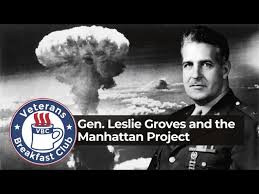
Manhattan Project: “The goal was to isolate a rare class of uranium atoms that were capable of producing nuclear chain reactions — the only process that could yield enough energy for an atom bomb…The most promising — gaseous diffusion — involved converting uranium into a gas called uranium hexafloride, or hex, and pumping it through a maze of porous barriers. Since the desired isotope, uranium-235, passed through the tiny pores, the rest of the atoms would gradually be filtered out, leaving only the prized nuclear fuel….If the project stood any chance of succeeding, the physicists needed materials that could stand up to both flourine and hex in some of the harshest conditions imaginable…As luck would have it, Dupont had already developed one that seemed to fit the bill: Teflon. The company hadn’t figured out how to make more than a few ounces at time, but it had a history of ramping up production fast…In the last two months of 1942 alone, the government contracted with Dupont to build two  factories to produce flourocarbon lubricants and sealants based on research from university scientists, and a third facility to manufacture a chemical critical to the production of both flourocarbons and hex — which were now a matter of national security….To avoid being seen as a war profiteer, the firm agreed  to limits its fee for the project to one dollar above costs and to turn all patents over to the US government. But it held on to its patent for Teflon, expecting the material would be key to the Columbia method for enriching uranium.”

Post War Products: “The push by companies like 3M to turn wartime innovations into peacetime profits would transform American Life. After the conflict, manufactures began marketing these materials for every imaginable purpose. Poison gases found new life as pesticides. Explosives like ammonium nitrate were repackaged as chemical fertilizer, revolutionizing entire food systems. And plastics once reserved for military use were transformed into a cornucopia of goods. Polyethylene, which had been used to coat radar cables, were turned into Tupperware, Hula Hoops, and grocery bags. Vinyl, or PVC, became shower curtains, flooring, medical equipment, and a popular new household item call Saran wrap. Nylon, which had been used to make parachutes, flak jackets, and aircraft fuel tanks, returned to store shelves in the form of previously scarce run proof stockings.”

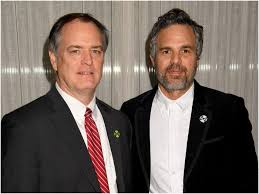
Rob Bilott and Mark Ruffalo

The book first focuses on PFOA (Perfluorooctanoic Acid C8HF15O2) which has a chain of 8 carbon atoms and were the first identified forever chemicals that do not break down. The book gives detailed histories of the long legal battles around the Dupont plant near Parkersburg, West Virginia, and the Dupont plant near Hoosick Falls NY surrounding Dupont’s production of PFOA chemicals. Cincinnati attorney Robert Bilott was involved in both battles. The 2019 Todd Haynes movie Dark Waters dramatizes the Parkersburg legal battle with Mark Ruffalo playing Robert Bilott.

Bilott first filed a Federal case in West Virginia in 1999 on behalf the Tennants, farmers whose cattle were dying as a result of Dupont hazardous substances being dumped into Dry Run near his farm. The case evolved into a class action suit with 3500 plaintiffs. Dupont reneged on their medical agreement forcing Bilott to file cases one by one. When the first few cases awarded millions in damages, Dupont settled with all plaintiffs for $671 million in 2017.

The Hoosick Falls case was settled for $27 million in 2025.

Dupont spun off its forever chemical division to Chemours Company in 2015.

Chemical companies continued development of forever chemicals in a new class of PFOS (Perfluorooctanesulfonic acid C8F17SO3H or C8HF17O3S ). Other new inventions were chemicals with carbon chains from 1 to 7 atoms and are identified as PFAS and include PFOA and PFOS.  They all share the characteristic that they don’t break down so are forever chemicals. It has become next to impossible for governments or the EPA to regulate (like setting parts per billion limits in drinking water).

“It all began in the early 2020s, when a group of European researchers developed a technique to detect an elusive subset of forever chemicals that evaded other methods — specifically, those with three or fewer carbon atoms. After applying this technique for drinking water across Germany, they made a breakthrough discovery: All but 2 percent of PFAS detected were ultashort-chain substances, which up until that point had hardly registered on scientists’ radar.”

“One molecule turned out to be particularly abundant — triflouroacetic acid, or TFA, which is used to make pesticides, pharmaceuticals, and working fluids for heating and cooling systems. It is also a common breakdown product of other PFAS. The researchers found that this chemical alone accounted for 90 percent of forever chemicals detected in German tap water. Since then, TFA has been detected in alarming levels in beer, bottled water, tea, and baby food in a variety of countries. One survey found the TFA made up virtually all PFAS found in rivers and groundwater across Europe.”

“Similarly, when researches from Emory University measured the levels of various PFAS in tap water from homes in Indiana, they found that TFA accounted for 85 percent of the total. And the average concentration was orders of magnitude above the EPA’s safety limits for PFOA. Industry has long insisted that shorter chain chemicals are safer because they don’t build up in people’s bodies. But the Emory team found that the TFA levels in homeowner’s blood were even higher than the national average for PFOA at its peak. This wasn’t because the chemical had built up over time but because people were being exposed to such large qualities.”

“They (TFA) build up faster in crops, leading to enormous concentrations in the few foods that have been tested. And they’re virtually impossible to get out of drinking water. Not only do they pass right through the type of carbon filters used to remove legacy chemicals but they also foil newer treatment technologies that are meant to remove a broad range of PFAS.”

“So far, manufacturers like Dupont, Chemours, and 3M have been hit with roughly fifteen thousand legal claims, the lion’s share from municipalities, water districts, and residents of polluted communities, though more than thirty U.S.states have also brought cases. And the numbers are expected to rise sharply in the coming months and years.”

“While these (EPA) standards are a potentially important step, they do nothing to protect people from the thousands of other forever chemicals that are inundating their bodies. And there’s no telling whether they (EPA standards) will survive Donald Trump’s second presidency.”

“In the end, any federal action may prove less consequential than the aggressive measures cropping up in other places. In 2023, the European Commission introduced a wholesale ban on the production and sale of PFAS and products containing them, the most sweeping chemical regulation in the bloc’s history. Thanks to the tireless efforts of grassroots activists, many U.S. states are embracing similar measures.”

“Rob Bilott, the lawyer who brought these chemicals to the world’s attention, sees these developments as a testament to the power of ordinary citizens. “It shows just how much individual people and communities standing up and speaking out can do and the dramatic change they put in motion” he said. “It took us way too long get here, but its happening.”


The Current American Oligarchic System

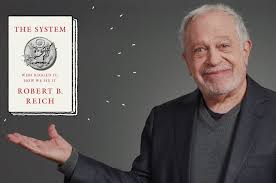
The System; Who rigged it, how we fix it; Robert B Reich, 2022

The typical American, as I have shown, has little wealth and has “near-zero, statistically non-significant” political power. Almost all wealth and power now reside in the oligarchy. Yet the oligarchy is not committed to the public good. It does not want to raise the wages of working Americans, reduce inequalities, guarantee all Americans access to good health care and a world class education, or stop climate change. The oligarchy’s allegiance is to corporate shareholders, and its major interest is enlarging their  and its own wealth. The easiest way to lift share values and enlarge the oligarchy’s wealth are to hold down wages, roll back regulations, find ever cheaper places to produce products and services, fight unions, and secure giant tax cuts that result in less money for education, health care, and everything else most Americans need.

In the 1980s and 1990s almost a quarter of all public corporations in the United States were at one time the target of an attempted hostile takeover, opposed by a firm’s management. Another quarter received takeover bids supported by management.

Corporate Raider Carl Icahn and Donald Trump

Few conditions change minds more profoundly than the imminent possibility of being sacked. Hence across America, CEOs who were now threatened by being replaced by CEOs who would maximize shareholder value began to view their responsibilities differently: they would maximize shareholder value even more. The corporate statesmen of previous decades became the corporate butchers of the 1980s and 1990s, whose nearly exclusive focus was — in the meat ax parlance that became fashionable — “to cut the fat,” “cut to the bone,” and make their companies “lean and mean.” By 1997, the Business Roundtable reversed the position it had taken in 1981. Now it declared the “job of business is in fact only to maximize shareholder wealth.”

Between 1981, when Jack Welch took the helm at GE, and 2001 when he retired, GE’s stock catapulted from $13 billion to $500 billion. Welch accomplished this largely by slashing American jobs and abandoning the communities GE had been rooted in. Before he became CEO, most GE employees had spent their entire careers with the company, usually at one of its facilities in upstate New York. But between 1981 and 1985, a quarter of them — 100,000 in all — were laid off, earning Welch the moniker of “neutron Jack,” along with the growing admiration of the business community. Between the mid-1980s and the late 1990s, GE slashed its American workforce by half again (to about 160,000) while nearly doubling its foreign workforce (to 130,000)…As GE opened facilities abroad, staffed by foreign workers costing a small fraction of what GE had paid its American employees, the corporation had all but abandoned upstate New York.

Giant corporations that dominate an industry also gain political power. They provide significant campaign contributions, have platoons of lobbyists and lawyers, and directly employ many voters. As a result, their CEO’s phone calls to members of congress are promptly returned. Items they want included in legislation are dutifully inserted; those they don’t want are scrapped. They get tax loopholes, subsidies, bailouts, regulatory exemptions, and loan guarantees they seek. They can stop laws in their tracks. Never underestimate the monetary value of such largess. The financial returns on political investments are among the highest in the whole system.

The three systemic changes I have outlined — from stakeholder to shareholder capitalism, from unionized workers to corporate monopolies, and from regulation of Wall Street to letting the street run wild — profoundly altered the American system. It created a jaw-dropping wealthy and powerful oligarchy. It shafted just about everyone else.


Jamie Dimon and Sandy Weill <> <> <> <> <> Koch Brothers

Dig under the surface of the system and you see individuals making deals that generate billions for themselves — such as Carl Icahn’s corporate raids, Jack Welch’s attacks on GE’s workers and unions, Warren Buffet’s investments in corporations with moats, and Sandy Weill’s and Jamie Dimon’s unfettered financial supermarkets and betting parlors.

Dig deeper and you see how these deals depended on seemingly small changes in laws and regulations, such as preventing companies defending themselves from raiders, neutering antitrust enforcement, imposing small fines for firing union organizers, refusing to regulate derivatives, and dismantling Glass-Steagall.

Bore still deeper and you see a vicious cycle in which, starting around 1980, wealth and power began concentrating around a relative small group at the top, giving them increasingly political clout to get changes in laws and regulations that concentrated their wealth and power even more.

The first three decades after WWII featured a growing middle class. a steadily more inclusive democracy, and a nation beginning to grapple with problems like poverty, inequality of opportunity, and environmental decay. African American and women slowly gained footholds in the system. Mass production begat mass consumption demanded steady jobs with good wages. This balance relied on strong unions, a government willing to regulate corporations, and large corporations rooted in their communities and responsible for the well being of their employees and neighbors as well are shareholders.

The  last forty years, the opposite has occurred. The middle class has shrunk, democracy is too often malfunctioning, and the nation has turned its back on climate change, poverty, widening inequality, and the evils of racism and xenophobia. As I’ve said, the economy doesn’t have to be a zero-sum game in which the winners do better only to the extent losers do worse. But power is necessarily a zero-sum game. Certain people possess it only to the extent other people don’t. Some people gain it only when others lose it. The connection between the economy and power is critical. As power has concentrated  in the hands of a few, those few have grabbed nearly all the economic gains for themselves.

Techno Feudalism – OpenAI

Empire of AI; Dreams and Nightmares in Sam Altman’s OpenAI, Karen Hao 2025

In their book Power and Progress, MIT economists and Nobel laureates Daron Acemoglu and Simon Johnson argue that every technology revolution must begin with a rallying ambition. It is the promoted of a technology benefiting everyone that puts in motion the long journey of amassing enough talent and resources to turn it into a reality. After analyzing one thousand years of technology history, the authors conclude that technologies are not inevitable. The ability to advance them is driven by a collective belief that they are worth advancing. The irony is that for this very reason, new technologies rarely default to bringing widespread prosperity, the authors continue. Those who successfully rally for a technology’s creation are those who have the power and resources to do the rallying. As they turn their ideas into reality, the vision they impose–of what the technology is and whom it can benefit–is thus the vision of a narrow elite, imbued with all their blind spots and self-serving philosophies. Only through cataclysmic shifts in society or powerful organized resistance can a technology transform from enriching the few to lifting the many.
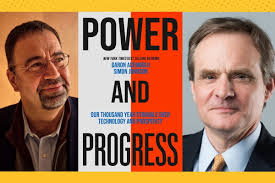
The two features of technology revolutions–their promise to deliver progress and their tendency instead to reverse it for the most vulnerable–are perhaps truer than ever for the moment we now find ourselves in with artificial intelligence. Since its conception, the development and use of AI has been propelled by tantalizing dreams of modernity and shaped by a narrow elite with money and influence to bring forth their conception of the technology. That conception is what has led to the exploding social, labor, and environmental cost that are playing out around the world today, particularly, as we’ll see, in many Global South countries, for which the consequences of their dispossession by historical empires still linger in delayed economic development and weaker political institutions.

“In February 2020, I (Hao) published a profile for MIT Technology Review, drawing on my observations from my time in the (OpenAI) office, nearly three dozen interviews, and a handful of internal documents.

“There is a misalignment between what the company publicly espouses and how it operates behind closed doors .. Over time it has allowed a fierce competitiveness and mounting pressure for ever more funding to erode its founding ideals of transparency, openness, and collaboration.”

“…OpenAI would ‘t speak to me again for three years.”

Alan Turing published in 1950 the article “Can machines think?”  proposing the Turing Test, also known as the imitation game. He argued that if a machine could engage in conversation indistinguishable from a human, it could be considered to be thinking. The term “artificial intelligence” was first coined by John McCarthy, an American computer scientist, in 1956. The field immediately divided into two camps promoting alternate research approaches:

1. Symbolic AI (or GOFAI – Good Old-Fashioned AI)
  • Relies on representing knowledge using human-readable symbols and logical rules,.
  • Aims to explicitly program knowledge and rules into the system, enabling logical reasoning and deduction.
  • Strengths: Transparency and interpretability, logical reasoning, and handling structured problems where rules are well-defined.
  • Weaknesses: Inflexibility in handling complex and ambiguous real-world scenarios, difficulty with large and unstructured datasets, and a labor-intensive process of knowledge acquisition.
  • IBM’s Deep Blue computer that first defeated chess grand masters used symbolic AI in its development.
2. Connectionist AI
  • Models AI processes based on the structure and functioning of the human brain, utilizing artificial neural networks.
  • Learns from data through training, identifying patterns and relationships, rather than relying on explicit programming.
  • Strengths: Excels at pattern recognition, handles large and complex datasets effectively, and demonstrates adaptability.
  • Weaknesses: Often considered “black boxes” due to their lack of transparency, making it difficult to understand how they arrive at decisions, Also requires significant computational resources and extensive training data. 
  • AlphaGo which first beat the Go champion was developed with Connectionist AI
Bridging the gap: Neuro-symbolic AI
Recognizing the limitations of each approach, a new field called neuro-symbolic AI is emerging. This approach aims to combine the strengths of both symbolic AI and connectionist AI, creating systems that are both adaptable and explainable. 
  • This integration allows AI systems to leverage neural networks’ ability to learn from data while utilizing symbolic reasoning to understand and explain their decisions.
  • This approach is especially promising for complex tasks requiring both pattern recognition and logical reasoning, such as medical diagnostics, autonomous driving, and financial modeling. 
The evolution of AI continues to explore ways to effectively combine these approaches to create more robust and trustworthy intelligent systems. 

Effective altruism (EA) is a philosophical and social movement that advocates using evidence and reason to determine the most effective ways to benefit others.

Ilya Sutskever, Sam Altman, Mira Murati, and Greg Brockman, of OpenAI

Following Sutskever’s philosophy of scaling simple neural networks, the question in the early days of OpenAI became: Scale which one?..none of the neural networks that had gained widespread traction seemed to fit the bill. In August 2017, that changed with Google’s invention of a new type of Neural network know as the Transformer. Transformers excel at picking up on long-range patterns. In 2018 OpenAI released the first version of that model, called Generative Pre-Trained Transformer, later nicknamed GPT-1. The second word in the name pre-trained — is a technical term with AI research that refers to training a model on a generic pool of data as a prerequisite for it to learn more specific tasks later. IGPT-1 in other words, had been trained on a generic pool of English to create a rough approximation of how the language worked. The model could then be “fine-tuned” or specialized, later by training on a much more tailored dataset–say Shakespeare plays to teach it how to generate Shakespeare-esque prose.

The cluster of models that OpenAI trained leading up to the final 1.5-billion-parameter version illustrated this relationship (between data, compute, and parameters). Each one (model) fell neatly on a curve of increasing capability. So it was little surprise when the largest one, which they named GPT-2 markedly improved over the juvenile text generation of GPT-1 to produce lengthy and coherent enough prose to be confused with a human’s.

What the darker surprise to the team was the content that GPT-2 was producing with its new coherence. Fed a few words like Hilary Clinton or George Soros, the chattier language model could quickly veer into conspiracy theories.. Small amounts of Nazi propaganda swept up in its training data could surface in horrible ways.

Everything OpenAI did was the opposite of inevitable; the explosive global costs of its massive deep learning models, and the perilous race it sparked across the industry to scale such models to planetary limits, could only have ever arisen from the place it actually did.

GPT-4’s new level of performance convinced OpenAI leadership that it was time to start working toward one of Altman’s long-coveted ambitions: an AI assistant that would look like and feel like the character Samantha (Scarlett Johansson) in the 2013 Spike Jonze movie Her.

But for the OpenAI executives, the rumors (that Anthropic was about to introduce a chatbot) were enough to trigger a decision; the company wouldn’t wait to ready GPT-4 into a chatbot; would release Schulman’s chat-enabled GPT-3.5 model with the Super-assistant team’s brand new chat interface in two weeks, right after thanksgiving (ChatGPT launched Nov 29, 2022 “No, all the GPU’s are melting. Everything is crashing.”).
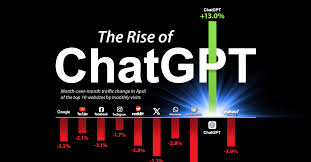
Within two months ChatGPT had reached one hundred million, at the time the fastest-growing consumer app in history.

ChatGPT catapulted OpenAI from a hot startup well-known within the tech industry into a household name overnight.

The model’s (ChatGPT) high rate of hallucinations, for example, had continued to prove particularly difficult to get under control … an internal document noted that OpenAI’s model had hallucinated during an internal test on roughly 30 percent of so-called closed-domain questions.

AI hallucinations occur when large language models (LLMs) generate false, misleading, or nonsensical information, presenting it as factual. These errors can range from simple inaccuracies to completely fabricated details.

On the Dangers of Stochastic Parrots: Can Language Models Be Too Big?

This paper originate within Google. The four big warnings:

First, large language models were growing so vast that they were generating an enormous environmental footprint, as found in Strubell’s paper. This could exacerbate climate change, which ultimately affected everyone but had a disproportionate burden on Global South communities already suffering from broader political, social, and economic precarity.

Second, the demand for data was growing so vast that companies were scraping whatever they could find on the internet, inadvertently capturing more toxic and abusive language as well as subtler racist and sexist references. This, once again, risked harming vulnerable populations the most in ways like the wrongful arrest of the Palestinian man or as documented in Noble’s work.

Third, because such vast databases were difficult to audit and scrutinize, it was extremely challenging to verify what was actually in them, making it harder to eradicate toxicity or more broadly ensure that they reflected evolving social norms and values.

Finally, the model outputs were getting so good that people could easily mistake its statistically calculated outputs as language with will meaning and intent. This would make people prone not only to believing the text to be factual information, but also to consider the model a competent advisor, a trustworthy confidant, and perhaps even something sentient.


The kinds of chips that OpenAI needed were expensive. Known as graphic processing units, or GPUs, that had originally been designed to quickly render graphics on computers, such as for giving video games a low-latency, glossy finish. But the same form factor excelled at training the AI models OpenAI wanted to develop, since they shared with graphics-rendering a common requirement: the need for crunching massive amounts of numbers in parallel.

Nvidia was the only chip maker making suitable GPUs and A100s, B100s, H100s, and V100s were are used in OpenAI ‘s modeling.

A15 Bionic Chip

Apple does not figure significantly in this discussion of the development of AGI. Their first Iphone introduced in 2007 incorporated an ARM (Advanced reduced instruction set computer) and a Power IV GPU. In 2017 Apple added an NPU (Neuroprocessing unit to its Bionic chip.

Yanis Varoufakis take on the tech giants damage to capitalism TechnoFeudalism Killed Capitalism


Heartsick Breakup With the West

One Day, Everyone Will Have Always Been Against This, Omar El Akkad, 2025

It is pointless, even, to make the obvious analogies, to imagine the response had almost any other country on earth killed hundreds or thousands of civilians on a hostage rescue mission, or flattened every hospital in a city on the hunt for a terror group, and then bragged about its success. Pointless because such things assume a conversation anchored in facts or reason or even the thinnest presupposition that the people being killed, like those killed on October 7 (2023), are human beings, their loss an utter indictment of the systems and leaders and world that allowed it. Instead, as the scope and scale of annihilation intensifies, an opposite presupposition becomes necessary, one that imposes on the dead the appropriate mendacity to justify their killing. A few weeks in, the notion that Palestinians deserve to die because some of them voted for Hamas becomes insufficient to hold up the body count. Soon Palestinians become indistinguishable from Nazis, and then worse than Nazis. As their eradication continues, they must be transformed into the worst human beings on earth, the weight of their deaths only then sufficiently lightened.

Everyone involved–the dead, their killers, the arbiters of the exchange rate–knows this for what it is. In 2014, when an Israeli newspaper runs an opinion piece in which the writer describes Palestinian children as “the explosives of the future,” there’s no ambiguity as to what is happening, what is desired to happen. Seven months before the Hamas attacks of October 2023, when the same newspaper publishes and then quickly deletes a post titled “When Genocide Is Permissible,” the bedrock of polite intellectual discourse that liberalism so desperately and invariably see as a hallmark of its own enlightenment is shown to be a phantom thing–a premise that, when most needed, cedes the floor to the concrete vocabulary of violence.  And then following the attacks, when Israeli defense minister Yoav Gallant says Israel is fighting “human animals,” it is not a statement of belief so much as permission. When those dying are deemed human enough to warrant discussion, discussion must be had. When they’re deemed nonhuman, discussion becomes offensive, an affront to civility.

…Tomorrow, more Palestinians will die, but in the places where the bombs are built and launched it will have no bearing on mortgages, bills, employment. Indeed, in many of these places, what will have a real economic effect is if the bombing stops. In social and professional circles there will be limited tolerance for any talk about the fortunes of some exotic, dangerous-sounding people. In the context of self interest–and maybe there never was any other context–it is utter madness to risk one’s own prospects standing up for people who can offer nothing in return. Tomorrow more Palestinians will die, but the unsaid thing is that it is all right because that’s what those people do, they die. Just for a moment, cease to believe that this particular group of people are human.

Two Parties in America

And yet there is a deranged honesty about the cult to which the likes of Pence–and former South Carolinian governor Nikki Haley, who signed her own message, “Finish Them!,” to similar bombs belong. American liberalism demands a rhetorical politeness from which the fascistic iteration of the modern Republican Party is fully free. There is something stomach-churning about watching a parade of Biden administration press secretaries offer insincere expressions of concern for Palestinians as the same administration bankrolls their butcher. It is a reminder that the Democratic Party’s relationship with progressivism so often ends at the lawn sign: Proclaim support for this minority group or that. Hang a rainbow flag one month a year from some White House window. Most important, remind everyone at every turn of how much worse the alternative would be.

Against such hollow gesturing, even the most unhinged Republican will always be able to say: Look, these people have no interest in your suffering, only in empty gestures. I’ll do away with gestures, and make the right people suffer. It is an astonishingly effective technique, but would not be if the leadership of the Democratic Party had come to realize that sloganeering without concrete action means nothing.

Don’t let the Biden administration’s endorsement of mass murder distract from the reality that a Trump administration would be so much worse.

…It can’t be the case that the Supreme Court is an unaccountable neoconservative body intent on rendering the whole country unrecognizable and that there’s simply no way to do anything significant about it. It can’t be that climate change is the single most important issue facing the world, with our entire species at risk, and drilling licenses need to continue. It can’t be that innocent Palestinians have faced unbearable suffering and we care very deeply about their plight, and absolutely nothing will stop the arming of the nation responsible. It can’t be both rhetorical urgency and policymaking impotence.

…Suddenly an otherwise very persuasive argument takes on a different meaning: “Vote for the liberal though he harms you because the conservative will harm you more” starts to sound a lot like “Vote for the liberal though he harms you because the conservative might harm me too.”..Want my vote? Be less monstrous than the monsters.

To preserve the values of the civilized world, it is necessary to set fire to a library. To blow up a mosque, To incinerate olive trees. To dress up in the lingerie of women who fled and then take picture. To level universities. To loot jewelry, art, banks, food. To arrest children for picking vegetables . To shoot children for throwing stones. To parade the captured in their underwear. To break a man’s teeth and shove a toilet brush in his mouth. To let combat dogs loose on a man with Down’s syndrome and then leave him to die. Otherwise, the uncivilized world might win.

written at Guantanamo Bay in 2008.

No, there is no terrible thing coming for you in some distant future, but know that a terrible thing is happening to you now. You are being asked to kill off a part of you that would otherwise scream in opposition to injustice. You are being asked to dismantle the machinery of a functioning conscience.  Who cares if diplomatic expediency prefers you shrug away the sight of dismembered children? Who cares if great distance from the bloodstained middle allows obliviousness. Forget pity, forget even the dead if you must, but at least fight against the theft of your soul.

A few months into the genocide, protestors are regularly interrupting Democratic Party events, Dozens of major universities across the country come to a standstill as students build encampments to protest the killing. It harkens most clearly to the anti-apartheid movement of the eighties and the antiwar and civil rights protests of the sixties–all of them, too, led overwhelmingly by young people and derided as naive and inconsequential until they weren’t, until they became central facets of the story the United States tells itself about how, inevitably, justice prevails.

It’s difficult to live in this country in this moment and not come to the conclusion that the principal concern of the modern American liberal is, at all times, not what one does or believes or supports or opposes, but what one is seen to be.

Whatever derangement currently occupies conservative American politics is, at least, something of very real consequence: the minority groups they want to legislate out of every facet of society, the books they want to ban, the mechanisms of democracy they want to subvert–none of it is hypothetical…every Republican will always be able to say, truthfully: At least there’s no contradiction between what I am, what I claim concerns me, and what I plan to do.

A growing number of people ask a different question; the world asks a different question, The world, full of people who factor not one iota in the calculus of those morning meetings (Democratic Party talking points of the day), looks upon this and asks, simply: Beyond self interest, what do you believe in? And every morning the answer, dressed up in anesthetic euphemism and dependent on our collective capacity for resignation to lessor of two evils, is: Nothing.

How empty does your message have to be for a deranged right wing to even have a chance of winning? Of all the epitaphs that may one day be written on the gravestone of Western liberalism, the most damning is this: Faced off against a nihilistic, endlessly cruel manifestation of conservationism, and somehow managed to make it close.

Imperialism

Maybe the real fear is that, when one begins to consider the root systems of small-scale, sometimes state supported, but often stateless evil, there’s an obligation to apply the same rigor to the large scale machinery of imperial evil. And in doing so, one might find that what drives and absolves the state of so much evil isn’t the fear that not doing so will allow some terrorist to destroy the fabric of free society. But rather that the evil itself is necessary to the system it protects. That in the end there is no international rules-based order, no universal human rights, no equal justice for all, simply fleeting arrangements of convenience in which any amount of human collateral is deemed acceptable so long as it works in the empire’s interest.

Leavetaking – Death in Palestine

In a hospital, In a refugee camp. In their beds. While make dinner for their children. While holding their siblings. While cycling. While playing on a beach. In a Market. In an incubator. Struggling to breathe, under the rubble. While trying to drag a loved one from the middle of the road. While burying the dead. While scavenging for food. While selling vegetable. While swimming in the sea, trying to catch fish. While playing soccer. While waving a white flag. With their hands raised in surrender. With their hands tied. While running away. At a checkpoint. In a torture camp. In a safe zone. In a school. While delivering aid. While waiting on aid. While performing surgery. While sitting down in a chair. By drone, from the safety of a great distance. Live on air. Away from sight.

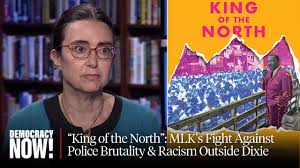
Martin Luther and Coretta Scott King Outside the South

King of the North, Martin Luther King Jr’s Life Struggle outside the South, Jeanne Theoharis, 2025

A new history of the Kings to correct the impression of previous biographies, news reporting, and northern and national politicians attempt to minimize the north’s Jim Crow wide spread school segregation, police brutality, housing segregation, and job discrimination and of the Kings efforts to address these abuses.

The book documents the Kings extensive time in Boston, New York, Los Angeles, and Chicago trying to get political action to address these problems in a national fight against racism, poverty, and war.

An important book correcting  the general impression that Lyndon Johnson’s civil rights legislation, war on poverty,  Great Society actually accomplished much of anything to address these problems, even in the face of the 1965 LA Watts riots that soon spread throughout the north.

The book particularly focused on Chicago where the Kings moved to a west side ghetto to try to fight  mayor Daley’s racist machine. This book reports that Daley’s critical support of LBJs 1968 reelection  may have prevented LBJ from acting and promoting critical legislation to address these issues in the north, particularly his failure to pass the 1966 Civil Rights Act.

In addition to the many local and state and federal politicians who stonewalled attempts to reform the racist policies of these major cities was the equally abysmal coverage of the Kings and events by the major national newspapers from the New York Times, The Washington Post, The LA Times, The Chicago Tribune, the Chicago Sun-Times, and others. These papers had in place policies limiting their coverage of serious black and Latino movements and actions and marches complete with regular editorials disparaging and villainizing King.

On Sept 28, 1963 the New York Times ran an editorial entitled Strike Against Santa Claus  13 days after the KKK bombing of the Sixteenth Street Baptist Church in Birmingham killing four girls and wounding more than a dozen. The piece slammed the bus boycott plan as “singularly inappropriate”, “dangerous”, and “self defeating”. Such a boycott, the Times claimed, would turn Christmas into “a day of hate” and put civil rights activists on the same level as those who did the church bombing”.  This from the Times paper of record!

The book includes extensive coverage of the efforts of J Edgar Hoover and the FBI to spy on the Kings and the movement, to infiltrate, tap phones, and leak salacious information to the press and to LBJ who received regular FBI briefings on MLK.

The book emphasized the critical role of Coretta Scott King in supporting, educating, and collaborating with King while at the same time raising the couple’s children (in Atlanta) while balance family wife with extensive work on her own globally in support of nuclear disarmament, the end to wars, and opposition to continued colonizing behavior by the big powers. The book criticizes the lack of women leadership in the movements both international and domestic. Coretta Scott emerges here as a force to be reckoned with.

The couple fully understood the constant threats to their lives including the 1963 bombing of their home In Birmingham early in the bus strike. They had extensive discussions about how to protect their children in the event of a death of either or both.

A book well worth reading to fully understand the extent of racial hatred in the north supported by active political policies including policing to enforce continued subjugation and suppression.

Human Rights Watch – a reflection

Righting Wrongs; Three Decades on the Front Lines Battling Abusive Governments, Kenneth Roth, Former Executive Director of Human Rights Watch, 2025

At 325 dense pages, this book is not easily summarized or digested. Human Rights Watch early on developed a strategy that focused on Shaming the governments perpetuating human rights violations. This required extensive and meticulous research and documentation of the abuse, gaining a reputation for the accuracy and reliability of the reports generated, and perfecting the process of publicizing, circulating, and gaining widespread governmental and popular attention to these reports.

The table of contents gives a quick look at the focus of the book: China, Russia and Syria, Saudi Arabia, War Crimes, Israel, The United Nations, Rwanda and the Democratic Republic of Congo, Hungary and Poland, The United States. For each focus, the book highlights the process of research and data collection, preparing reports, meeting key influential government and non government players, pressuring for changes, shaming through publication and pressure.

Karim Khan ICC Chief Prosecutor Putin, Netanyahu, Gallant

For this reader, the most interesting chapter was International Criminal Justice. Here is a detailed discussion of the development of international law and institutions to define global standards for the conducting of war, genocide, suppression of minorities and apartheid. Starting with post WWII Nuremberg and Tokyo tribunal trials conducted by the victors of the war, to the Universal Declaration of Human Rights, to the development of a consent of universal jurisdiction (jurisdiction that can involve a single nation or a coalition of nations or an international body) to bring legal cases against violators of human rights anywhere in the world. Included are the histories of the development of the ICC (International Criminal Court) and the ICJ (International Court of Justice), the International Covenant on Civil and Political Rights, the International Covenant on Economic, Social and Political Rights.

Interested readers are encouraged to read in its entirely this thoughtful, humane, optimistic work.


From the Enlightenment to the Present AGE OF ANGER

Age of Anger; A History of the Present, Pankaj Mishra, 2016

Friedrich Nietzsche and Marx

Voltaire

Jean-Jacques Rousseau

Nietzsche Appeared to be building on this contrast when he claimed to identify in the battle between Voltaire and Rousseau the ‘unfinished problem of civilization’. On one side stood the ‘representative of the victorious, ruling classes and their valuations’; on the other, a vulgar plebeian, overcome by his primordial resentment of a superior civilization.

One doesn’t have to subscribe to Nietzsche’s dichotomies to see that the disagreements between Voltaire and Rousseau illuminate some of the perennial questions: how human beings define themselves, what holds societies together, and divides them, why the underprivileged majority erupts in revolt against the privileged few, and what roles intellectuals play in these conflicts.

Alexis de Tocqueville

But as Tocqueville shrewdly pointed out, determined to ‘rebuilt society according to a entirely new plan, which each of them elaborated by the light of reason alone’, these men of letters (Voltaire and Rousseau) developed

“a taste for abstract, general theories of government, theories in which they trusted blindly. Living as they did almost totally removed from practical life, they had no experience that might have tempered their natural passions. Nothing warned them of the obstacles that existing realities might pose to even the most desirable reforms. They had no idea of the perils that invariably accompany even the most necessary revolutions.  Indeed, they had no premonition of them because the complete absence of political liberty ensured that they not only failed to grasp the world of affairs, but actually failed to see it. They had nothing to do with that world and were incapable of recognizing what others did within it.”

V.S. Naipaul                          Salman Rushdie

Many of them also became members, like Naipaul and Rushdie, of what  the philosopher Kwame Anthony Appiah calls a ‘comprador intelligentsia’: ‘a relatively small, Western-style, Western-trained group of writers and thinkers who mediate the trade in cultural commodities of world capitalism at the periphery’. Some other began to think, after close observation of European and American politics and history, that Voltaire and Kant, after all, might not hold the key to redemption, which may lie closer to home, in indigenous religious and cultural traditions.

John Maynard Keynes

The triumphs of capitalist imperialism in the nineteenth century had fulfilled on a grand scale Voltaire’s dream of a worldwide materialist civilization knit together by rational self-interest…A typical later example was the inhabitant of London, who in 1914, as John Maynard Keynes wrote, could ‘order by telephone, sipping his morning tea in bed, the various products of the whole earth…he could at the same moment and by the same means adventure his wealth in the natural resources and new enterprises of any quarter of the world’. This blessed citizen of an empire, who was best positioned to make money in globalized markets, regarded this state of affairs as normal, certain, and permanent, except in the direction of further improvement’. To him, ‘the projects and politics of militarism and imperialism, of racial and cultural rivalries’ seemed to have no influence on social and economic life. The extensive conflagrations of the early twentieth century, during which racial and national identity was repeatedly valued more than economic rationality, shattered this illusion. As Keynes wrote, with devastating understatement, “The age of economic internationalism was not particularly successful in avoiding war”.

But Nietzsche seemed to answer most thrillingly, as the (nineteenth) century ended, a general feeling of malaise: he seemed best able to discern, as Lu Xun, China’s iconic modern writer, claimed, ‘the falsity and the imbalances’ of nineteenth-century civilization. He confirmed the sense that old practices and institutions were failing to respond to the imperatives of development and progress, but he also seemed to amplify a widely felt need for a New Man and New Order.

To his youthful followers across the world he (Nietzsche) provided the intellectual framework for several quintessentially modern and pressing projects: the radical trans-valuation of inherited values, the revolt against authority and its shibboleths, the creation of new forms of superabundant life, and politics in the grand mode.

However, men like (Timothy) McVeigh, (Ramzi Ahmed) Yousef and (Omar) Mateen challenge the assumption that a freely willing human subject is motivated by certain desires, beliefs and perceived benefits, and has an omelette in mind — a New Man or a New Middle East — when he breaks eggs. For them the act of violence is all; they have no vision of an alternative political reality on a global or even local scale, like the one of a classless society or an Islamic nation state offered by communist and Iranian revolutionaries in the past and cultural supremacists and enthno-nationalists in the present. Pierre-Joseph Proudhon once defined this particular kind of revolutionary:

“Neither monarchy, nor aristocracy, nor even democracy itself, insofar as it may imply any government at all, even though acting in the name of the people, and calling itself the people. No authority, no government, not even popular, that is the Revolution.”

And now with the victory of Donald Trump (2016) it has become impossible to deny or obscure the great chasm, first explored by Rousseau, between an elite that seizes modernity’s choicest fruits while disdaining older truths and uprooted masses, who, on findings themselves cheated of the same fruits, recoil into cultural supremacism, populism and rancorous brutality. The contradictions and costs of a minority’s progress, long suppressed by historical revisionism, blustery denial and aggressive equivocation, have become visible on a planetary scale

They encourage the suspicion — potentially lethal among the hundreds of millions of people condemned to superfluousness — that the present order, democratic or authoritarian, is built upon force and fraud; they incite a broader and more apocalyptic mood than we have witnessed before. They also underscore the need for some truly transformative thinking, about both the self and the world.

Anarchism, Libertarianism, Neoliberalism, the origins of market Radicals

Crack-Up Capitalism; Market Radicals and the Dream of a World Without Democracy, Quinn Slobodian, 2023

Slobodian starts with a brief history of Hong Kong and of Singapore post independence from Britain. These have been the model for special economic zones (SEZ) and greatly influenced Chinese Chairman Deng Xiaoping’s  establishment of Shenzhen, Zhuhai, Shantou and Xiamen in the 1980s.  (see Deng and the Transformation of China)

He later spends time on the development of SEZs in Dubai. “If there is any place in the world that has contributed to global zone fever as much as the Asian juggernauts of Hong Kong and Singapore, it is Dubai…In the first decade of the 2000s, Dubai’s economic growth grew by 13 percent a year on average, outpacing even China. Skyscrapers were built (by low cost foreign labor) at the rate of a floor every three days. In six years, the city’s population doubled and its footprint quadrupled.” All three also created additional land from massive land reclamation projects.

How could such historical accidents be made to happen again? The shortcut to Hong Kong that (Paul) Romer offered was called the charter city. The formula: persuade poor nations to surrender patches of uninhabited territory to be managed by richer ones. Pollinate the empty land with rules known to make capitalism work and watch it grow. This would be colonialism by consent, occupation by invitation…Why not go all the way and give over your country to external management.

While earlier settlers once sought wealth in gold, crops, or railroads, the treasure of (special economic) zones like Prospera in the twenty-first-century was their status as a jurisdiction — their potential as a new place to pick and choose among regulations and licensing requirements. Such zones offered vivid examples of what had become standard practice in the conduct of global capitalism. When people form a business contract anywhere in the world, they already had the choice of which law they elect to use;  most commercial contracts are written either in New York State or English law. For what one scholar calls “roving capital”, laws were selected and combined a la carte…These jurisdictions (SEZs) were portals to what Oliver Bullough calls Moneyland, where people can select whichever laws “are most suited to those wealthy enough to afford them at any moment in time.”

The result, they said, would be the emergence of a hypermobile superclass of high-IQ individuals, who could remotely coordinate placid low-IQ workforces while stashing their wealth far from the grasping hands of governments.

Davidson and Rees-Mogg called this tiny, rarefied fraction of the world’s population “sovereign individuals” and estimated their combined number at a hundred million worldwide. The nation-state form was dysgenic. It worked against the dictates of evolutionary advance and survival. In an era of hypermobility, it served evolutionary interests to escape national constraints…The elites would cease to see national identity as anything meaningful, and the conceit that they owed anything to their so-called fellow citizens would be laughable. They would understand that one’s countrymen were actually “the main parasite and preditor”, their brains contaminated by the idea that they were owed a share of someone else’s hard-earned income. Sovereign individuals knew they had no obligations to anyone but themselves.

(Balaji) Srinivasan’s tweak to the start-up city model was to suggest that the online and offline worlds might not be alternatives to each other but complementary: you build online first, then you come down to earth. His replacement of the sovereign individual with “the sovereign collective” seemed like a break from Davidson and Rees-Mogg, but the difference was really only semantic. All three say the same things: the possibility of exit created by new technology, the creation of a new global caste of meritocratic adepts, and the abandonment of the taxing, regulatory state in favor of new affiliations and even new territories organized along the lines of private corporations.

Srinivasan preferred blue-sky (or, better blank-whiteboard) speculation to real-world examples. Yet one of the successful examples he offered was telling: the state of Israel. This was indeed a reverse diaspora, organized through newspapers and texts that produced a kind of cloud country of a Jewish homeland through the media of the time. Kicked off by the the publication of Theodor Herzl’s Jewish State in 1896, the Zionist plan translated only slowly into facts of the ground through small-scale acts of colonization, which were eventually accepted and given legitimacy by the dominant imperial powers of the the day. But consider the consequences of this example. The land in Palestine was no more bare than anywhere else in the world, and it remains rent by competing historical claims over territory. Israel’s solution to the problem of demographic and political geography has been to create a two-tier system separating primarily Jewish citizens of country from Muslim inhabitants of the regions. It fenced boundary — policed by cameras, drones, armed soldiers, and heat-sensing technology at the limit of theological frontier — puts the Berlin Wall’s death strip to shame.

Perhaps there was an honesty in this example. Srinivasan and his fellow tech investors expressed frustration with the problems of San Francisco —  a place rife with visible inequality and untreated mental illness, the legacy of centuries of racialized poverty, violence, and discriminatory immigration policy stretching back to the original expropriation of the land on which the city was built. It is clear that Srinivasan, with his resources, could find somewhere better. But as he seemed to admit to himself, it would probably look like the state of Israel: militarized, paranoid, defiant — and also very invested in technology. It was not for nothing that a bestselling book on Israel praised by Srinivasan called it the “start-up-nation”. Here was a template: a cloud country with a twenty-six-foot-tall border wall.

Those seeking an exit in the metaverse would also find nothing of the sort. The platforms that we log on to are owned by private actors. Our every keystroke (and when we are strapped into a VR rig, out every twitch bend and nod) is minutely tracked, traced, sorted, calibrated, and sold onward to advertisers and other developers. It says a lot that one of Silicon Valley’s most successful companies — Uber — did not offer an empty prairie on which to roam and build. Rather, if you were a driver, it pulled you along like a dog on a leash, punishing you for any deviation while preserving the fiction that you were a free contractor. The metaverse, as one critic has astutely observed, is probably best thought of as a cubicle.  The private government of corporations has little space for the alternative visions of collectives, other than those that reproduce its own dominance.

As one of the foundational texts of tech criticism notes, Silicon Valley often forgets its Hegel at its own risk. The German philosopher taught that the master is always dependent on the slave. Neither island nor cloud can exist without its underclass. Beyond the Masses of app-mediated gig workers, (see techno feudalism Yanis Varoufakis) even the vaunted artificial intelligence programs work only because of the often repetitive routines and efforts of labor both skilled and unskilled. From Honduras to Dubai, the waged service class is the easiest for the visionaries to forget and the hardest for them to live without.

Patrik Schumacher, Parametricism

In the twenty-first century, however, the situation changed again, (anarcho-capitalist Patrik) Schumacher said. As manufacturing grew more automated, and advances in artificial intelligence promised a “man-machine symbiosis” on the horizon, democracy no longer made sense. It was an antique ideology, an artifact of an earlier, superseded moment in the history of capitalism — a dumbly literal reading of the world map, as if everything were penned inside its colored containers. What made sense in the twenty-first century were dots on the map like Liberland: blank-slate enclaves that could be anchor points for virtual enterprises, getaways for the global elite, or new citadels of financial services, marketing, design, software engineering, and other lines of work that needed little more than an electrical outlet and a robust internet connection. “The revolution comes when the political system becomes a barrier to the forces of production” Schumacher said. “And that’s what we’ve reached.”

Reimagined Industrial City NEOM

(SEZ) Zones are everywhere, but contrary to the rhetoric of boosters, they do not seem to be creating islands of liberation from the state. Rather, states are using them as tools to advance their own purposes. NEOM is a telling example. Saudi Arabia, an economy owned and operated by a royal family, is contracting with the Chinese company Huawei to wire its agglomeration in the desert as a “smart city”. As one consultant conceded, zones have proceeded through government-enabled confiscation, running roughshod over basic libertarian principles of property rights. Creating a land market in rural China, was projected to leave 110 million villagers without land land by 2030. Zones are not turning the world into a patchwork of a thousand private polities in dynamic competition. They are strengthening the position of a handful of state-capitalist superpowers.

Good capitalists know the real game is capturing the existing state, not going through the hassle of creating a new one.

Besides, the United States itself looks more like a (SEZ) zone all the time.  In 2022, it edged out Switzerland, Singapore, and the Cayman Islands to take top spot in an index of financial secrecy, crowned as the best place in the world to illegally hide or launder assets. Its own status as a democracy has been called into question. It was briefly downgraded by a well-respected index to a so-called anocracy, a system mixing features of democratic and autocratic rule. Soon, Americans may no longer need to go elsewhere to realize the perfect zone.

No matter the rhetoric, zones are tools of the state, not liberation from it. No matter the exit fantasies, zones cannot escape the earth. The third truth about them is perhaps the most banal but most consequential; zones have inhabitants. There is no such thing as a blank slate.

We can see this clearly back in the ur-zone of Hong Kong. I began this book with Milton Friedman gazing out affectionately at the city’s skyline, which he imagined as a perfect container for the conduct of capitalism, with decision-making insulated from disruptions by the absence of democratic elections. In 2017, when I presented and early version of that chapter at the University of Hong Kong, a professor from the law school laughed. Milton’s description of a quiescent city-state was borderline ridiculous in the middle of one the most convulsive periods in Hong Kong history, with the population taking to the streets time and time again to demand political self-determination.