Brave Old World

Devil General, Kato Kiyomasa katokiyomasa1 (July 25, 1562-August 2, 1611) was a Japanese daimyō of the Sengoku and Edo period.)
Pretty scary guy, especially dealing with the Christians. (Click the image to see better)

A ferocious fighter and often ruthless, Katô Kiyomasa was a warrior, nothing more, nothing less. He wrote to his followers later in his life that poetry and dancing were shameful pastimes for a samurai, and ordered anyone who found himself engaged in the latter to commit suicide. His cruelty and love of combat (for sport, he hunted tigers with a spear in Korea) earned him the nickname Kishokan, or, ‘Devil General’. (via)

Another July 25 birthday person was Thomas Eakins who was born in 1844.
Thomas Eakins eakins
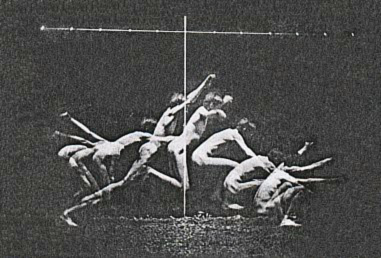
Where Muybridge’s system relied on a series of cameras triggered to produce a sequence of individual photographs, Eakins preferred to use a single camera to produce a series of exposures on one negative. (via)

Are you familiar with this image? Here is his Walt Whitman.

Eric Hoffer the author of the True Believer and Elias Canetti were born on July 25 three years apart.
This Nobel prize winning author is more known for “Crowd and Power” and “Auto-Da-Fe”

Elias Canetti elias-canetti

His Aphorisms – Canetti-scope (Mixed with his planets from his horoscope)
*Today everyone takes part in public executions through the newspapers.
*Most religions do not make men better, only warier.
*There is no such thing as an ugly language. Today I hear every language as if it were the only one, and when I hear of one that is dying, it overwhelms me as though it were the death of the earth.

My favorite book by Canetti is “Kafka’s Other Trial” – Kafka’s Letters to Felice B.

Canetti sees that writers are responsible of the preservation, revivification, and invention of the life-sustaining myths and their meaning. Tolstoy is rejected as a model for having “struck a kind of pact with death” in his late turn to religion, and Kafka emerges “among all writers as the greatest expert on power”.(Via)

The Odd Bod (In literary London, Elias Canetti was everybody’s favorite refugee, by Jonathan Wilson.)

Iris Murdoch, Canetti’s lover for three years from 1952, gets absolutely and cruelly ripped, as a lover, as a novelist, and as a philosopher.

Canetti appeared in Iris Murdoch’s novels as..

he spawned in her not just mysterious power-broking Mischa Fox, but also demonic puppet-master Julius King in A Fairly Honourable Defeat, and rapacious woman-hating tyrant Charles Arrowby in her Booker-winning The Sea, The Sea. (Fox on the Loose)

In Party in the Blitz Canetti exacts his vengeance on her. “Everything I despise about English life is in her,” he declares. His portrait of her, though “caricature” is surely a better word, fairly seethes with venom and bile. He scorns everything from her enthusiasms for Sartre and Heidegger to the diaphanous blouse she wears to a meeting with Canetti and his friend the aristocratic Aymer Maxwell. He describes in detail the circumstances of their love-making–“she had things on that didn’t have anything remotely to do with love, it was all woolen and ungainly”–and, even worse, he is dismissive of her gift:
Iris is what I would call an “illegitimate” writer. She never suffered from having to write. There was always something schoolgirl-like about her, even after twenty-four novels, and if not schoolgirl-like, then schoolmarmish, which in a writer is even worse.
It is a pity that Party in the Blitz should stand as Canetti’s last word. He was, in his way, a great figure, one of the last of those omnivorous intellects produced by Old Europe in its dying decades before the catastrophe of World War II. If Auto-da-Fé is more impressive than satisfying, Canetti’s Crowds and Power, which grew out of the disastrous politics of the 1930s, will surely survive. For all the cruelty of his late judgments on those he loved and those who loved him, it is well to heed the warning of Murdoch’s biographer Peter Conradi: “Those wishing to honour Iris’s reputation must fight the temptation to blacken Canetti’s.”
Monster’s Ball by John Banville)

July 26 birthday boys – Aldous Huxley, Stanley Kubrick and Carl Jung (Previously here and here ).
You can see Huxley here. (Mike Wallace interviewed him)


Bruce Conner Without End

  • Bombhead bruceconner by Bruce Conner

  • <> 1BruceforH

  • The great collage artist and accidental avant-garde father of found-footage, Bruce Conner died July 7th 2008. His legacy in Library of Congress and in collections among major art institution the world over. But long before he certainly had been immortalized on YouTube, and that of course bears an amusing double-irony. Some might interpret it as “giving back” others as “stealing from a thief”.

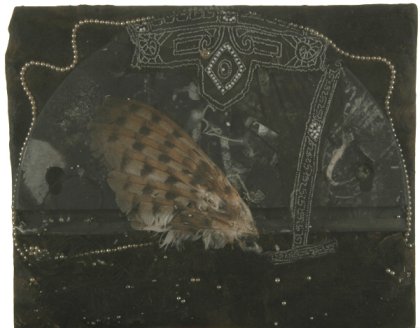
    Feather brucefeather2

  • <> <> <>bruce3

    <> <> <>brucemetro Metronome Cocoon
    The above images from Susan Inglett Gallery and Paule Anglim

    Blessing Angel by Bruce Conner – 12 more angels to click through (via Life on Mars)
    The Sound of Two Hand Angel. (This angel appeared on NYtimes obit )

    Various works by B. C from Kohn Gallery

    Bruce Conner and his poet friend had a lovely adventure by calling up Robert Motherwell from a phone book.
    (Read more here, an obit by Leah Garchick.)

    R.I.P Bruce Conner (previous post)

    R.I.P Bruce Conner

    Bombhead bruceconner by Bruce Conner 1933 – 2008

    Bruce Conner, San Francisco Artist With 1950s Beat Roots, Dies at 74 (Ken Johnson NYtimes)

    See Mea Culpa, Bruce with David Byrne and Brian Eno from My Life in the Bush of Ghosts

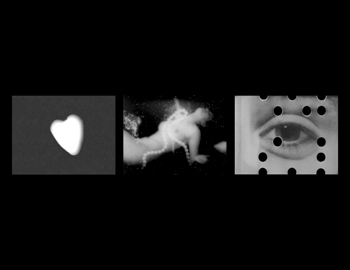
    Connor mainly uses old educational films, science films, government footage and film footage that people throw out and then recuts them to new music, creating dark and sometimes hilarious moods and visual commentaries.

    A-Movie – It is referred to as the piece that brought Conner to notoriety. In skillfully editing stock footage, Conner created abstract metaphors of mankind’s violence.

    EVE-RAY-FOREVER bruce2(via)

    His interview 1990

    Devo’s Mongoloid :From “The Complete Truth About De-evolution.” (youtube)

  • <> <>

    “Erasing Dreamland” was created using found footage from Youtube in order to forge a digital homage to the analog techniques of the artist and film maker Bruce Conner, specifically his film “Take The 5-10 To Dreamland.”

  • The digital recreation of “Take The 5-10 To Dreamland” was created by searching through the meta data associated with videos on YouTube and sorting through the resulting clips for bits and pieces that would sync in time with Bruce Conners’s film.

    Here is When Caveh [Zahedi] met Bruce (Conner) (who didn’t meet Louise [Brooks])

    Conner was cantankerous and one-of-a-kind. He would wear an American flag pin. When asked why, he said, “I’m not going to let those bastards take it away from me.” Sigh. (via Movie city indie)

    San Francisco author Rebecca Solnit wrote;

    My friend Bruce Conner died yesterday morning in San Francisco, I heard from many mutual friends this morning (I’m overseas). He had been ill for decades and had been given months to live twenty years earlier and more seriously. I met him when I was in my early twenties; I approached him with considerable trepidation when I wrote my thesis on the artist Wallace Berman and found him duly terrifying but also charming, hilarious and possessed of a stunning memory for events of the 1950s, when he joined the other visual artists who, allied with the beat poets of the era, created one of California’s first and most significant avant-gardes. We became friends and had a bumpy, a musing, precious friendship over the next near-quarter century, with interruptions. Bruce himself as most of you know was an extraordinary prodigal genius in many media, reshaping the way film could be understood with his short found-footage movies from A Movie (1958) on, making brilliant, eclectic, and deeply individual work in painting, collage, assemblage, printmaking, photography and other still media, mostly in black and white, a drama of beauty, strangeness, moral wrestling, pop culture and spiritual inquiry that is in my opinion among the most important visual stuff to come out of that strange midcentury moment; I think posterity will raise him higher in the history books, though his choice to spend his life in San Francisco was a choice not to give a damn about that, and he made many uncareerist decisions in a career that is better described as a quest for unattainable perfection that left him dissatisfied but kept his standards high. He was able to see what was sad in porn ography, beautiful in atomic explosions, strange in shadows and photograms, comic in Jesus engravings, rich in black and white. I remember him telling another interviewer about his first viewing of a movie–a Shirley Temple film seen with his mother in Kansas when he was five; his mother kept urging him to admire Temple’s cuteness and he recalled, “She was fifty feet tall and the scariest thing I’d ever seen.” And he commented, “I’m just a stranger on earth, that’s all,” or words to that effect suggesting that aliens see things differently than the natives. No longer of this earth…..
    warmly,
    Rebecca
    (Via email from Hal Lum)

    Alan Sondheim – I saw his films years ago, this is sad (via email)

  • Obit from Sf MoMa Open Space

  • Cherry, Mahogany and Scott Burton

    <> <> <>brancusi (via)

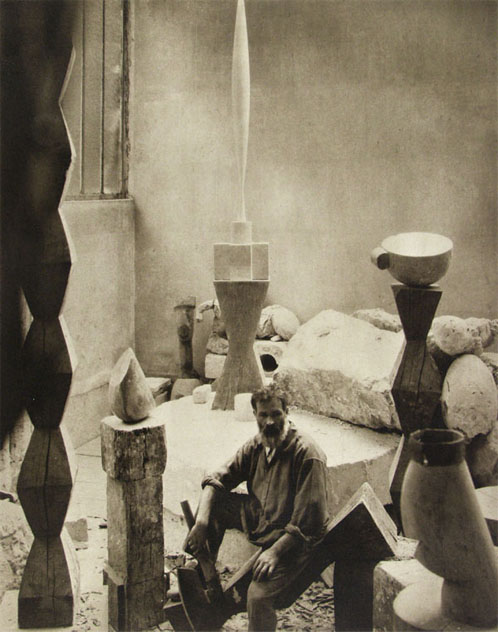
    Name the sculptor who made the above piece. You see him here (photo:Edward Steichen) and here, two great photos with this cup like sculpture on the edge .
    Scott Burton made a career out of studying this great artist and extend the concept of merging art and design, abstract non-functional to functional.

    Mahogany scottburton Table by Scott Burton

    Mr. Burton, a small, wiry man known for his erudition, verbal precision and explosive laugh, worked as a critic and an editor for Art News and Art in America before becoming a full-time artist. He emerged in the late 1960’s and early 70’s as part of an artistic generation that came of age in the shadow of Minimalism. (Obit by Roberta Smith)

    See more Scott Burtonhere Bronze Chair <>Steel furniture <> Rock Sattee Sitting on his stone chair

    Ellen Harvey’s Panel (partial view – via)
    mellen
    Don’t know Ellen? Look her up here.

    Matt Christie mpanel2
    Crafted by Matt Christie. (Yes, the reader of philiosophy and literature and an author of Pas-audela)
    Wood work you can buy. (Make great wedding, anniversary, or housewarming gifts) They are on sale now at GREENRIVERWOODS Etsy.

    Saul Steinberg and Erik Erikson

    Finger Print Landscape gallery_fingerprintland
    1950 (Via)

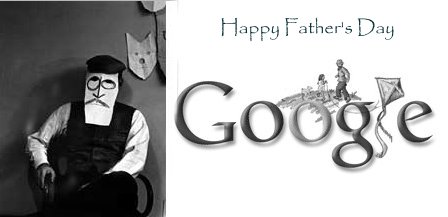
    She met the artist Saul Steinberg in 1958. When she went to his home to make a portrait, Steinberg came to the door wearing a mask that he had fashioned from a paper bag. Over a period of several years they collaborated on a series of portraits, inviting individuals and groups of people to pose for Morath wearing Steinberg’s masks. (via)

    saul2
    Saul Steinberg wearing one of his masks, c. 1961. Photo by Inge Morath.

    June 15 is the birthday of Saul Steinberg and Erik Erikson.

    The Erikson life-stage virtues, in the order of the stages in which they may be acquired, are:

  • 1. hope – Basic Trust vs. Mistrust – Infant stage. Does the child believe its caregivers to be reliable?
  • 2. will – Autonomy vs. Shame and Doubt – Toddler stage. Child needs to learn to explore the world. Bad if the parent is too smothering or completely neglectful.
  • 3. purpose – Initiative vs. Guilt – Kindergarten – Can the child plan or do things on his own, such as dress him or herself. If “guilty” about making his or her own choices, the child will not function well. Erikson has a positive outlook on this stage, saying that most guilt is quickly compensated by a sense of accomplishment.
  • 4. competence – Industry vs. Inferiority – Around age 6 to puberty. Child comparing self worth to others (such as in a classroom environment). Child can recognise major disparities in personal abilities relative to other children. Erikson places some emphasis on the teacher, who should ensure that children do not feel inferior.
  • 5. fidelity – Identity vs. Role Confusion – Teenager. Questioning of self. Who am I, how do I fit in? Where am I going in life? Erikson believes that if the parents allow the child to explore, they will conclude their own identity. However, if the parents continually push him/her to conform to their views, the teen will face identity confusion.
  • 6. love (in intimate relationships, work and family) – Intimacy vs. Isolation – Young adult. Who do I want to be with or date, what am I going to do with my life? Will I settle down? This stage has begun to last longer as young adults choose to stay in school and not settle.
  • 7.caring – Generativity vs. Stagnation – the Mid-life crisis. Measure accomplishments/failures. Am I satisfied or not? The need to assist the younger generation. Stagnation is the feeling of not having done anything to help the next generation.
  • 8. wisdom – Ego Integrity vs. Despair – old age. Some handle death well. Some can be bitter, unhappy, dissatisfied with what they accomplished or failed to accomplish within their life time. They reflect on the past, and either conclude at satisfaction or despair.
  • Gandhi’s Truth On the Origins of Militant Nonviolence by Erik H. Erikson –

    Previous post on Father and Son – Oe Kenzaburo, Arthur Miller and Gandhi

    They’re Not There

    <> <> <> <> <> <> velasquez
    Some Velázquez Paintings were missing at EL Prado that particular day.

    Yesterday I went to the Prado with my friend Maria. We saw some amazing paintings. The people in them are all dead now. It was not possible to take pictures and for this I made a long list. I also found this room from which they moved some masterpieces to another room and I took photos of the marks of time. When they saw me they told me to stop.(Christodoulos from Limassol, Cyprus)

    Now I know two people from Limassol, Christodoulos and Marcos Baghdadis thanks to google Velázquez alert.

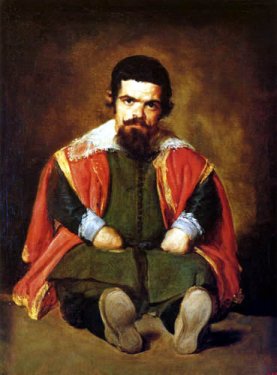
    El bufon don Sebastian de Morra dwarf
    Diego Velázquez

    Obama and Clinton met privately, they wrote. We’re not there to know if they’re were there to meet. (My tribute to Obama’s mom and her son and Gifs for Gaffe for Bosnia animation)

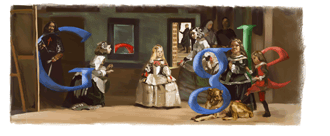
    Meanwhile we were there to catch two google logos recently.
    Google Balloon Daybalo.jpg Everest Day

    Speaking of “Not quite there” read this review for Todd Haynes I’m Not There.

    Todd Haynes has always struck me as less filmmaker than conceptual artist — a man with grand ideas whose mind works faster than 24 frames per second, the screen never quite able to contain the weight of his brain.

    Universal Studio on Fire


  • (Photo of Ed Rucha by Gianfranco Gorgoni)

  • EdruschauniRuscha (via) Gelatin silver print 1999

    Fire 1967
    “Universal Studio, Universal City” by (Click to enlarge)

    Fire 2008
    universal.jpg (via)

    “We have duplicates of everything,” said Ron Meyer, NBC Universal president and chief operating officer. “Nothing is lost forever.” (via)

    Workers using a blowtorch on the roof of a movie set building facade at Universal Studios accidentally set a huge fire that swept through the back lot, fire officials said Monday. (via)