Empire of AI; Dreams and Nightmares in Sam Altman’s OpenAI, Karen Hao 2025

In their book Power and Progress, MIT economists and Nobel laureates Daron Acemoglu and Simon Johnson argue that every technology revolution must begin with a rallying ambition. It is the promoted of a technology benefiting everyone that puts in motion the long journey of amassing enough talent and resources to turn it into a reality. After analyzing one thousand years of technology history, the authors conclude that technologies are not inevitable. The ability to advance them is driven by a collective belief that they are worth advancing. The irony is that for this very reason, new technologies rarely default to bringing widespread prosperity, the authors continue. Those who successfully rally for a technology’s creation are those who have the power and resources to do the rallying. As they turn their ideas into reality, the vision they impose–of what the technology is and whom it can benefit–is thus the vision of a narrow elite, imbued with all their blind spots and self-serving philosophies. Only through cataclysmic shifts in society or powerful organized resistance can a technology transform from enriching the few to lifting the many.

The two features of technology revolutions–their promise to deliver progress and their tendency instead to reverse it for the most vulnerable–are perhaps truer than ever for the moment we now find ourselves in with artificial intelligence. Since its conception, the development and use of AI has been propelled by tantalizing dreams of modernity and shaped by a narrow elite with money and influence to bring forth their conception of the technology. That conception is what has led to the exploding social, labor, and environmental cost that are playing out around the world today, particularly, as we’ll see, in many Global South countries, for which the consequences of their dispossession by historical empires still linger in delayed economic development and weaker political institutions.
“In February 2020, I (Hao) published a profile for MIT Technology Review, drawing on my observations from my time in the (OpenAI) office, nearly three dozen interviews, and a handful of internal documents.“
“There is a misalignment between what the company publicly espouses and how it operates behind closed doors .. Over time it has allowed a fierce competitiveness and mounting pressure for ever more funding to erode its founding ideals of transparency, openness, and collaboration.”
“…OpenAI would ‘t speak to me again for three years.”

Alan Turing published in 1950 the article “Can machines think?” proposing the Turing Test, also known as the imitation game. He argued that if a machine could engage in conversation indistinguishable from a human, it could be considered to be thinking. The term “artificial intelligence” was first coined by John McCarthy, an American computer scientist, in 1956. The field immediately divided into two camps promoting alternate research approaches:
1. Symbolic AI (or GOFAI – Good Old-Fashioned AI)
- Relies on representing knowledge using human-readable symbols and logical rules,.
- Aims to explicitly program knowledge and rules into the system, enabling logical reasoning and deduction.
- Strengths: Transparency and interpretability, logical reasoning, and handling structured problems where rules are well-defined.
- Weaknesses: Inflexibility in handling complex and ambiguous real-world scenarios, difficulty with large and unstructured datasets, and a labor-intensive process of knowledge acquisition.
- IBM’s Deep Blue computer that first defeated chess grand masters used symbolic AI in its development.
2. Connectionist AI
- Models AI processes based on the structure and functioning of the human brain, utilizing artificial neural networks.
- Learns from data through training, identifying patterns and relationships, rather than relying on explicit programming.
- Strengths: Excels at pattern recognition, handles large and complex datasets effectively, and demonstrates adaptability.
- Weaknesses: Often considered “black boxes” due to their lack of transparency, making it difficult to understand how they arrive at decisions, Also requires significant computational resources and extensive training data.
- AlphaGo which first beat the Go champion was developed with Connectionist AI
Bridging the gap: Neuro-symbolic AI
Recognizing the limitations of each approach, a new field called neuro-symbolic AI is emerging. This approach aims to combine the strengths of both symbolic AI and connectionist AI, creating systems that are both adaptable and explainable.
- This integration allows AI systems to leverage neural networks’ ability to learn from data while utilizing symbolic reasoning to understand and explain their decisions.
- This approach is especially promising for complex tasks requiring both pattern recognition and logical reasoning, such as medical diagnostics, autonomous driving, and financial modeling.
The evolution of AI continues to explore ways to effectively combine these approaches to create more robust and trustworthy intelligent systems.
Effective altruism (EA) is a philosophical and social movement that advocates using evidence and reason to determine the most effective ways to benefit others.

Ilya Sutskever, Sam Altman, Mira Murati, and Greg Brockman, of OpenAI
Following Sutskever’s philosophy of scaling simple neural networks, the question in the early days of OpenAI became: Scale which one?..none of the neural networks that had gained widespread traction seemed to fit the bill. In August 2017, that changed with Google’s invention of a new type of Neural network know as the Transformer. Transformers excel at picking up on long-range patterns. In 2018 OpenAI released the first version of that model, called Generative Pre-Trained Transformer, later nicknamed GPT-1. The second word in the name pre-trained — is a technical term with AI research that refers to training a model on a generic pool of data as a prerequisite for it to learn more specific tasks later. IGPT-1 in other words, had been trained on a generic pool of English to create a rough approximation of how the language worked. The model could then be “fine-tuned” or specialized, later by training on a much more tailored dataset–say Shakespeare plays to teach it how to generate Shakespeare-esque prose.
The cluster of models that OpenAI trained leading up to the final 1.5-billion-parameter version illustrated this relationship (between data, compute, and parameters). Each one (model) fell neatly on a curve of increasing capability. So it was little surprise when the largest one, which they named GPT-2 markedly improved over the juvenile text generation of GPT-1 to produce lengthy and coherent enough prose to be confused with a human’s.
What the darker surprise to the team was the content that GPT-2 was producing with its new coherence. Fed a few words like Hilary Clinton or George Soros, the chattier language model could quickly veer into conspiracy theories.. Small amounts of Nazi propaganda swept up in its training data could surface in horrible ways.
Everything OpenAI did was the opposite of inevitable; the explosive global costs of its massive deep learning models, and the perilous race it sparked across the industry to scale such models to planetary limits, could only have ever arisen from the place it actually did.
GPT-4’s new level of performance convinced OpenAI leadership that it was time to start working toward one of Altman’s long-coveted ambitions: an AI assistant that would look like and feel like the character Samantha (Scarlett Johansson) in the 2013 Spike Jonze movie Her.
But for the OpenAI executives, the rumors (that Anthropic was about to introduce a chatbot) were enough to trigger a decision; the company wouldn’t wait to ready GPT-4 into a chatbot; would release Schulman’s chat-enabled GPT-3.5 model with the Super-assistant team’s brand new chat interface in two weeks, right after thanksgiving (ChatGPT launched Nov 29, 2022 “No, all the GPU’s are melting. Everything is crashing.”).
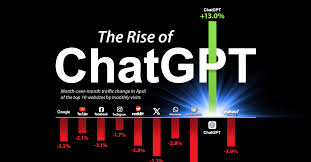
Within two months ChatGPT had reached one hundred million, at the time the fastest-growing consumer app in history.
ChatGPT catapulted OpenAI from a hot startup well-known within the tech industry into a household name overnight.
The model’s (ChatGPT) high rate of hallucinations, for example, had continued to prove particularly difficult to get under control … an internal document noted that OpenAI’s model had hallucinated during an internal test on roughly 30 percent of so-called closed-domain questions.
AI hallucinations occur when large language models (LLMs) generate false, misleading, or nonsensical information, presenting it as factual. These errors can range from simple inaccuracies to completely fabricated details.
On the Dangers of Stochastic Parrots: Can Language Models Be Too Big?
This paper originate within Google. The four big warnings:
First, large language models were growing so vast that they were generating an enormous environmental footprint, as found in Strubell’s paper. This could exacerbate climate change, which ultimately affected everyone but had a disproportionate burden on Global South communities already suffering from broader political, social, and economic precarity.
Second, the demand for data was growing so vast that companies were scraping whatever they could find on the internet, inadvertently capturing more toxic and abusive language as well as subtler racist and sexist references. This, once again, risked harming vulnerable populations the most in ways like the wrongful arrest of the Palestinian man or as documented in Noble’s work.
Third, because such vast databases were difficult to audit and scrutinize, it was extremely challenging to verify what was actually in them, making it harder to eradicate toxicity or more broadly ensure that they reflected evolving social norms and values.
Finally, the model outputs were getting so good that people could easily mistake its statistically calculated outputs as language with will meaning and intent. This would make people prone not only to believing the text to be factual information, but also to consider the model a competent advisor, a trustworthy confidant, and perhaps even something sentient.
The kinds of chips that OpenAI needed were expensive. Known as graphic processing units, or GPUs, that had originally been designed to quickly render graphics on computers, such as for giving video games a low-latency, glossy finish. But the same form factor excelled at training the AI models OpenAI wanted to develop, since they shared with graphics-rendering a common requirement: the need for crunching massive amounts of numbers in parallel.
Nvidia was the only chip maker making suitable GPUs and A100s, B100s, H100s, and V100s were are used in OpenAI ‘s modeling.

A15 Bionic Chip
Apple does not figure significantly in this discussion of the development of AGI. Their first Iphone introduced in 2007 incorporated an ARM (Advanced reduced instruction set computer) and a Power IV GPU. In 2017 Apple added an NPU (Neuroprocessing unit to its Bionic chip.
Yanis Varoufakis take on the tech giants damage to capitalism TechnoFeudalism Killed Capitalism