Archive for the 'Books' Category

Financial Disaster Tourist

Thursday, December 15th, 2011

Boomerang, Travels in the New Third World, Michael Lewis, 2011


Kyle Bass, scavenger of nations

In 2008 Lewis interviewed Kyle Bass of Hayman Capital, a Texas hedge fund, who predicted that a number of first world countries, starting with Greece, but including Japan, France, Ireland, Portugal, Spain, Italy, and Switzerland were destined to default on their debts. Bass didn’t know when this might happen but started placing bets with JP Morgan, Morgan Stanley, and Goldman Sachs, figuring these firms had proven too big to fail and would therefore still be around to pay the bets. These bets were pretty cheap, for example $1 million insurance that Greece will default cost him $1100 per year. If Greece negotiated down its debt 70% Bass’s $1100 bet would return $700,000. Not bad. Thus the first chapter of Lewis’ new book would lead one to expect a sequel to his The Big Short. It isn’t.

Instead we are treated to a fast, superficial tour of Iceland, Greece, Ireland, and Germany, complete with annoying pronouncements about stereotypical national culture traits of these countries. Of our own Wall Streeter’s Lewis says;


Billionaire bankster John Paulson

Extremely smart traders inside Wall Street investment banks devise deeply unfair, diabolically complicated bets, and then send their sales forces out to scout out and scour the world for some idiot who will take the other side of these bets. During the boom years a wildly disproportional number of those idiots were in Germany…When Goldman Sachs helped the New York hedge fund manager John Paulson design a bond to bet against – a bond that Paulson hoped would fail – the buyer on the other side was a German bank IKB, along with another famous fool at the Wall Street poker table called WestLB…

In other words, Germans have a national flaw that causes them to believe that Wall Street “banksters” are not scam artists of the first order and to believe that an AAA credit rating actually means something. Shame on them. These German banking idiots are paid a mere €100,000 per year and some were thrown in jail after their losses occurred. Prosecuting bankers, what a concept. German banks, along side British, Danish, and other banks were all big investors and losers in Iceland and Ireland.


Fathers Ephraim and Arsinios

Lewis’ best story concerns two monks, Father Ephraim and Father Arsinios, who found themselves in charge of a deteriorating, badly managed monastery on the peninsula of Mount Athos. They discover a five hundred year old land grant from the Byzantine Empire to a lake that is now under the control of the Greek government. The monks go to Athens and trade “their” lake for €1-2 billion worth of government commercial real estate. The monk’s intend to to use the money from these commercial properties to restore their monastery. How they managed this is still under investigation but there is talk of confessions the monks took from government ministers. In any event, word leaked of the land trades, and public outrage forced the collapse of the decades long rule of the conservative party, bringing to power American born socialist George Papandreou in October 2009.

The Greek government in order to qualify to join the European Union and the Euro-zone had to meet stringent requirements for debt and inflation. They were allowed to join the EU in 2002 and were then able to borrow money at EU rates of 5% where previously the government was paying upward of 15%. Still, when the socialists came to power in 2009 the debt for that year was projected to be a manageable 3.7%. The new socialist finance minister discovered the government was making large numbers of off the books payments bringing the actual 2009 debt to around 14%. The total indebtedness of the Greek government was discovered to be around €1.2 Trillion or about €250,000 for each citizen. This is still better than the $330,000 debt for each Icelander.

Greece also has a problem with revenues – it can’t collect taxes. A majority of Greeks are self employed including all Greek doctors and all report a maximum income of €12,000, below the poverty line but avoiding all income tax. Real estate is valued at a small fraction of its true market value for taxes and Greeks avoid paying sale taxes most of the time. Tax collectors would rather accept bribes than go after a tax dodger. A tax collector that is too diligent may be fired.

Greece’s debt comes from such practices as paying an average of €65,000 for public workers, more than is paid in Germany. The railroad brings in €100 million in revenue and costs €400 million per year to run. For all this money the trains never run on time. One analyst concluded Greece would be better off shutting down the railroad and paying taxi fees. Most government workers retire at age 50 and receive full pensions.

When the EU imposed austerity measures which limited public workers to €4,000 per month, the Greek government responded by creating the 14 month year. The population is so opposed to austerity measures that they engage in violent protests.

Turning to Ireland, Lewis describes their three banks as doing little more than investing in commercial and home real estate development in Ireland. The new Anglo Irish bank invested exclusively in large commercial real estate development and their growth and success forced to two older banks to compete. An analyst at Meryl Lynch, Ingram wrote a scathing report on the three bank’s lending practices and was fired for his efforts. Meryl Lynch then published a report stating that all three Irish banks were profitable and well capitalized. Based on this report, the Irish government moved to shore up the banks when they got into trouble. Instead of guaranteeing deposits and letting investors and bond holders go under, the Irish government guaranteed everyone, in effect nationalizing the banks. This left the Irish public on the hook for the entire debt incurred by the three mad banks. In the end, the banks funded development of more offices than Ireland had businesses, and more houses than Ireland had people. It was total madness. Prices were completely disconnected from rents so that an €800,000 house would rent for €800 month. After the collapse, Irish bankers have had to go into hiding as have the Icelandic bankers. They are both afraid and ashamed to be seem in public.

Lewis’ best analysis again concerns Germany. Germans are very disciplined, hate debt and inflation, and demand that their government act accordingly. Germans are also sitting on a massive gold store second only to the US. As the dominant power in the Euro-zone, Germany expects all other Euro-zone members to act responsibly like they do. When these nations include Greece, Ireland, Italy, Spain, and France, this expectation is unlikely to be met. So will the Euro-zone survive? Who knows.


Arnold Schwarzenegger, Governator

At the end of this short book, he goes home to California, the state closest to complete financial collapse. One California professor thinks they are not quite as bad as Greece but close. Lewis quotes some statistics. California spent $6 billion in 2010 on 30,000 prison guards, that’s $200,000 per guard twice the German banker’s pay. A prison guard who started work at age 45 can retire 5 years later at age 50 with full pension. California’s highest paid employee made $838,706 working for the prison system. Yet the prison system is so overcrowded and badly run that courts have ordered reductions in inmates and improvements in prison conditions.

In that same year, California spent $4.7 billion on its higher education system’s 33 campuses serving 670,000 students and once the envy of the world. Tuitions that in 1980 were $776 per year were $13,218 in 2011. California’s debt to its employees alone is approaching $200 billion. Californians share the Greeks hatred of paying taxes. They have created a system of government that is totally dysfunctional and where its citizens can override lawmakers with petitions at any time. City after city are declaring bankruptcy. But Lewis doesn’t have much to say about American national character.

The IMF is now moving to take control of both Greece and Italy. What is probably needed here is a sequel, not to The Big Short, but to Naomi Klein’s The Shock Doctrine. What is likely going on here is a move by the financial giants to seize ownership of the various nation’s most important and productive assets. The joke that Papandreou tried to sell the Greek Islands may actually be what is about to happen. Neo-colonialism may be coming to the Euro-zone.

Prelude to the Great War

Monday, December 12th, 2011

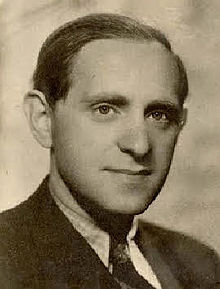
They Were Divided, Miklos Banffy, 1940
Book Three of The Writing on the Wall, the Transylvania Trilogy, translated into English in 2001


Miklos Banffy The Tolstoy of Transylvania


Kolozsvar Romania

This book covers events from the time of Austria’s annexation of Bosnia and Herzegovina in 1908 to the start of the Great War (WWI) in 1914. The story is told from the point of view of Count Balint Abady, an Hungarian aristocrat with large land holdings near Kolozsvar (now Cluj-Napoca) in Transylvania (Romania). This is a world well known to the author Banffy, perhaps the richest Hungarian aristocrat in Kolozsvar who was an able diplomat who negotiated the agreement under which Hungary joined the League of Nations in 1920.

The book is about evenly divided between stories and descriptions of the social lives of these Hungarian aristocrats and the meaningless politics of the Hungarian aristocrats in the dual monarchy Austro-Hungarian empire. It is a nostalgic and regretful look back on a world destroyed in the Great War. An English preface to the look likens the Hungarians in Romania to the English in Ireland and says Banffy reminds him of Hardy.

Balint tries his best to maintain his Noblesse oblige to his own serfs and actively promotes the establishment of agricultural cooperatives to allow the Romanian small land holders to collectively cooperate in the production and distribution of their agricultural products. He is forward looking but helpless in the face of the foolish political maneuvers of his fellow political aristocrats. He credits the peace that has held in Europe since 1967 with creating a generation unacquainted with the horrors of war and unprepared to take the necessary steps to prevent it. Italy, Russia, and France are busy trying to expand their empires in North Africa and the Balkans feeling that they have come late to the party of empire. Kaiser Wilhelm in Germany is building up his navy and recklessly challenging England on the seas. Franz Joseph has been emperor of the declining dual empire since 1848 but seems destined to live forever. Efforts to build up their military and even build a navy (with sea-bases where?) come to nothing.

In the end Balint fatalistically rejoins his old regiment in the mobilization and prepares for war. He expects to die and expects the world he has known and loved to be completely destroyed.

Patent Follies

Wednesday, November 30th, 2011

Deadly Monopolies, Harriet A. Washington,2011

Washington is a medical ethicist and bioethicist whose attitude seems to be summed up in this quote from Thomas Browne;
“No one should approach the temple of science with the soul of a money changer.”


The Real Henrietta Lacks, unsung hero of Polio vaccine

Who owns our bodies? Apparently not us judging from consistent court rulings. In 1951 tumor cells were extracted without consent from cancer patient Henrietta Lacks for further study. These cells, known as Hela were propagated and sold over and over and are still available for research today. They have generated millions of dollars in fees and have underpinned research breakthroughs and treatments too numerous to mention although their contribution to the development of Salk’s polio vaccine stands out for special mention. Henrietta’s husband had refused to consent to the cell extraction and the family only learned that the Hela line was world famous in 1994 when a son was approached to provide his cells for additional study.


Alistair Cooke’s Body Snatched

Appropriation of body parts without permission continues unabated and is a huge business worth billions today. Among those appropriated without permission were Alistair Cooke, long time host of PBS’ Masterpiece Theater. Some of these bodies including children have found themselves used in auto manufacturers crash tests.


Burroughs Ginsberg writings overturned plant patent

Then in 1980 the Bayh-Dole act was passed to allow the commercialization of patents resulting from government sponsored research. In that same year, 1980, the supreme court ruled that life can be patented leading to a gold rush of patents in plant and animal life. Traditional remedies and medicines known for hundreds or even thousands of years have been patented. Few have been overturned by the courts. A 1980′s patent on a Brazilian psychedelic plant was overturned not because of the plant’s traditional and sacred meaning to a Brazilian tribe but to the 30 year prior writings of Alan Ginsburg and William S. Burroughs. Bio-colonialism is OK but prior documented western “discovery” can be used to invalidate a patent.

While the human genome project itself and its discoveries were placed in the public domain, subsequent work to isolate individual genes responsible for certain diseases were allowed to be patented. That’s right, Alzheimer’s, cancers, and many other deadly diseases are owned and controlled by patent holders. More than 50,000, almost a fifth of all human genes are now patented, more than 36,000 by a single French company, Genset. Many genes were allowed to be patented even though researchers don’t know the gene’s function. These genes patents more than any single cause have stymied, slowed down, or even blocked outright research into tests and treatments of many deadly diseases. At the very least they have dramatically increased the cost of doing research as huge patent licensing fees must be paid.

The pharmaceutical industry was once the most profitable industry ever to exist on the planet. It has now fallen to the third most profitable and profits are in free fall off the cliff. Why? Because drug companies no longer develop important life saving blockbuster drugs like the statins (Zocor is off patent and Lipitor’s patent is expiring), but put their efforts into “me too” drugs and life enhancing drugs like Viagra or cosmetics.

They also pour enormous efforts and resources into defending through litigation and extending their patents with such tricks as combining two drugs whose patents are expiring into a “new” patentable drug, or re-branding a drug for a new purpose such as patenting an existing drug under a new name with FDA approval for use by black people (whatever that means genetically) exclusively. Remember thalidomide the drug that caused all those birth defects back in the 1950s and 1960s. Guess what, thalidomide is back as a relabeled newly patented drug for the treatment of lepers.

It costs upward of $1 million to fight a patent infringement case involving drugs. To prevent “me too” drugs, companies file not only the drug they want to market, but every near derivative they can imagine. One drug patent was surrounded by 1300 similar drug patents to make “me too” drugs virtually impossible to produce. Adding to the mess, some drug patents are 400,000 pages long (not a typo) and the company requesting the patent pays most of the patent office costs. Sounds a lot like the relationship between the ratings agencies and the financial companies who pay them. Imagine litigating over a patent that no one can possibly read or understand.

What can happen once a patent is granted for a drug? One drug capable of eliminating sleeping sickness was never marketed for that purpose but was re-branded as a facial creme to remove women’s facial hair. Not enough money in sleeping sickness? Several effective cancer drugs were not marketed because of low projected revenues and the university inventors were unable to override the company decision. Those drugs sit on the shelf useless.

Available cancer drugs have been singularly disappointing resulting in an overall extension of average American lifespans a mere four months. Yet a single course of cancer drug treatment can cost $200,000 to $300,000 each. In one case, the Canadian health system, unable to reach an acceptable price agreement with the manufacturer, paid $218,000 for one Canadian patient to travel across the border for treatment in the US. We now learn that speculators often corner the market and horde these expensive drugs in order to hold doctors-patients-hospitals hostage for incredible additional markups. Oh the wonders of unfettered capitalism.

Unable to get American consents for drug studies, companies increasingly are testing drugs in Africa and Asia where they ignore consent requirements and feel free to use placebos where they would be required to use the best available treatments for their comparisons. That’s OK, their test subjects won’t be able to get the test drug anyway after the study ends. This is The Constant Gardener on steroids. See also The Body Hunters. And if the patients or their families sue with government help as in a case in Nigeria where 11 children died during a test and many other were disabled for life, the drug company “lost” all its records yet once a settlement was negotiated was able to identify its test subjects through DNA tests. Very mysterious record disappearance. The drug was never FDA approved fortunately.

But avoiding the need for consent is not limited to poor countries but is practiced domestically as well. One company had developed a blood hemoglobin substitute whose early tests showed up bad side effects. Needing another large clinical study to proceed the company came up with a novel idea. They kept supplies of the “blood” in EMT vehicles operating in whose areas contained mostly poor, primarily black and Hispanic populations. Whenever the EMT team picked up a patient who had lost blood they administered the artificial hemoglobin rather than the usual saline solution on the trip to the hospital. The company’s thin justification for avoiding the need for consent was that the subject was unconscious (sometimes), that no family members were present (sometimes) and that treatment was urgently required. (No, saline would have stabilized the subject til arrival at the hospital.) Once in the hospital, the company extracted blood samples three times a day for the study. If a subject asked why they were told it was a normal part of their treatment. In other words the subjects were never informed that they were in the study, of the known risks and side effects of their treatment, they were lied to throughout. The FDA did not approve the hemoglobin substitute.

For those that think the horrors of the Tuskegee syphilis experiments on black soldiers is ancient history, think again. After the military grade anthrax samples were mailed to important congressmen and newsrooms, a drug company rushed to develop a vaccine for anthrax. While the vaccine was in testing and after significant problems such as loss of vision and hearing and miscarriages had already surfaced, the DOD determined to vaccinate more than 100,000 troops with the non-FDA approved drug. Thousands of soldiers refused and were dishonorably discharged from service at great cost to themselves and the military. A pregnant soldier asked to be transferred but her commanding officer not only denied the transfer but forcibly had her vaccinated as an example. She miscarried. The FDA never approved the vaccination but the soldiers learned they had no legal recourse either against the military or the drug company. Today thousands of former soldiers suffer from the side effects.

Also on the subject of bio-colonialism, researchers are increasingly descending on isolated groups of people whose isolation give them a limited gene pool and therefore makes them useful for isolating particular disease’s genetic causes. Thus Easter Island, Hawaiians, a 2000 year old group of Jews in India are recruited for studies for which they are unlikely to benefit. An interesting example is Iceland where an Icelandic researcher formed his own company and set out to collect samples and information promising financial rewards and medical breakthroughs beneficial to Icelanders. Icelanders love genealogy and can track their ancestry often back to a Viking. They also keep extensive medical records tracing back for generations. Thus the researcher was able to put together a uniquely valuable data base with cell samples. Unfortunately breakthroughs and profits eluded him and the company fell into bankruptcy where control of the valuable data was lost. The information has now been sold to drug companies and insurance companies (Did you know your disqualifying pre-condition originated with some ancient viking?) The possible horrors are hard to contemplate.

While government grants still fund the vast majority of research on disease and treatment, the drug companies have dominated the control and marketing of the resulting breakthroughs. Drug companies also include the government subsidies when justifying high drug prices. A Pharma sponsored study put the average cost per drug at $800 million which they round to a billion in talking points. Ralph Nader’s group, using Pharma’s own numbers puts the actual cost at about $100 million, still serious money.

The patenting mess has drawn the universities and other institutions into a dependency on marketing their patents and research that has totally compromised their role as independent investigators. One researcher assembled the worlds most valuable collection of cells and materials to study Alzheimer’s only to see his University of Washington sell the collection to Pfizer. He and his subjects were unable to reverse the sale. In one court case, Duke argued that their university researchers should be protected in their investigations only to have the court rule that since Duke patents research and sells licenses they are indistinguishable from any other corporation and their employees cannot be expected to have special privileges. Universities are no longer special. Further, virtually all researchers whether in the University or elsewhere are on the take from the drug companies.

Professional journals such as JAMA and the New England Journal of Medicine have been compromised to the point they are little more than paid drug ads. Journal articles are ghost written by drug employees with the named authors having no access to the underlying research numbers. Because everyone qualified is on the take, independent peer review of articles is no longer possible. The big danger in all this is that drug companies are able to hide and lie about the actual clinical trial results and cover over or minimize side effects. Thus doctors who rely on journals to keep up with medical advances are mislead as to the true risks of the drugs they prescribe.

Even worse, doctors are on the take to the tune of $6 billion a year with an additional $2 billion in junkets. How can a patient rely on a corrupted doctor’s recommendations for treatment?

Drug companies also contribute financially to the FDA’s operating costs. This gives them the power to remove FDA officials who may oppose approval. The FDA has moved from denying approval of questionable new drugs to requiring larger warning labels as if this will prevent or limit the drug’s inappropriate use. When a drug is pulled by the FDA it often is re targeted and relabeled and reintroduced with FDA approval such as the infamous thalidomide.


Lula da Silva announces Brazil’s HIV march-in

Governments all have the ability to require “compulsory licenses” for critical drugs like those for HIV. Brazil shocked Pharma in 2007 by announcing a compulsory license for Merck’s HIV efavirenz. India has long ignored drug patents and have become proficient as reverse engineering patented drugs. Brazil’s action has set off a chain reaction among other governments causing the drug industry to start to rethink its pricing policies for poor countries. In the last 20 years only 4 drugs have been developed for diseases unique to poor countries. One of those is sold only as a vaccine for visitors to those poor areas not for the residents themselves.

The Gates Foundation, WHO, and other groups are experimenting with a new model where entire governments in poor countries guarantee a market for a drug to treat diseases like sleeping sickness or malaria. It is hoped the guarantee will finally induce drug companies into manufacturing drugs for these diseases. International organizations are also encouraging drug companies to think of pricing tiers for poor countries and are helping to police the illegal re-importation of the cheap drugs. The actions of Brazil and India are encouraging this trend but counter pressures come from WTO attempts to enforce intellectual property rights, i.e. patents.

There have also been a few cases where gene patents have been overturned, most famously for the seven ovarian cancer patents on the genes BRAC1 and BRAC2. This case has been appealed and will likely end before the supreme court. Still this temporary limited victory gives Washington hope that things might be reversing and ever optimistic, she looks forward to the day when Bayh-Dole will be eliminated and the plant and animal and gene patent rulings reversed. Dream on. At least patents expire after twenty years unless companies figure cleaver ways to extend them so research and development may be able to resume after this wasteful interregnum.

Civilization Lost

Friday, November 18th, 2011

The Price of Civilization, Jeffrey D. Sacks, 2011


Justice Oliver Wendell Holmes Jr.

Sacks quotes Supreme court justice Oliver Wendell Holmes Jr.; “I like to pay taxes. With them I buy civilization.” Hence the title of his book and its subtitle “Reawakening American Virtue and Prosperity.” Fortunately, Holmes, who died in 1935, would not live to see the death of his ideal in the current age of unfettered greed.

Sacks begins by citing the guiding economic principles of his mentor Paul Samuelson of MIT whose textbook Economics, first published in 1948 has been used in most introductory economics courses including this reader’s ever since.

    Markets are reasonably efficient institutions for allocating society’s scarce economic resources and lead to high productivity and average living standards.
    Efficiency, however, does not guarantee fairness (or “justice”) in the allocation of incomes.
    Fairness requires the government to redistribute income among the citizenry, especially from the richest members of the society to the poorest and most vulnerable members.
    Markets systematically underprovide certain “public goods” such as infrastructure, environmental regulation, education, and scientific research, whose adequate supply depends on the government.
    The market economy is prone to financial instability, which can be alleviated through active government policies including financial regulation and well-directed monetary and fiscal policies.

Sachs goes on to give the reasons why income inequality is at historic high levels, and yet taxes on wealth are historically low, why government is doing virtually nothing about redistribution and is providing almost none of the things government is uniquely required to provide like support for research, education, environmental regulation, infrastructure, etc. The picture is predictable awful.

He joins other writers disillusioned with an Obama that he supported. He details how health care “reform” was decided in secrecy in negotiations with the insurers and pharmaceuticals and in complete disregard for public option that wanted at least a public option. He goes on to show how Obama and lawmakers disregard public opinion in issue after issue, from environmental reform to energy policy to banking re regulation and wall street makeover. The voters are clearly the disenfranchised as the administration and Congress listen only to powerful interests and the elites.

But Sachs is ever the optimist and in part 2 he attempts to demonstrate that things can change for the better. He goes through an obscure numbers exercise to show that things can improve with modest changes – no need for radical overhaul. Unfortunately his exercise doesn’t really address the fundamental problem of income redistribution and the proper role of government called for by Samuelson. But how can even the modest goals be met in our current state of political paralysis? Sachs suggests maybe a third political party will arise miraculously from the ashes to save us. Yeah right. Or maybe the Millennials (those born after 1992 with their inadequate and partial educations thanks to our dysfunctional governments) will save us. American society does everything it can to destroy the future prospects for the next generation and then expects them to come save us from ourselves?

This reader enjoyed the clear, simple writing to explain where we are and how we got here, but the solutions, unfortunately are also simple (as in retarded).

Liberal’s Capitulation

Thursday, November 17th, 2011

Death of the Liberal Class, Chris Hedges, 2011

Most accounts of our current political paralysis starts in the 1970s or with the election of Reagan and focus on the role of the Neocons and their greedy corporate masters. This history starts with the outbreak of the Great War (WWI) and asks the question: What happened to the once powerful and independent liberal class, the Democratic party, the labor unions, the academics and intellectuals, the liberal media, the arts, music, and theater to allow the total takeover of the corporate masters and their war machine? Hedge’s answer:

The liberal class has ossified. It has become part of the system it once tried to reform. It continues to speak in the language of technical jargon and tepid political reform, even though the corporate state has long since gutted the mechanisms for actual reform. The failure of the liberal class to adjust to the harsh, new reality of corporate power and the permanent war economy, to acknowledge its own powerlessness, has left the liberal class isolated and despised. The liberal class has died because it has refused to act as if anything has changed. It ignored the looming environmental and economic collapse. It ignored the structural critique that might pull us back from the horrific effects of climate change and a global depression. Our power elites and their liberal apologists lack the ideas and the vocabulary to make sense of our new and terrifying reality.

This situation has left the entire country disenfranchised and Hedges joins the growing list of writers who supported the Obama election hoping for change, and are now totally disillusioned. The timidity of Obama and the liberal class to stand up to the Corporate elites is both frightening and astounding. He fears the disenfranchised, in their disillusion, will be manipulated by demagogs and does not rule out a fascistic takeover. he quotes Jaron Lanier:

The preponderance of them (the disenfranchised) are located in rural areas and in the Red States, the former slave states. And they are connected (via the Internet) and get angrier and angrier What exactly happens? …There is a potential here for very bad stuff to happen.

This reader would have liked Hedges to start a little earlier, with the progressive movement and Teddy Roosevelt (TR) that brought the robber barons under control and broke up Standard oil. Government control expanded and incomes were better distributed. This short progressive era also saw the first American colonies in Cuba and the Philippines and the use of gunboat diplomacy to open Japan and persuade Columbia to allow an independent Panama in exchange for a little 100 mile corridor called the Panama Canal zone.

This short progressive period ended under liberal president Woodrow Wilson, former President of Princeton University, who aided and abetted the corporate and banking interests who wanted the US to enter WWI so it would have a seat at the table in determining the future of Germany and Europe and the fate the Ottoman Empire at war’s end. To this end, the corporate and media powers created the first modern propaganda machine under George Creel, silencing opponents of war (most Americans and their Congressional representatives). With the German U boat sinking of the Lusitania, Wilson was able to push his war resolution through Congress and launch America into the new era of the perpetual war state.

The propaganda machine created such memorable slogans and “The war to end all wars” and “the war to make the world safe for democracy”, both patently false. At the end of the short war, the propaganda machine instantly turned to vilify Russian communism blaming the Germans and lower East Side Jews for fomenting the revolution.

America entered a decade long period of unfettered capitalist madness culminating in the stock market crash of 1929 and the start of the Great Depression with its massive worldwide suffering. Two elections in 1932 were to seal the fate of the world for the next several decades; the US election of FDR and the German election of the Nazi party with Hitler as Chancellor. It is the latter model that Hedges fears for America’s future.

With FDR, the US entered another short progressive period, this time with major gains by labor unions. Even socialists were elected to office and there was a flourishing of art, literature, and theater directed at the mass of the working public. Hedges sites particularly, the musical “The Cradle will Rock” first produced in 1937. He also sites the writings of John Steinbeck. This progressive era was again cut short by war with FDR committing America to a two front war against Japan and Germany.

Once again, the propaganda machine was instantly turned against the Soviet Union at the end of the war and we entered the long not so cold war with misadventures in Korea and Vietnam. The unamerican activities hearings intimidated and silenced broad swathes of liberal artists and intellectuals at a time when they should have been speaking loudest. With a brief renaissance of the civil rights movement and consumer and environmental movements under Ralph Nader the country quickly reverted to corporate control.


Rosenthal Pandering to the Advertisers – Nader Fourth Most Powerful American

Hedges has a particularly bitter feeling for the New York Times and its then executive editor, right wing Abe Rosenthal who oversaw the marginalization of Nader and instituted a policy which seems to still be in place that Noam Chomsky was never to be sited in the Times. Hedges himself was forced out of the Times for speaking the truth after 15 years work in the Middle East. Even legendary reporter Sydney Schanberg (The Killing Fields) was forced out by the Times because he insisted on reporting the truth about New York. Hedges believes both Malcolm X and Martin Luther King would have been marginalized into irrelevance by the media had they lived a couple of years longer. Today the best the Times can do is offer Tom Friedman and his second Iraq war and benefits of globalization corporate cheer leading.


Greatest Living American Intellectual

Unions marginalized themselves by cozying up to management and cutting sweatheart deals undercutting their own membership. Universities turned the process of tenure from protecting the academic freedom of deserving members to a process of ensuring tepid work and conformity. Many disciplines became meaningless closed loops of obscurity such as the followers of Derrida whose language and work can have meaning only to those inside the loop. Theater has become meaningless extravaganza that few can afford to attend. Art has become a commodity to be manipulated by museums and the wealthy and is more about celebrity than any possible meaning.


Living an exemplary life

Hedges only glimmer of hope lies with the continuing works of Ralph Nader and Noam Chomsky. He also considers Howard Zinn’s life a meaningful example of honesty and protest, a man who believed history should be told from the point of view of its victims. His A People’s History of the United States remains an important legacy. As far as journalism is concerned, Hedges has little positive to say. Nader, though, sites Amy Goodman of Pacifica’s Democracy Now as the only place he turns today when he has something to contribute. Democracy Now was the only reliable source of the information during the Arab Spring and is now the most reliable source of information on the Occupy Wall Street movement.


The Truthful Journalist

We can only hope that meaningful change will come out the Occupy Wall Street movement. The alternative, fascistic scenario is too awful to contemplate. What is clear to Hedges is that the liberal class is incapable of fixing itself. It sold its soul to the corporate masters and is dead.

Coyotes, Goats, and Chestnuts

Tuesday, November 8th, 2011

Prodigal Summer, Barbara Kingsolver, 2000

An ecological tale from Appalachia. The main characters are two educated women.

Deanna Wolfe is a forty two year old forest service ranger – game warden who guards the mountain overlooking Zebullon Valley and the town of Egg Fork where she was born and raised. Her master’s thesis was on the role and importance of predators in the balance of nature. With the extinction of the red wolf from her area, a replacement is needed and for the first time she has spotted signs that coyotes may have arrived. She desperately hopes that the coyotes will stay and successfully raise families on her mountain. Young Eddie Bondo, a Wyoming rancher out to see the rest of country arrives on reclusive Deanna’s mountain, rifle in hand. From birth Eddie has known that the coyote is the enemy of the rancher and must be hunted down. Eddie and Deanna spend the rest of the book arguing about the proper role of the coyote in the grander scheme of things. Neither can convince the other but Eddie for the first time has met his match in a woman and the two become lovers. Deanna knows Eddie will disappear some day.

Lusa Maluf Landowski, descended from Polish Jews and Palestinians, is an entomologist teaching at the U of Kentucky in Lexington where she meets Cole, a farmer from Egg Fork, sent by local farmers to her workshop on integrated insect management. They fall in love and Lusa moves to Cole’s sixty acre farm where she finds herself immersed in the Widener family and its many daughters. Cole is the youngest and only son and inheritor of the farm that has been in the family for generations. To make ends meet on the struggling farm, Cole drives and truck and soon dies in a road accident. Cole leaves no will but Lusa as his widow inherits the farm.

The Widener family expects Lusa, the city girl, to pack up and leave but she shows little sign of doing so. The farm house is haunted by friendly ghosts, both Cole and his sister Jewell and, strangely, ghosts from her own family. Lusa decides that since both sides of her family lost their farms, the Jews in the holocaust, and the Palestinians in the settlement of Israel, that Cole was sent to her, not to be her husband, but to deliver to her a farm. She just has to figure out a way to keep it. Lusa’s brother-in-laws arrive to inform her that they will be back on the weekend to plant tobacco. The plants don’t arrive and she is on her own. While tobacco remains the safest way to earn a living in the area, Lusa is glad she will not be growing it.

She notices that the calendar for the year has the Christmas-New Year and Easter Ramadan holidays aligned and the valley has many goats no one seems to be minding. She asks her 17 year old nephew who is one of the only relatives she can talk to about the goats. He says there was a school teacher and 4-H adviser, Mr. Walker, now retired at 80, who got everyone into raising goats for their 4_H projects even though no one in the valley eats goat or uses goat milk. Walker seems to have done this simply to irritate his neighbors. As a result almost every farm now has a few goats no one knows what to do with. Lusa does know what to do with goats, places an ad for free goats, contacts a special butcher in New York, and goes into the goat business. Lusa has seen Coyotes on her property but figures the loss of a kid is a small price to pay and much else can go wrong.

For comic relieve, Kingsolver introduces us to two feuding neighbors, Nannie Rawley, a 75 year old spinster and organic gardener who sells produce at the local Amish market and who sells her apples to an organic apple juice plant in Georgia. Her neighbor is retired widower and goat expert Mr. Walker who never met an herbicide or pesticide he doesn’t love. For some years he has been trying to cross an Asian chestnut with the American to get a strain resistant to the blight that killed almost all the region’s chestnut trees in the 1940s. Walker is real curmudgeon constantly fighting with his neighbor over weeds, fallen trees and other problems. Nannie always gets the upper hand. Since this is a small community we learn that Nannie practically raised Deanna after her mother died, and Mr. Walker’s no good son married Cole’s sister Jewell, gave her two children, then vanished. Mr. Walker has nothing to do with his grandchildren.

A good tale of struggling farm life, what life is like in a small community, and man’s ignorance and impacts on ecological balance. Educational and entertaining. For example, this reader learned that the coyote families we see in the preserve in front of our house consist of multiple female adults, not the male and female we assumed were raising their pups. One Alpha female has her litter and her sisters help her raise the pups and ensure their survival even if something should happen to mom. The male remains a loner. No wonder the coyotes are successfully spreading from their natural home in the West throughout the US. The Indians believe the coyote is more cunning than other animals.

Investigative Reporter and Black Ops

Tuesday, November 8th, 2011

The Room and the Chair, Lorraine Adams, 2009

An enjoyable page turner about modern print journalism (the news room) and CIA black operations (headed by the chair). We have the lightly disguised Washington Post news room with its Watergate famous investigative reporter Woodward (Don Grady), executive editor Adam Sanger, and night editor Stanley Belsen, a raisin passing for white. The three interned together at the paper and we understand Stanley didn’t advance, not because of his color which few even know about, but because he is overly considerate and kind.

A plane or helicopter has just crashed into the Potomac directly across from the Watergate and an anonymous caller from the (Bush) White house has informed someone at the paper that a helicopter with POTUS (President of the United States) on board has gone down. At 2AM Adam and the important editors all converge on the newsroom relegating Stanley to the background. They quickly dismiss the POTUS report but can’t get any more information and are left to run a picture of a fire with the Watergate in the background.

Mary Goodwyn, Air Force Captain, pilot of the F16 Viper, that she has ejected from when the plane stop responding to the controls and heads for the Potomac, awakes in a giant oak. She notices the great view of the Lincoln Memorial and reflecting pool before going into shock. She wakes up later in Walter Reed Hospital. There is no explanation for the plane’s malfunction and she is not charged with pilot error. Soon she is flying again and heading for her second tour of duty in Afghanistan. On her first mission she is directed to a target where she drops a 500 pound pound. Pictures are later released of girls dressed in white who were killed by her bomb. The novel and Mary quickly forget this incident.

The air force admits that it was an f16 that crashed but do not reveal the name or fate of the pilot. The story dies.

We meet the chair, Will Holmes, CIA black ops, former military, current head of MECS Media Exploitation Component Services housed in an unmarked office in Vienna Virginia. His group has originated a technology to remotely take control of a fly by wire modern plane such as a commercial airliner (or an F16) The program is code named “Potomac Pilot”. No more need for the VP (who Will call the Mean Man) to order the shooting down of hijacked commercial airliners. The CIA can just bring any plane down at will once the technology is fully deployed.

A secret document the Sissy (Senate Select Committee on Intelligence) report is leaked to the competitive paper who publish a report of surveillance of the President. There is great embarrassment in the news room and heads will roll. Don has had a copy of the Sissy report all along but is saving it for his next book, unknown to Adam. When reports don’t appear, another copy is leaked to Don’s wife Mabel who is a columnist for the paper. She attempts to deliver it to Adam but he is too busy to see her so he puts it into Stanley’s mail slot at home. Only Stanley among all journalists at either paper who seems to have actual read the report where he finds buried the “Potomac Pilot” program.

Stanley has assigned a black reporter, Vera, on the metro police beat to investigate the F16 crash. She finds a 14 year old street prostitute, Baby, who was on Roosevelt Island when the crash occurred and saw the pilot in the tree and her rescuers (dressed in black). Vera finds a sign on the Island saying he park is closed. Implausibly the Letters MECS are on the bottom of the sign. It later transpires that the newly promoted Managing Editor of the paper is a regular customer of Baby and other underage prostitutes. No consequences for the Managing Editor – some tale huh! Now Stanley gives Vera the Sissy report so she can wrap up her story of the “Potomac Pilot” program and the crash. Vera never uncovers Mary. The VP gets the paper to kill the story. The end? Not quite.

Now a side plot in the already thin tale; In a previous incarnation, Will ran spies and his highest value recruit was Persian Nuclear Scientist Hoseyn who supposedly died but recent intelligence reports indicates may be alive. Will conceives a plan right out of the Carter administration to go into Iran snag Hosein and fly him in a stolen commercial airliner to Iraq. He picks Mary as his pilot and they will disguise themselves as Kurdish peasants until the snatch.

The book is filled with overly smart and sometimes incomprehensible language and expressions. It is best on the inner dynamics of the news room where the author worked for several years and where no reporter or editor reads the paper any more. The expose on the almost total absence of investigative reporting, the repression of news, the new focus on writing books as opposed to reporting the news sounds about right. Disappointing in that nothing is ever resolved, or reported, or corrected. Life at the paper blunders on. It is not only the Internet that is killing print journalism.

Greed Hall of Infamy

Monday, November 7th, 2011

Age of Greed, The Triumph of Finance and the Decline of America, 1970 to the Present, Jeff Madrick, 2011

Madrick begins his account around 1970 when CEOs made an average of 12 times the compensation of the average worker and bankers were paid less than the CEOs of major non banking corporations. Today the CEOs make 200-300 times the average worker and CEOs of finance companies can join the ranks of the top 400 wealthiest Americans, far outreaching the wealth of the average CEO. This 40 year period also saw the greatest decline in American industrial innovation and research in history. He tells the story of this decline through the careers of the most notorious characters of the period.


Citigroup’s Wriston, Inventor of Too Big to Fail

He starts with Walter Wriston, who headed what later became Citigroup from 1967 through 1983 as it became the first “too big to fail” financial institution. Writon worked tirelessly to undermine, eliminate, or circumvent all banking regulation while repeatedly requiring the Federal government to come to his rescue when his bank got into financial difficulties. During his tenure, state usury laws were eliminated, the limits on interest banks could pay depositors were eliminated, and the prohibition against interstate banking were eliminated. Both Carter and Reagan were responsible for these banking changes.


Pickens, Greenmail specialist and Milken, junk bond specialist

He then moves to the aggressive acquisitions and mergers period of the 80s highlighting such innovations as insider trading (Ivan Boesky), greenmail, the launching of a fake bid to buy a company to induce other bidders to enter a bidding war. T Boone Pickens repeatedly used greenmail launching bids without ever completing a company purchase building enormous wealth in the process. He uses GEs Jack Welsh to illustrate that acquisitions with no strategy other than maximizing profits and driving up the price of the company stock. Welch perfected the art of manipulating accounts to show increased profits every quarter for 13 straight years. In the process GE shed hundreds of thousands of jobs, closed countless divisions, and moved GE steadily toward becoming a financial giant accounting for more than half of GEs profits. To provide money for all these acquisitions, Michael Milken perfected the junk bond, a way to raise money from investors outside normal financial regulations. Milken was brought down, not from abuses in junk bonds, but because he began to illegally “park” stock purchases for those quietly buying stock in a target company above the 5% disclosure limit.


Welch strips GE and exports jobs

He illustrates how destructive acquisitions have become to the companies involved and to the overall economy. The goal is to become the dominant player in a field after which reducing labor and research (innovation) can be used to drive profits without fear of competition. The consumer and the economy as a whole suffers. The biggest example comes out of the mergers in media, cable, and entertainment with the mergers of Warner, Time, Turner, and AOL which destroyed enormous wealth and turned the unique 24 hours news CNN network into a news-less shell.

After junk bonds became a dirty word and helped to bring down the entire S&L industry, the new hot investment vehicle became the hedge fund. Hedge funds are limited to 100 very wealthy investors. He uses George Soros, who claims he never broke the rules with his investing then admits that there were no rules, and John Meriwether of LTCM who introduced the VAR volatility measure and hiring of mathematical “quants” to the business of risk managed investing. LTCM collapsed in 1998 but Soros is still going strong.


Weil Too Big to Manage

He returns to Citigroup with CEO Sandy Weil, illustrating the nutty progressing of acquisitions and divestitures. Weil came by way of Shearson merging with AMEX who when acquired by Prudential. Weil then bought back Shearson from AMEX and bought Travelers. Weil then merged with Citi to form Citigroup. The only problem was the Glass-Steagall separation of investment from retail banking. Weil approached Alan Greenspan who offered a two year waiver to allow the merger and a year later Glass-Steagall was history. Citigroup continued its various flirtations with disaster, coming to the brink of collapse time after time only to have the government rescue it. An early colleague of Weil, Jimmy Dimon followed his own circuitous route to eventually head JP Morgan.

He then leads us through the corrupt world of stock analysts, featuring Frank Quattrone, and IPOs leading to the dot com crash of 2000. By 2000 virtually every analyst was recommending buy or strong buy for every new stock issue. A hold or sell meant simply that the analysts company had been cut out the commissions involved in the IPO. Allocations of IPO shares was a rewards – punishment labyrinth of conflicting interests. Hundreds of billions were lost as the companies folded in the crash. Similar things happened in communications with analysts like Jack Grubman pushing Worldcom, Global Crossings, Tyco, and Adelphia stocks ever higher. To add to the mix, accounting giant Anderson, was approving the crazy accounting of companies like Worldcom and Enron. Banking giants were also using “creative accounting” to show profits and hide losses or risky exposure.

Finally he turns to the current mess featuring Bear Stern’s Jimmy Cayne, Lehman Brothers’ Richard Fuld, Merrill Lynch’s Stan O’Neil, and Citigroup’s Robert Rubin. Derivatives for currencies, commodities, and other securities have been around since the 1960s and were applied to mortgages by Fanny Mae in the 1980s but for conventional or conforming loans only. Dividing securities into tranches or slices to tailor risk and insuring derivatives have also been around a while. What was new after the dot com crash was that mortgage backed derivatives became the new best way for financial institutions to earn huge fees. Everyone from Freddy and Fannie, to Wall Street, to the banks, to the hedge funds all jumped on board, creating an enormous demand for new mortgages. The only way to meet this demand was to create new types or mortgages (ARMS, interest only, pay what you can) and sell them to an ever wider collection of consumer. Enter specialized mortgage firms like Countrywide under Angelo Mozilo. When the quality of mortgages started to get B ratings, ever creative geniuses of finance created the CDO 2 which was made up of B rated derivatives somehow magically transformed into AAA instruments.


Masterminding the big crash

Estimates put the federal exposure to mortgages backed by government guarantees at $12 Trillion, too big to fail on steroids. Despite TARP and institution bas debt writedowns in the hundreds of billions, we still don’t know the extent of toxic assets still sitting on the books. Madrick is particularly critical of the failure of government not to insist that the books be cleaned and the institutions forced to lend to business and consumers as a price for the bailouts. He also thinks the government should have been better compensated for the extreme risks the public took. He doesn’t however call for a breakup of the too big to fail finance organizations.

There are excellent books covering specific periods and incidents covered here but the primary benefit of this work is to pull together a 40 year overall look at the transformations of American business and finance. His conclusion is that the entire period is one of wasted opportunities and massive loss of wealth that could have been used to build a better, sustainable America. From the Latin American loans in the 1970s to the destructive acquisitions binge of the 1980s via junk bonds and the collapse of the S&Ls to the telecom bubble of the 1990s to the technology bubble of 2000 to the mortgage crisis of 2008, trillions of investment dollars were simply flushed down the toilets. Some of that enormous investment found its way into the pockets of a handful of very wealthy investors which was the driving motive for all the investment activity in the first place. In the process, finance became the new way to wealth in America, replacing entrepreneurship and innovation. He sites a study that shows that Harvard graduates now going into finance can expect to earn three times more than their classmates.

In a heavily and properly regulated environment, none of this need have happened but every President from Carter on has led to more and more deregulation. Obamas efforts at reform fall far short and Madrick is pessimistic that government is up to the task to putting into place an adequate regulatory environment.

Understanding the Financial Meltdown

Monday, May 16th, 2011

The Big Short, Michael Lewis, 2010

Having read and commented on several works detailing the financial meltdown, including IOU, How Markets Fail, Too Big To Fail, and House of Cards , this reader still felt that something was missing from the account; how could all these “masters of the universe” have been so monumentally stupid as to not see the disaster they were inevitably creating?

Along comes Lewis, who chooses to focus on four individuals who saw the disaster coming before others and found ways to personally profit from the disaster by inventing new “shorting” strategies. Some reviewers have focused on David Einhorn who features in Sorkin’s work for his alleged role in leading the charge to short Bear Sterns and ultimately bring down the first Wall Street firm to fail. But this book puts the focus where it properly belongs on Dr. Michael Burry, a medical doctor who first became interested in investing while working long hours as an intern. He not only found time to research and invest while working long hours but started blogging about his research and investment strategies, thus coming to the attention of other investors. Interestingly, unlike Einhorn, whose primary investment strategy was looking for firms to short, Burry started out as a value investor in the mold of Warren Buffet. A value investor looks for companies whose stock price is so depressed, the company would be worth more if it were liquidated. Burry became so successful in his strategy he actually (thanks to his blog) got some New York investors to create a fund that he would manage. This fund effectively put an end to Burry’s career as a practicing doctor.

burry Dr. Michael Burry

Then, around 2004, for whatever reason but probably simply curiosity, Burry started researching the new sub-prime mortgage instruments deemed by most too complex to understand. Lewis believes that Burry was perhaps the only person in the entire world (perhaps other than the lawyers who created them) to read and understand the documents used to create these new instruments. Burry immediately intuited that these instruments were ticking time bombs and he picked a few to study in depth to understand the probable time line of their demise. But Burry had a problem. There was no obvious way to profit from his advanced knowledge of what was about to unfold in the market.

einhorn1 David Einhorn

Burry had been aware for a couple years of something called a credit default swap (CDS) which was actually an insurance policy one would take out on a corporate bond. Burry thought such an instrument was need for sub-prime mortgage “bonds” and convinced some wall street firms to offer them starting around 2005. The CDS then allowed Burry and others, like Einhorn, to place bets against specific sub-prime mortgage “bonds”. The really interesting thing I hadn’t previously realized was that one could buy a CDS on a mortgage bond without actually buying the bond itself. This is a bit like companies buying life insurance policies for their employees with themselves as beneficiaries. Burry is thus “patient zero” in the creation of an entire industry (admittedly small) dedicated to shorting the sub-prime mortgage market. Curiously, only a handful of people and institutions (four of which feature in this book) followed Burry into this market for shorting bonds. It was only at the end toward the collapse, that most of wall street who were holding these ticking time bombs started buying their own “insurance”. It was this last minute flurry that caused such huge losses at AIG (the biggest underwriter of CDS) and which resulted in much of TARP money making good on insurance payouts.

Most reviews of this book are misleading and lead one to wonder if reviewers actually bother to read the books they review. A somewhat lengthy excerpt was published in Vanity Fair around the time of publication that gives a an accurate sense of the book and of Burry’s central role in the market for shorting sub-prime mortgage bonds.

For this reader, one of the best aspects of Lewis’ book was not the figuring out how to bet against the collapse of this huge financial market, but the actual living through the demise from the point of view of those who had made huge bets that the market would collapse. First, sub prime mortgage bonds were not sold in a normal market with transparency and a readily available marketplace where they could be traded under fair and regulated conditions. So if a sub prime mortgage bond has clearly failed and insurance is owed, who exactly is responsible for declaring it worthless.

Our small group of shorters were shocked to discover how many of these bonds were still held by big Wall Street and banking firms as they failed. They naturally assumed that since it was obvious to them these bonds would blow up, the smart people running the big firms would know this as well and would have long since sold the ticking bombs to some other dumb suckers. They didn’t and when it finally dawned on the big firms they quickly started buying their own insurance policies at the last minute, transferring at least some of their liability to the underwriters like AIG. During this period while they were busy buying their own policies they had every incentive to hide the fact that the bonds had already failed. But here again, some firms were also underwriting and holding the bonds at the same time (monumental stupidity) and they reacted to the failure of the bonds by denying the bonds were worthless.

Without defined marketplaces and without well understood and enforced rules how were the shorters to get clear declarations that the bonds they were betting against had actually failed and the insurance was therefore owed?

Finally the scales tipped with TARP and some of the most toxic bonds were declared to have failed. The next big hurtle to getting paid was the likelihood that the insurers would themselves become insolvent and no insurance would be forthcoming. Again, step in the federal government to prop up the insurers and allow the shorters to be paid.

So these handful of people foresaw the collapse, figured out a way to bet that it would collapse, and profited by that collapse. Did they celebrate? By Lewis account most were shocked by the magnitude and breadth of the disaster they themselves predicted. After months of concern that they would ever see their bets pay off, most were equally shocked that Federal government intervention was almost the sole means by which their bets were made good. So there doesn’t seem to have been celebrations that these few had got it right and had been able to profit from being right. Many are now in new lines of work or have reverted to previous investment modes like Burry’s original value investing.

Shorting a world wide economic collapse didn’t, in the end, feel too good. Good reading, fascinating characters, and even a moral tale. who would have thought.

The vulnerable American University

Monday, May 16th, 2011

The Great American University, Jonathan R. Cole, 2009

This important work is a plea for the preservation of the unique American Research Universities that are currently the best in the world but that are unstable and vulnerable institutions. Cole, a lifelong Columbia University product, is uniquely qualified for this work because of his specialized training in the sociology of science and his career which culminated as provost (in charge of curriculum) at Columbia. He begins with a brief history of the American University, starting with the first, Harvard, and including a small number of private colleges, two of which, the University of Pennsylvania and the University of Virginia were founded by Benjamin Franklin and Thomas Jefferson respectively. He focuses on the period from 1870 to 1930. During the Civil War, the prescient Abraham Lincoln oversaw the creation of the land grant colleges where Federal land was made available to the states to establishes new colleges, and the establishment of the Federally funded agricultural extension services whereby advanced agricultural research and technical assistance to farmers could be conducted at the newly established land grant institutions. These acts led to the dramatic increase in the number of institutions of higher learning throughout the United States. An unanticipated result was the key role these new public “agricultural” colleges were to play in the increasingly urban and industrialized country that grew rapidly after the civil war. Cole also notes the critical influence of the “Robber Baron” class of monopolists whose extreme wealth led to several individuals endowing entire colleges (Stanford, Carnegie, Rockefeller) and establishing large foundations and grant organizations funding college research. But the rise in power of the monopolists also led to a backlash in the form of the Teddy Roosevelt led progressive movement which aimed to reign in the power and corruption of these wealthy monopolists. The impact on the colleges was a revolution in governance as a new level of professionalism, professional journals, and peer review came to replace the college presidents and board of governors or trustees as the focus of power and decision making in the schools.

vannever bush Vannever Bush

By 1930, the American universities were in the ascendancy but not yet recognized as the best in the world. Then came the great depression and the inauguration of two leaders in January 1933, FDR in the US and Hitler in Germany. By October 1933, Hitler had fired all Jewish public servants including University professors and started the greatest brain drain in educational and scientific research history. Some non Jews such as the theologian Paul Tillich, who openly opposed the Nazi regime were also fired and many other non Jews left German universities of their own accord. The exodus was not limited to Germany and many Austrian, Hungarian (Leo Szilard), and even Scandinavian (Danish Niels Bohr) professors who went on to make key contributions to the Manhattan project. By the end of WWII half of all German theoretical physicists had migrated to the US. The German Universities fell in stature from the best in the world in 1930 to mediocre and to this day have not recovered their former eminence. It is this sudden precipitate and seemingly permanent fall from dominance that leads Cole to fear for the fragility of the American research university system. By the end of WWII the American research university with its rich infusion of foreign talent was poised to become the best in the world. Enter Vannevar Bush, a key administrator for the Manhattan project and science visionary with the ear of FDR who wrote a treatise “Science-The Endless Frontier” outlining his vision of a unified federal grant agency with huge funds to support scientific research at American universities. The actual implementation was not a single agency (with Bush as its head as he envisioned) but a number of separate agencies, the NSF for general science, the NIH for biological and medical research, the DOD and its unique ARPA agency that supported social and scientific research without immediate military application and others. This set of agencies led to the huge infusion of grants and research monies that allowed the American Research Universities to enter their golden age of worldwide dominance and leadership in research.

clark kerr Clark Kerr

What was this uniquely American research university like? Clark Kerr, the man most responsible for the development of the national trend setting University of California system wrote in 1963 about the uniquely American universities:

A university anywhere can aim no higher than to be as British as possible for the sake of the undergraduates, as German as possible for the sake of the graduates and the research personnel, as American as possible for the sake of the public at large — and as confused as possible for the sake of the preservation of the whole uneasy balance.

Cole calls the period from 1963-1968 (LBJ) the golden age of the American research university. It was in this golden age that the social sciences received large grants for research and even the arts and humanities found large and sustained support. Vietnam was to put an end this golden age as campus protests and unrest led to the dismissal of at least two University leaders, the president at Columbia was fired for overreacting to student protests, and Clark Kerr at Berkeley, was removed by newly elected governor Ronald Regan for under reacting to protests at Berkeley. Cole asserts the it took two decades for Columbia to recover from this period and incident.

terman Frederick Terman

Cole spends some time looking at Stanford’s meteoric rise to become one of the leading research universities in the nation under Frederick Terman. Two of Terman’s students, Hewitt and Packard, were pioneers in establishing HP in the first industrial park wholly owned by Stanford, creating the legendary Silicon Valley with start ups like Fairchild, Intel, Sun, Apple, Google and hundreds of others. even Boston with Harvard, MIT and six other universities pales in comparison with the impact of Stanford (Berkeley and Cal tech deserve some credit) on the creation of Silicon valley.

Starting in the 1970s research grants moved almost completely away from the humanities and and social sciences and even to some extent away from pure science into computers and technology and most heavily into biological and medical science. Today about half of all Federal support for university research is spent on biomedical research. Until 1980 any patents resulting from Federally funded research belonged to the government. Then the Bayh – Dole act of 1980 assigned these patents to the universities where the research took place. This led to a profound change as the Universities were suddenly pushed into the role of technology licensers with huge potential payoffs. Stanford made $380 million from licensing the Google search patents to Google and similar windfalls have come from licensing drug and medical device patents.
Cole identifies three distinct types of research, pure science such as particle physics and space exploration where immediate application and benefits are unknown. Pure science is curiosity driven and it may be no accident that the world’s largest particle accelerator CERN was built in Europe. The second type of research is in areas that are likely to result in immediate application such as computer and nano-technology as well as solar and wind technologies. These areas of research are increasingly attractive to American universities because they can lead to immediate patents and revenue for the university. The third area is pure research that may lead to applications if breakthroughs are made in the research. This is typical of the biological, genetic, and medical areas where progress is uncertain. Much has been learned about cancer but cures are still rare and disorders like autism, Parkison’s disease, and Alzheimer are still beyond any possible cure. But these area remain hopeful that scientific breakthroughs will occur.

Cole spends the middle section of his book reminding us all of the contributions our Universities have made to improving our lives. This section is a useful reminder of the importance these institutions have had in our lives.

He ends with a history of three threats that severely endangered our universities, the red scares of 1917-1924 and 1949-1954 where faculty members were fired or at least silenced, and the post 9/11 Bush terror scare from 2001-2009, which Cole argues is the most serious of the three in its implications for the survival of the preeminent research University. First, the Patriot Act gives the FBI unprecedented and secret powers to gain access to university records on individual professors and students including library records. Cole argues that this leads to unnecessary self censorship and fear among members of the university community far beyond any actual prosecution. Second, the anthrax scare actually ruined several careers and new catch 22 rules about the handling of pathogens has led to a mass exodus of researchers from the study of infectious diseases. Third, the imposition of arbitrary religious convictions regarding embryonic stem cells has virtually stopped research progress in promising areas which delay had undoubtedly caused unnecessary death and suffering. When Nancy Reagan questions the ban you know something has done badly wrong. Finally the overt and successful censorship of professional journal articles and government research efforts, particularly in regard to global warming and sex education by the Bush administration bodes very ill for the continuing freedom and integrity of the peer reviewed scientific communication system. The Bush administration also attempted to completely suppress publications that they arbitrarily believed would be be useful and exploitable by potential terrorists.

The other big impact of the Bush terror war is on the admission of foreign students and hiring of foreign professors. There has been a huge drop in intellectual capital that cannot be met by American high schools. Increasing percentages of enrollment in the University of California system come from Asia but this rise has leveled under restrictive immigration policies. Even active professors working at American universities have lost their ability to return to their positions at great cost to the research they were conducting.

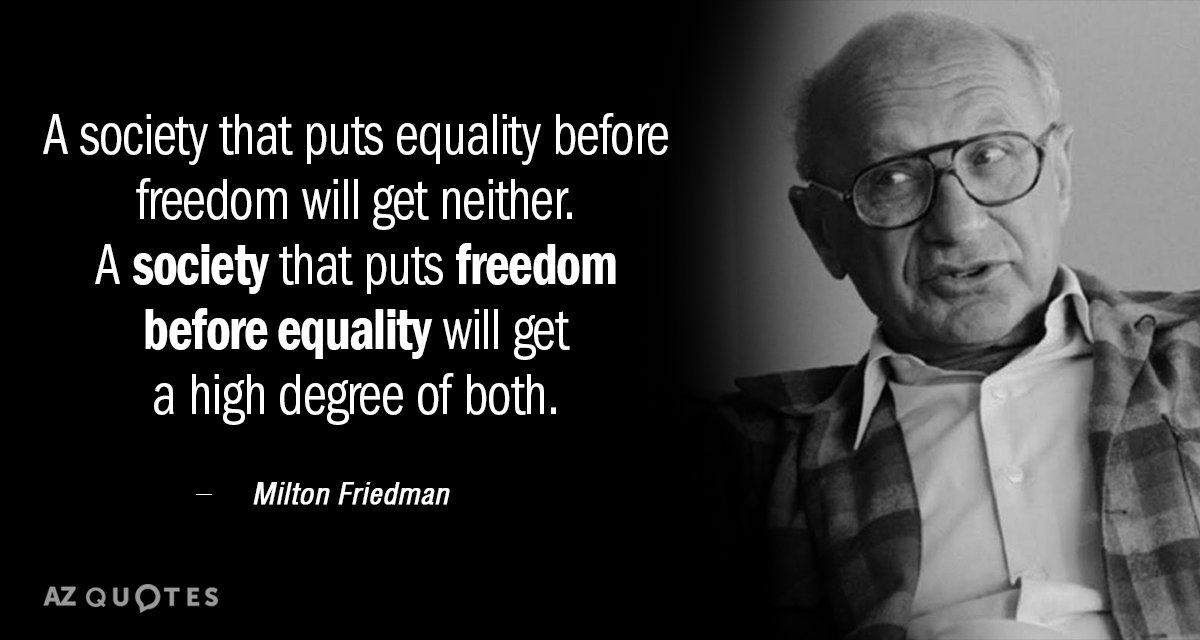
Perhaps the most interesting aspect of the book deal with trying to preserve a structure that is inherently a meritocracy (elitist), where only a few of the most talented are responsible for most of the gains and breakthroughs of the entire huge system. Cole talks about the internal threat posed by orthodoxy and dogma where a few individuals can gain control of a school of thought and close it to all possible challenges, killing criticism and any possibly of progress. He doesn’t give examples but this reader would offer the Chicago School of Economics where is seems to have happened. Milton Friedman and his associates so dominated discourse with their free market notions that empirical evidence simply was ignored. It was left to other schools to criticize the Chicago school (Stieglitz and Galbraith father and son) but the Chicago School held a stranglehold on government and government institutions like the IMF and World Bank throughout recent history. About the only positive thing about this example is the universe of research institutions is large enough that meaningful critical work can continue in these periods of orthodoxy.
Another risk comes from the increasing need of research universities to compete for the best talent and resources. The public universities like the California system are under enormous pressure as their states cut back on funding. They can only compensate by raising tuition and competing more effectively for research grants or by producing revenue generating licenseable technology. Somehow the states must be convinced to stop short changing their valuable research institutions and decrease this pressure before irreversible damage occurs.

Cole is also a strong believer the research university must remain strong in all areas including the social sciences, the arts and humanities. The research university must never divorce its research from its teaching function. The best and most productive members of the faculty in terms of research are usually the best at replicating themselves, training the next generation of researchers. It is also true that most innovation comes from young minds but that the rewards of grant moneys and laboratory facilities goes to older, established individuals. These gifted older individuals must train and offer laboratory opportunities to their students who will generate the next breakthroughs by bringing fresh perspectives to their work and research. The German system (as well as the Russian, Chinese, and Japanese) are authoritarian and hierarchical with absolute respect being owed to the senior professor. Visitors to American universities are always struck that professors and their graduate research assistants are on a first name, very informal basis. It is natural in this setting for the professor to offer gentle guidance based on experience but also to listen to new and even wild ideas from his assistants. This is the way to new discoveries.

Cole also talks a bit about the continuing struggle to broaden admissions to account for gender, racial, and income differences. Some universities like Harvard in the early 20th Century went on a campaign to rid its faculty and student body of Jews but other schools like Columbia and the University of Chicago simultaneously added disproportionate numbers of Jews to their faculties and student bodies. The great diversity of great American universities had no problem absorbing the large influx of Jewish European professor in the Nazi period. Cole finds it ironic the the Israeli lobby today is attacking those same institutions that offered refuge from the Nazis for hiring middle east professors and setting up programs to teach middle east language and culture. This lobby even attacks Jewish professors like Tony Judt for criticizing Israeli actions and policy. Columbia came under enormous pressure from the lobby when Palestinian Edward Said taught at Columbia.

How do you describe the unique American Research University? Here is Cole:

Great universities are designed to be unsettling. They challenge orthodoxies and dogmas as well as social values and public policies. They are the most effective instrument for creating skepticism and discontent with established institutions…Great teachers challenge the biases and presuppositions of their students and colleagues. They present unsettling ideas and dare others to rebut them and to defend their own beliefs in a coherent and principled manner. The American research university pushes and pulls at the walls of orthodoxy and rejects politically correct thinking.

Unsettling by nature, university culture is also highly conservative. It demands evidence before accepting novel challenges to existing theories and methods. The university ought to be viewed in terms of a fundamental interdependence between the liberality of its intellectual life and the conservatism of its methodological demands…We permit almost any idea to be put forward – but only because we demand arguments and evidence to back up the ideas we debate and because we set the bar of proof at such a high level. These two components — tolerance for unsettling ideas and insistence on rigorous skeptics about all ideas — create an essential tension at the the heart of the American research university.

So for all his fears about outside interventions from special interests, government, and industry, Cole ultimately fears most the threats from within the university itself if this unsettling tension is lost.

Finally Cole believes that competition among the leading universities is not only healthy but essential to maintain the absolute highest levels of achievement. This competition involves competing for endowments, grants, faculty, students, and even athletic achievement. He most worries that the wealthiest universities (Harvard dwarfs all other schools with its endowments) will increasingly have a competitive advantage and this will result in greater concentrations of talent and production. Only the Federal and state governments are in a position to redress this imbalance with increased infusions of support spread over the whole range of private and public universities. The new crop of super wealthy Americans like Gates and Buffet could also do a lot to redress the balance and create a more level playing field for the universities but currently Gates and Buffet are looking elsewhere where their money can have a global impact.