Does Your Mother Know?
Saturday, May 13th, 2023Happy Mother’s Day
Vitro NasuIconoclastic Incubator
|
Happy Mother’s Day
Gordon Lightfoot – Nov 17, 1938 – May 1 2023
(See photo of Gordon and Bob Dylan + listen to his songs)
The title comes from a section of Arizona State Route 74 in north Phoenix. Said Lightfoot, “I thought it would make a good title for a song. I wrote it down, put it in my suitcase and it stayed there for eight months.”[2] The song employs “Carefree Highway” as a metaphor for the state of mind where the singer seeks escape from his ruminations over a long ago failed affair with a woman named Ann. Lightfoot has stated that Ann actually was the name of a woman Lightfoot romanced when he was age 22:[2] “It [was] one of those situations where you meet that one woman who knocks you out and then leaves you standing there and says she’s on her way. (via wiki Carefree Highway)
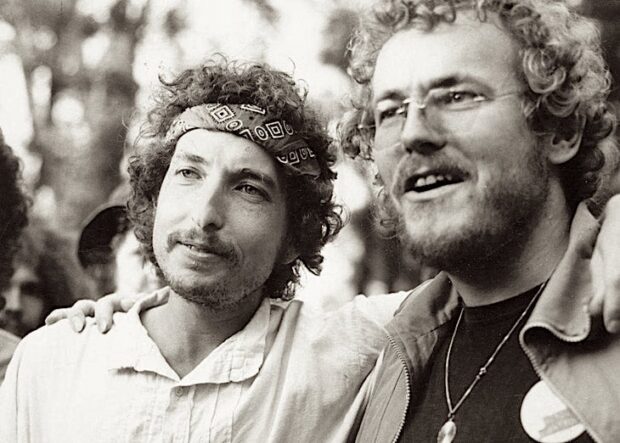
Bob Dylan and Gordon Lightfoot
I can’t think of any Gordon Lightfoot song I don’t like. Everytime I hear a song of his, it’s like I wish it would last forever.
-Bob Dylan
Here are 10 popular renditions.
https://tubitv.com/movies/551922/gordon-lightfoot-if-you-could-read-my-mind (A great documentary film – a must see).

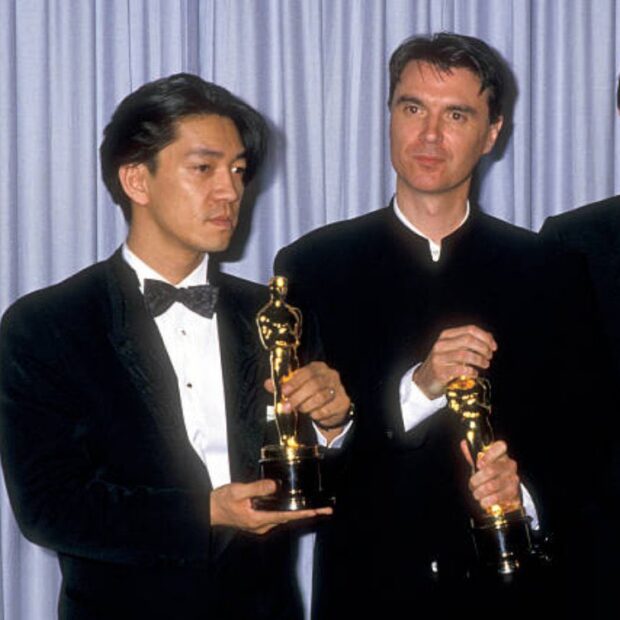
His nickname is Kyoju, which means Professor in Japanese.
Listen to Ryuichi Sakamoto playing “Bring Them Home” (Sakamoto was an activist for peace- scroll down) (Previous post)
Kitano Takeshi and Ryuichi Sakamoto
Dog Sitter sued Burt Bacharach (His dog was called Alfie- see the photo).

Allison Anders posted on FB.
I had the lead sheets to God Give Me Strength, the song Burt Bacharach and Elvis Costello wrote for my movie Grace Of My Heart, framed a little while ago, but I couldn’t find the right place for it yet. This morning upon hearing the news of Burt’s passing I immediately tore off the plastic and began to create this altar to process how much this man’s talent has meant to me.
On Monday it will be (I think?) 26 years since Burt recorded this song Feb 13 1996? in NYC with Elvis. It was a warm smallish studio and only a handful of us were there for this quietly historic session with the two of them; music supervisor extraordinaire Karyn Rachtman who brought these giants together for the first time to write this now classic song for me, our amazing lead actress Illeana Douglas, our wonderful producer Dan Hassid and me. Occasionally friends came by to visit; my daughter Tiffany with J Mascis and I recall our pal Joe McGinty got a life altering moment with Burt too that day. In the downtime Illeana and I absorbed all we could with Burt who was so generous so kind and so respectful. I remember asking him about working with one of my idols Dusty Springfield. And he said warmly thinking of her, “Hard.” I asked, “Hard to work with?” He said with such empathy, “She was hard on herself. And she was so brilliant.” It was exactly what I wanted to know.
After Burt and Elvis finished recording God Give Me Strength they both signed the lead sheets, one for me and one for Illeana. Burt wrote “For Allison…thank you for bringing us all together.” This Polaroid photo of them was taken the same day. Burt’s musical genius and warmth and beautiful melodies was part of the fabric of my life from the time I could open my toddler mouth and sing along to Perry Comos “Magic Moments”. There are far too many songs of his I love to begin to list, but I will over the coming days. Thank you Paul Myers for reaching out this morning and helping me process the meaning he’s had to me and to all of us. Rest In Peace Maestro.
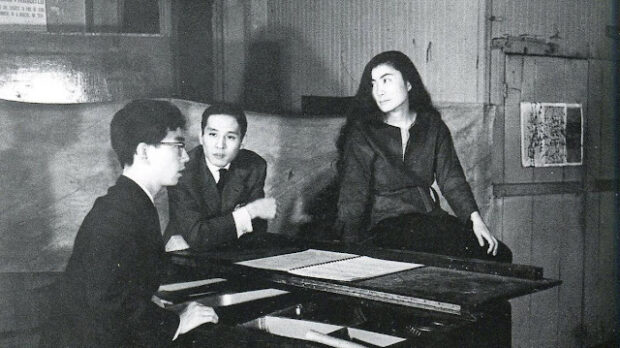
A Pioneer Composer Ichiyanagi dies, 89 years old
Avant-garde pianist and composer Toshi Ichiyanagi, who studied with John Cage and went on to lead Japan’s advances in experimental modern music, has died
Toshi Ichiyanagi (wiki)
One of the leading composers in Japan during the postwar era, Ichiyanagi worked in a range of genres, composing Western-style operas and orchestral and chamber works, as well as compositions using traditional Japanese instruments.[1] Ichiyanagi is known for incorporating avant-garde techniques into his works, such as chance music, extended technique, and nontraditional scoring.[1] Ichiyanagi was married to artist Yoko Ono from 1956 to 1962.
John Cage, T.Ichiyanagi 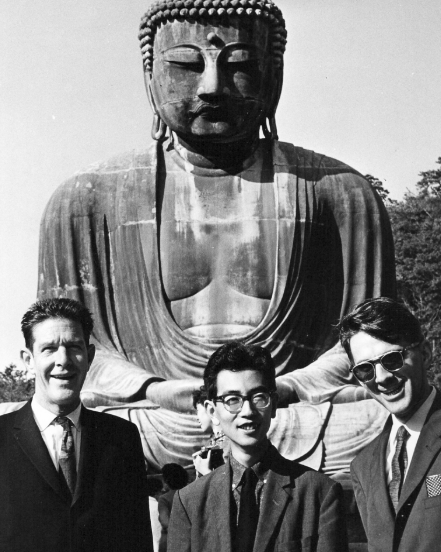
and David Tudor, Great Budhha in Tokyo)
See photo John Cage Shock vol 3 here.
Phaorah Sanders died – Rolling Stone
Pharoah Sanders, Saxophonist Who Pushed Jazz Toward the Spiritual, Dead at 81
“The Creator Has a Master Plan” legend was sideman on John Coltrane’s landmark avant-garde journeys before embarking on a decades-long career that concluded with 2021’s acclaimed Promises
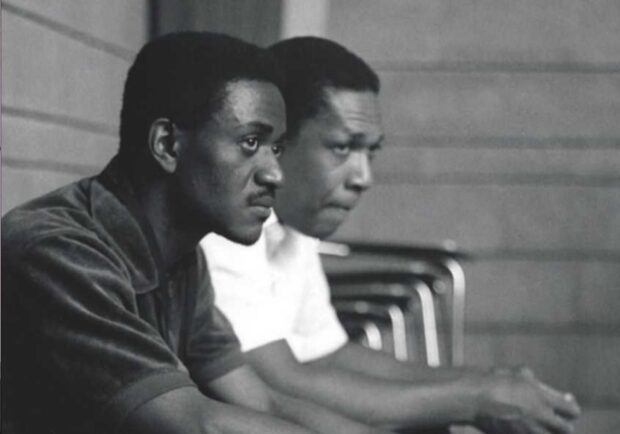

(Iphigenia)

(The Trojan Women)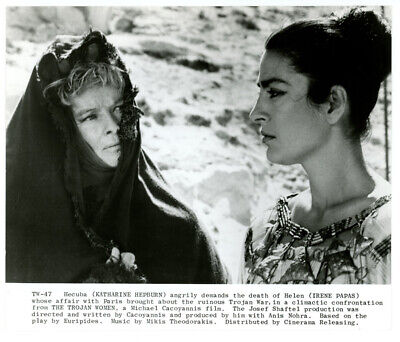
Irena Pappas was directed by Michael Cacoyannis in “Zorba the Greek”, “The Trojan Women”, “Iphigenia’ and “Electra”.
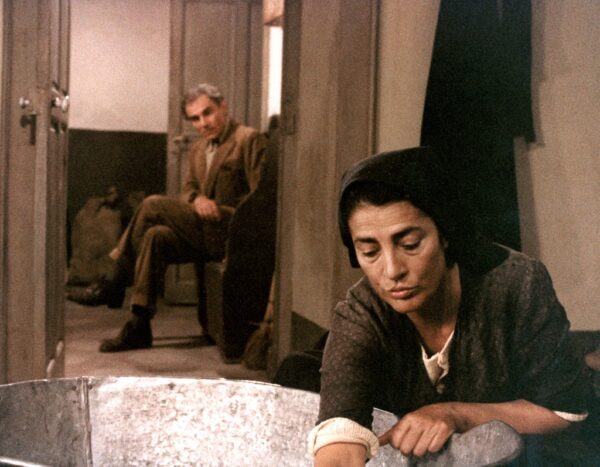
(“Christ Stopped at Eboli’ directed by Francesco Rosi.)
Irene Papas
was a Greek actress and singer who starred in over 70 films in a career spanning more than 50 years. She gained international recognition through such popular award-winning films as The Guns of Navarone (1961)
In 2013 she began to suffer from Alzheimer’s disease.[54] She died on 14 September 2022, having spent her final years in Chiliomodi.
(via wiki)
Her wiki on her affair with Marlon Brando.
In 1954 she met the actor Marlon Brando and they had a long love affair, which they kept secret at the time. Fifty years later, when Brando died, she recalled that “I have never since loved a man as I loved Marlon. He was the great passion of my life, absolutely the man I cared about the most and also the one I esteemed most, two things that generally are difficult to reconcile”
Manoel Oliveira directed Irene Papas in “Party” and “A Talking Picture”.

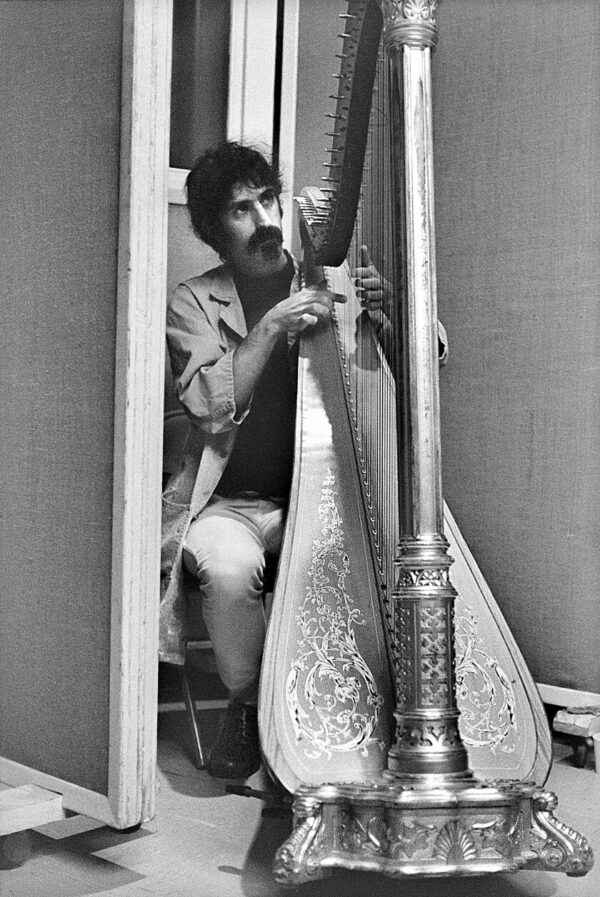
Photo via Frank Zappa Hot Rats Anniversary Collection
“Zappa” documentary directed by Alex Winter
(Streaming at Kanopy)
Alex Winter’s Documentary Hauntingly Captures the Skewed Passion of Frank Zappa, a One-of-a-Kind Rock Legend
The film finds an emotional through line by taking Frank Zappa as seriously as he took himself.
Zappa and Vaclav Havel – see the photo of them, here.
(Zappa’s visit to Prague was covered in this documentary).
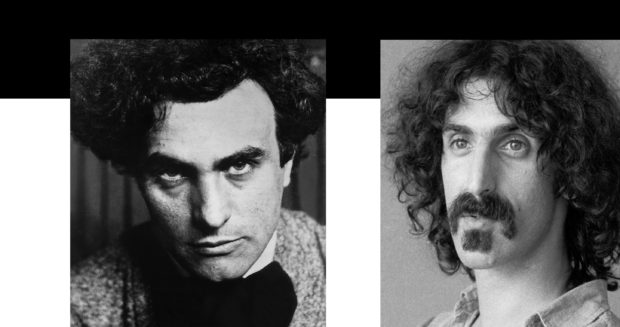
Letter to Edgard Varese, Zappa was 16 years old
Dear Sir:
Perhaps you might remember me from my stupid phone call last January, if not, my name again is Frank Zappa Jr. I am 16 years old … that might explain partly my disturbing you last winter. The reason for my letter at this time is that I am visiting relatives in Baltimore and as long as I am on the East Coast I hope I can get to see you.
It might seem strange but ever since I was 13 I have been interested in your music. The whole thing stems from the time when the keeper of this little record store sold me your album “The Complete Works of Edgard Varèse, Vol.l.” The only reason I knew it existed was that an article in either LOOK or the POST mentioned it as being noisy and unmusical and only good for trying out the sound systems in high fidelity units (referring to your “IONIZATIONS” [sic]). I don’t know how the store I got it from ever obtained it, but, after several hearings, I became curious and bought it for $5.40, which, at the time seemed awfully high and being so young, kept me broke for three weeks. Now I wouldn’t trade it for anything and I am looking around for another copy as the one I have is very worn and scratchy.
Kronos
See Frank Zappa art
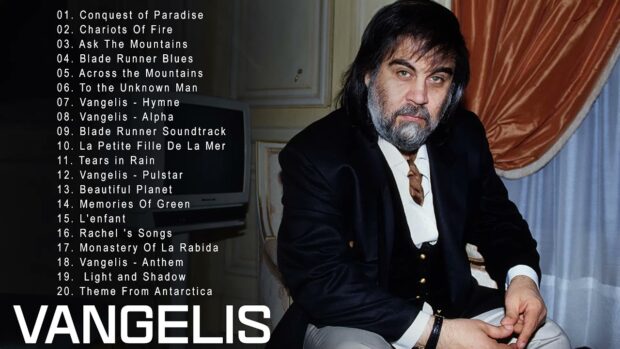
Vangelis composer of Chariots of Fire, Blade Runner dies
Later in the decade he scored the Palme d’Or-winning Costa-Gavras political drama Missing, starring Jack Lemmon; the Mel Gibson and Anthony Hopkins drama The Bounty; and the Mickey Rourke-starring Francesco. He worked again with the Blade Runner director, Ridley Scott, on 1992 film 1492: Conquest of Paradise, and elsewhere during the 1990s, soundtracked Roman Polanski’s Bitter Moon and documentaries by Jacques Cousteau.
As a hobby, Vangelis enjoyed painting. His first exhibition, of 70 paintings, was held in 2003 at Almudin in Valencia, Spain. It then toured South America until the end of 2004.[42][79][80]
Vangelis died on 17 May 2022, aged 79, at a hospital in France while receiving treatment for COVID-19.
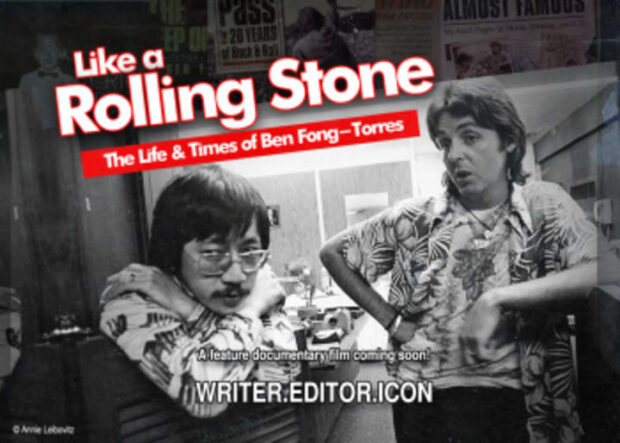
One of the most captivating documentaries about a journalist I’ve seen in a long while. If you are parents of teenagers, show this film, they can learn important history of America, not just Rock’n Roll.
<> <> 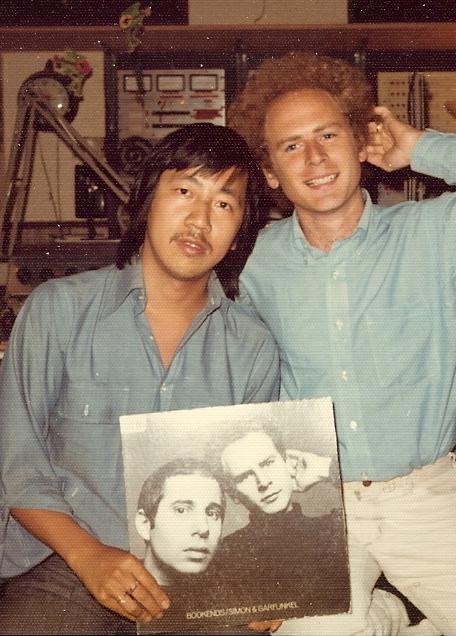
(Ben Fong-Torres (left) and Art Garfunkel (right) mimic a famous album cover)

He conducted interviews for Rolling Stone of entertainment figures including Bob Dylan, the Rolling Stones, comedian Steve Martin and Linda Ronstadt’s first cover story in 1975. He also profiled Marvin Gaye, Sly and the Family Stone, Bonnie Raitt, Paul McCartney and Rodney Dangerfield. A Fong-Torres interview with Ray Charles was awarded the Deems Taylor Award for Magazine Writing in 1974.
Fong-Torres was also a rock DJ for San Francisco radio station KSAN-FM in the 1970s. He later hosted a live, weekly entertainment and talk show, Fog City Radio, on NPR affiliate KQED-FM. On television, he is the five-time Emmy Award-winning co-anchor of the Chinese New Year Parade broadcast on KTVU (Fox) in San Francisco.