This Sporting Life
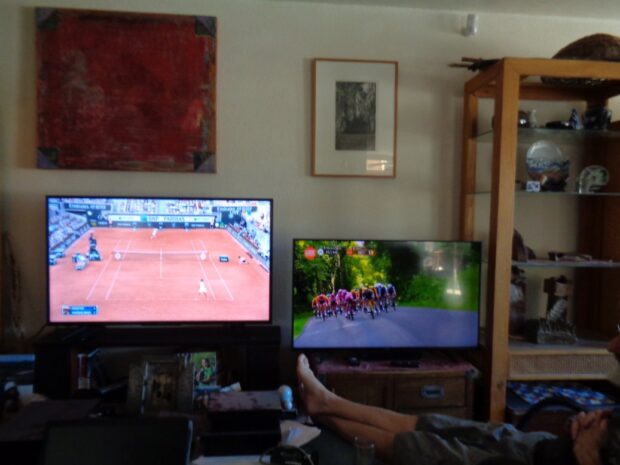
Monday, June 12th, 2023My painting, etching, and Ceramics sculptures competing with French Open Players and Bikers.
Elina Svitolina married Gael Monfils
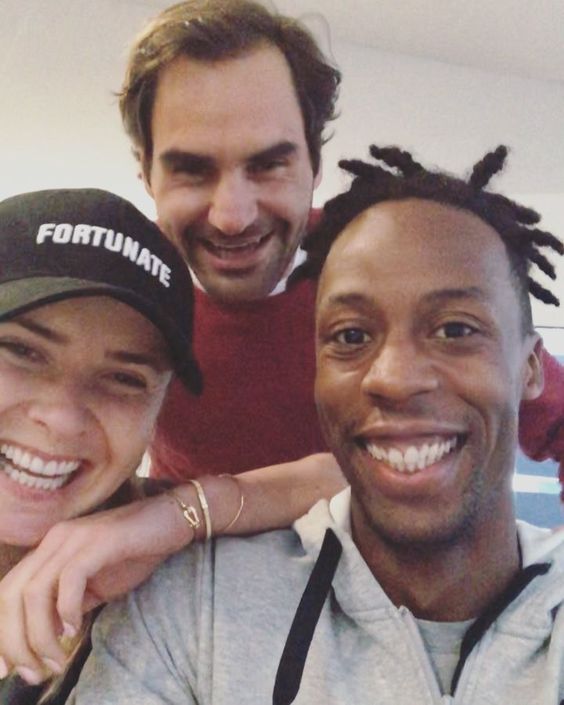
ELINA Svitolina and Gaël Monfils have been married for nearly two years.
Vitro NasuIconoclastic Incubator
|
My painting, etching, and Ceramics sculptures competing with French Open Players and Bikers.
Elina Svitolina married Gael Monfils
ELINA Svitolina and Gaël Monfils have been married for nearly two years.
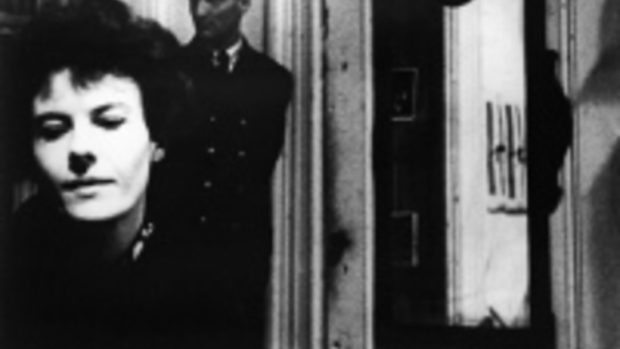
Painter Françoise Gilot, whose 1964 memoir detailing her tumultuous, decade-long relationship with Pablo Picasso became an international bestseller, died June 6 in New York at the age of 101. Having met Picasso when she was just twenty-one and he forty years older, she gave birth to two of his children—Claude Picasso and Paloma Picasso—before becoming, by his admission, the only woman ever to leave him.
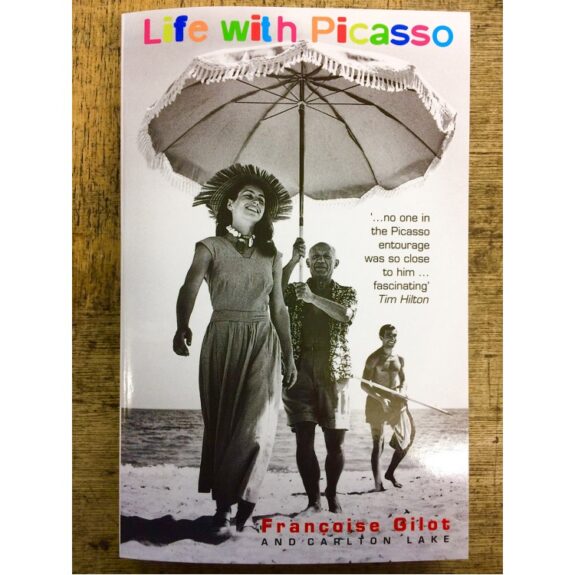
We all learned a lot about Picasso from her book. Merci.
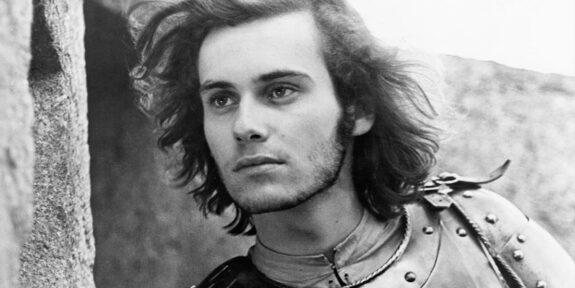
(Luc Simon)
(On Facebook, I was told that the actor who was directed by Robert Bresson in Lancelot du Lac was her husband).
Natascha McElhone played her in “Surviving Picasso”, Merchant Ivory production.

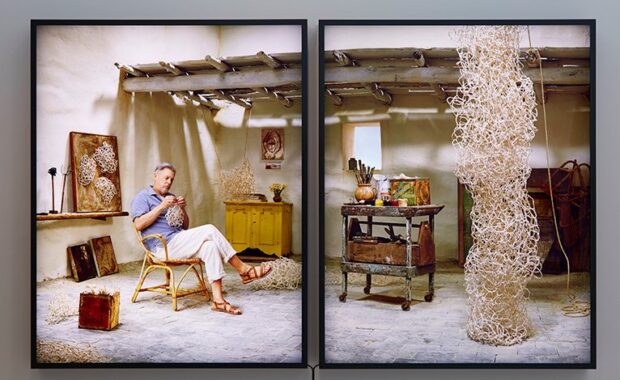
Happy birthday Tony Cragg
https://en.wikipedia.org/wiki/Tony_Cragg (wiki)
See more sculptures by Tony Cragg from here, https://www.tony-cragg.com/
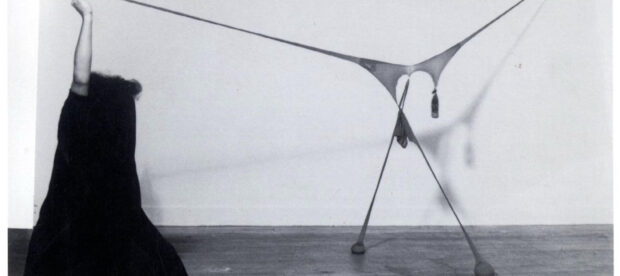
“I live in the fourth dimension when I create landscapes.”
Senga Nengudi Exibition at Dia Beacon
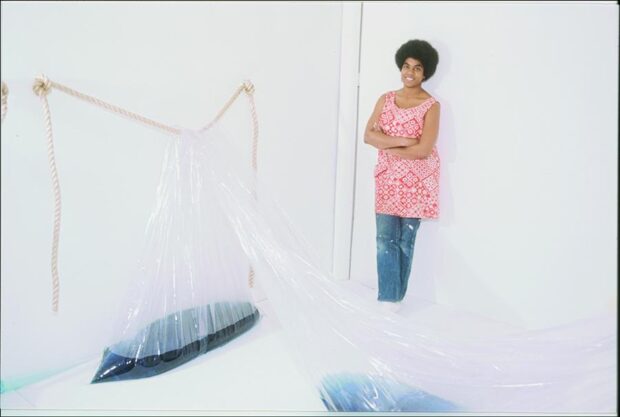
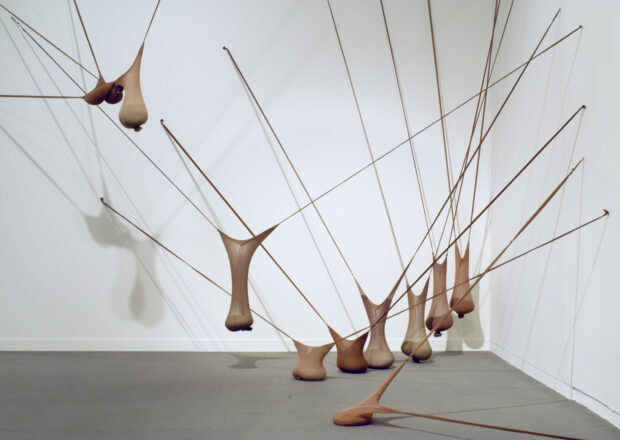
Over her five-decade-long career, Nengudi has realized a remarkable body of work that blurs the boundaries between sculpture and performance, fine art and ritual, individual authorship and collective energy. Made of everyday materials such as vinyl, water, nylon, sand, dry-cleaning bags, lint, paper, and tape, Nengudi’s installations are at once proxies for bodies and sites for performance. The works accommodate a variety of cultural references from African, Japanese, and South Asian rites to Western avant-garde art. Characteristic of her openness to multiplicity, the artist, born Sue Ellen Irons, has assumed pseudonyms that inflect her creative identities as sculptor (Senga Nengudi), painter (Harriet Chin), photographer (Propecia Leigh), and writer (Lily Bea Moor).
Dia’s long-term exhibition of Nengudi’s work will be accompanied by a performance program and publication, revealing the multiplicity of her practice. Sculptures and room-sized installations from the years 1969 to 2020 will be on display at Dia Beacon, including recent acquisitions in Dia’s permanent collection. Performances at Dia Beacon and partnering venues will activate and complement the sculptural presentation, and an artist’s book will collect, for the first time, Nengudi’s drawings, photographs, prints, poems, performance instructions, and other writings.

Levitated Mass documentary film Michael Heizer
In 2012, the Los Angeles County Museum of Art debuted Levitated Mass by Michael Heizer. How it got there was a work of art in itself, and the topic of a documentary by Doug Pray. Derek Blasberg caught up with Pray to talk about his film.
Michael Heizer The City in the Nevada Desert (Previous Post) (See a photo of Michael Heizer with a short bio)
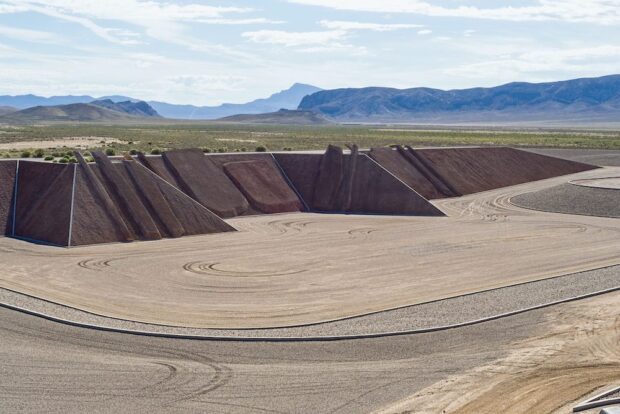

Isolated Mass / Circumflex (#2)
Artist: Michael Heizer
1968/1978
Mayari-R steel
146 × 1461 × 8 in. (370.8 × 3710.9 × 20.3 cm)
Place Created: United States, North America
De Menil
Michael Heizer Isolated Mass./Cucumflex 2 1968
https://www.menil.org/exhibitions/260-outdoor-sculpture-at-the-menil
Alfred Leslie, a second-generation Abstract Expressionist and filmmaker who turned his back on nonrepresentational art in the early 1960s to lead a revival of figurative painting, died on Friday in Brooklyn. He was 95. His son Anthony said the cause of his death, at a hospital, was complications of a Covid infection. (New York times).
The World is Charged with the Grandeur of God(Delphine Seyrig from Pull My Daisy)
Pull My Daisy Robert Frank, Albert Leslie, USA, 1959, V’08, Tribute to Bob Dylan
Pull My Daisy is a 1959 American short film directed by Robert Frank and Alfred Leslie, and adapted by Jack Kerouac from the third act of his play, Beat Generation. Kerouac also provided improvised narration
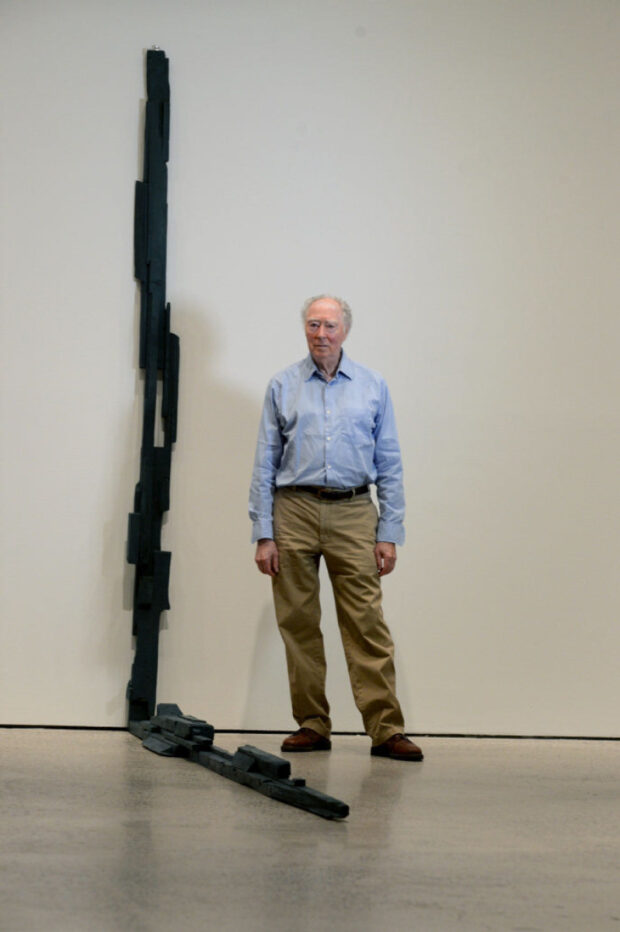
Photo via Michael Snow Objects of Vision at the art gallery of Ontario
Michael Snow the Canadian artist who was behind the iconic “Flightstop” art installation in the Eaton Centre, has passed away.
Michael Snow worked in a range of media including film, installation, sculpture, photography, and music. His best-known films are Wavelength (1967) and La Région Centrale (1971), with the former regarded as a milestone in avant-garde cinema.
ContentsMichael Snow Seen or Unseen – Criterion
From the archive: Annette Michelson on Michael Snow.
The working of his thought is thus concerned with that slow transformation of the notion of space which, beginning as a vacuum chamber, as an isotropic volume, gradually became a system inseparable from the matter it contains and from time.
—Paul Valery, Introduction To The Method Of Leonardo Da VinciMy eye, tuning towards the imaginary, will go to any wavelengths for its sights.
—Stan Brakhage, Metaphors On Vision
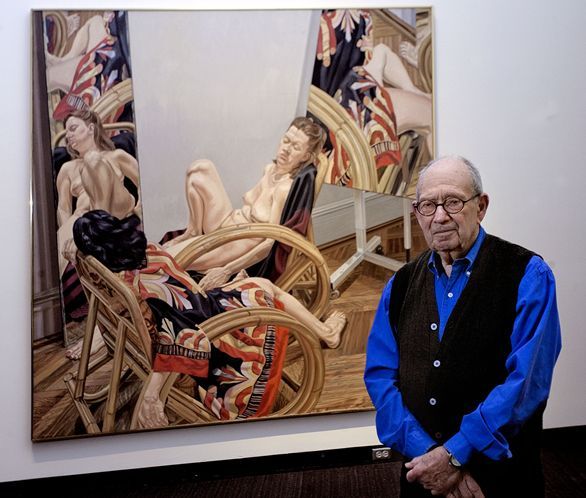
Artforum Obit Philip Perlstein
f
Highliths friendship art of Pearlstein, Warhol & Cantor
Philip Pearlstein, whose planar arctic nudes of the 1960s revitalized realistic figure painting for a new generation, died December 17 in New York at the age of ninety-eight. An accomplished illustrator by his teens, Pearlstein flirted with the emotional hues and geometric shapes of Abstract Expressionism before diving fully into figuration with his disaffected, antisexual nudes and paving the way for such twentieth-century notables as Jack Beal, Alex Katz, and Alfred Leslie. “A typical Pearlstein nude, in which the genitals are rarely as obvious as in any of [Larry] Rivers’ earlier nudes, establishes so corporeal a presence that, despite its seeming somnambulant apathy, it bursts through the limits of style,” wrote Sidney Tillim in a 1966 issue of Artforum, attempting to explain the controversy then surrounding the artist’s work. “The nude, in other words, regains its existential dignity.” (Artforum obit)
Rodney Graham 
Artforum obit
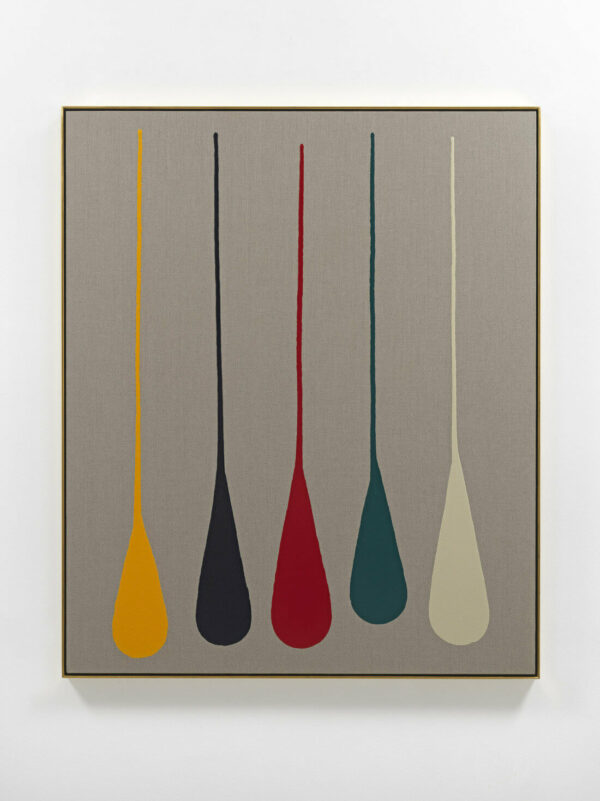
Lisson Gallery Rodney Graham
Inverted Drip Painting #57
With a practice spanning five decades, Canadian artist Rodney Graham (1949 – 2022) operated through systems of quotation, reference and adaptation. From the 1980s, Graham expanded his diverse oeuvre to encompass photography, painting, sculpture, film, video and music. As actor, performer, producer, historian, writer, poet, sound engineer and musician, Graham’s art examined the complexities of Western culture through strategies of disguise, as he shifted seamlessly into different roles and characters. Casting himself as a succession of motley characters, Graham inhabited different personae, genres and art forms for the duration of his career. ‘It may be a burden to reinvent oneself every time,’ Graham said, ‘but it makes things more interesting.’- Hauser & Wirth
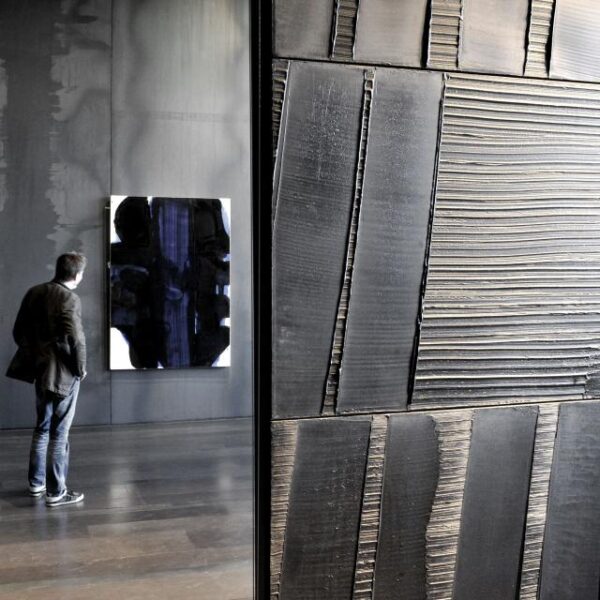
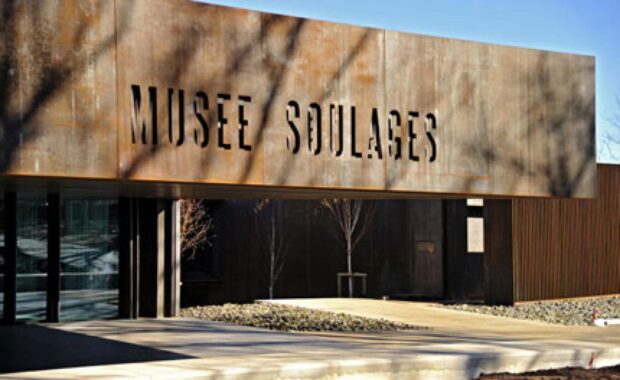
Pierre Soulages Painter of Black Dies at 102 (Hyperallergic.com)
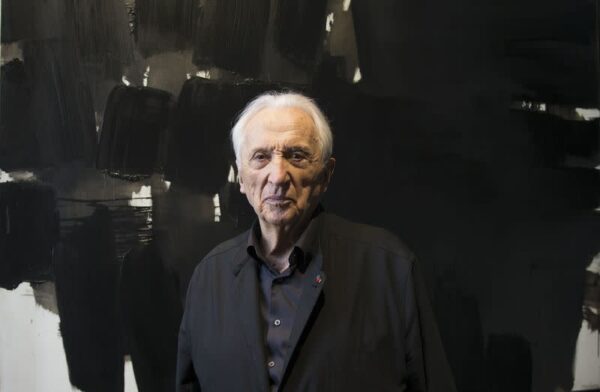

(Johan Coltrane – thanks to Pascal Blanchard for this photo)
Collections
Centre Georges Pompidou (Paris)[19]
Honolulu Museum of Art
Montreal Museum of Fine Arts
Musée d’Art Moderne de la Ville de Paris
Musée Soulages (Rodez)
Museum of Modern Art (New York)[20]
Museum of Modern Art (Rio de Janeiro)
National Gallery of Art (Washington, D.C.)
Solomon R. Guggenheim Museum (New York)[21]
Tate Gallery (London)
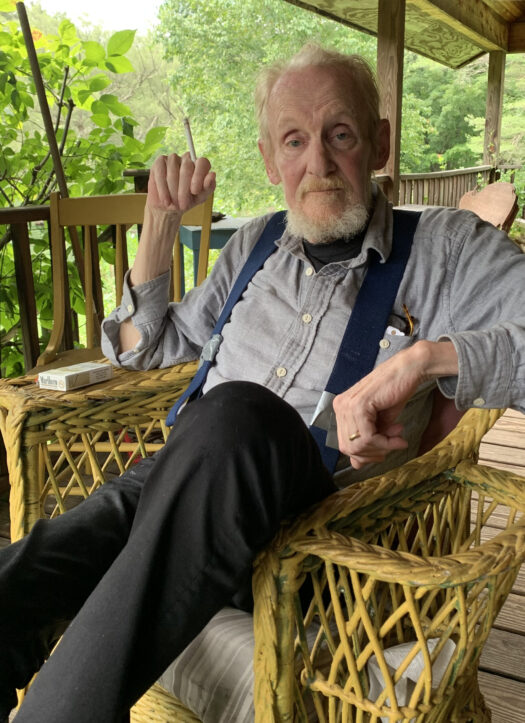
Art critic Peter Schjeldahl who wrote with unparalleled Elegance dies at 80.
<> <> 
Looking back at Peter Schjeldahls Visionary Criticism – New Yorker

(Racing Thoughts,” from 1983. Johns has often been burdened with overinterpretation. His silence must be our guide.Art work © 2021 Jasper Johns / VAGA at ARS)
Jasper Johns Remains Contemporary arts philosopher KIng
My father, Peter Schjeldahl, passed away today at 3pm in the Catskills of lung cancer. He was not in pain and he was not alone. My mother Brooke, his sister Ann, and I were with him. He will be buried privately. In March there will be a service honoring his life and work. We’re grateful for all the messages and will be in touch when we can.
(Ada Calhoun posted this morning on FB -Oct 21, 2022)
Ada Calhoun “Also a Poet – Frank O’Hara, Her Father and Her.