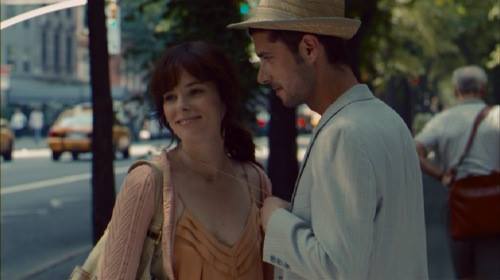
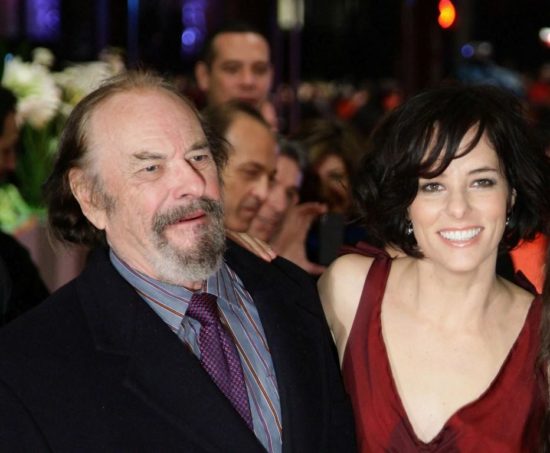
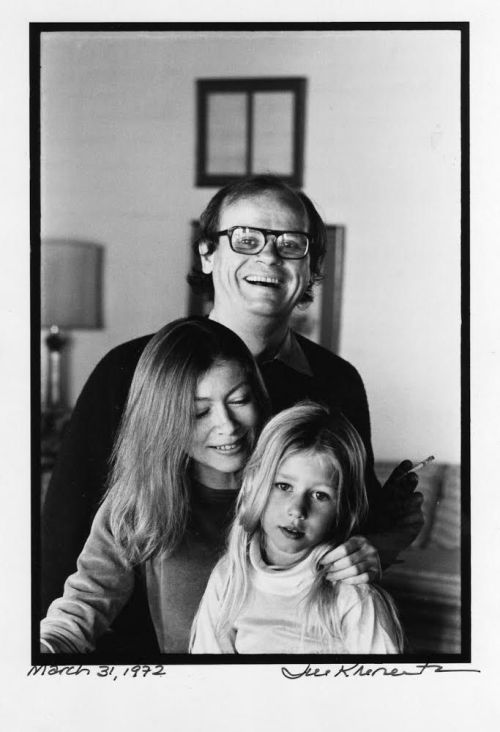
Painter Françoise Gilot, whose 1964 memoir detailing her tumultuous, decade-long relationship with Pablo Picasso became an international bestseller, died June 6 in New York at the age of 101. Having met Picasso when she was just twenty-one and he forty years older, she gave birth to two of his children—Claude Picasso and Paloma Picasso—before becoming, by his admission, the only woman ever to leave him.
We all learned a lot about Picasso from her book. Merci.
(Luc Simon)
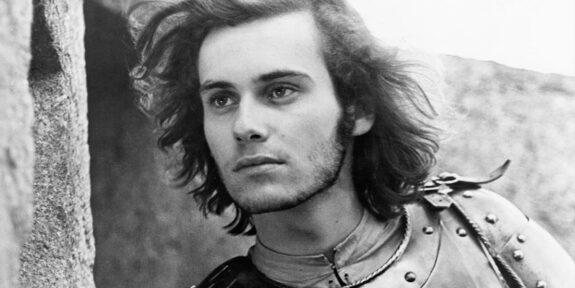
(On Facebook, I was told that the actor who was directed by Robert Bresson in Lancelot du Lac was her husband).
Natascha McElhone played her in “Surviving Picasso”, Merchant Ivory production.
Derrida’s closest intellectual comrade in the late 1960s and early 1970s was the writer and editor Philippe Sollers, who published a number of Derrida’s early essays in Tel Quel. But the friendship soured. Sollers wanted Tel Quel to become the cultural journal of the French Communist Party (PCF) and enforced strict obedience to the Moscow line. At a dinner with the Derridas, one telquelian launched into a passionate defence of the Soviet invasion of Prague, where Marguerite’s relatives lived. It did not go down well. Sollers was also worried that Derrida’s reputation might eclipse his own, suspecting that Derrida’s essay in praise of his novel, Numbers, was a covert ‘attempt at appropriation’. In 1967 Sollers had secretly married the Bulgarian literary theorist Julia Kristeva, whose career he was also keen to promote over Derrida’s. Rebuffed in their efforts to capture the cultural apparatus of the PCF, in the early 1970s Sollers and Kristeva converted to Maoism. This led to a deepening estrangement from Derrida, whose friend Lucien Bianco, a distinguished Sinologist, had disabused him of any illusions about revolutionary China. When Derrida gave an interview to La Nouvelle Critique, a PCF literary journal, Sollers and Kristeva protested by ‘boycotting’ a dinner in his honour. Derrida’s Tel Quel years were over. Years later, in her novel The Samurai, Kristeva would mockingly depict Derrida as Saïda, founder of ‘condestruction theory’, a man who was so attractive to American feminists that they ‘all became “condestructivists”’.)(Via Not In the Mood – a review of Derrida’s bio..) In the Mood for Julia Kristeva – June 24, 2013
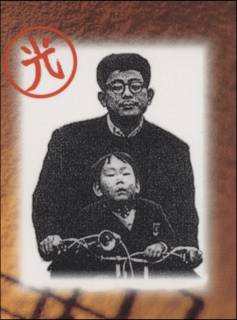
The birth of Hikari was a turning point in Oe’s life and in his literary career. Much of Oe’s later fiction examined the relationship between disabled and non disabled people. Hikari turned out to be exceptionally gifted in music, and he is acknowledged as one of the most famous composers in Japan. Hikari Oe Wikipedia here
“History is a cookbook. The tyrants are chefs. The philosophers write menus. The priests are waiters. The military men are bouncers. The singing you hear is the poets washing dishes in the kitchen.”
— Charles Simic
Than softly falling snow
Fussing over every flake
And making sure
It won’t wake someone.
Published in the print edition of the February 8, 2021, issue, The New Yorker.
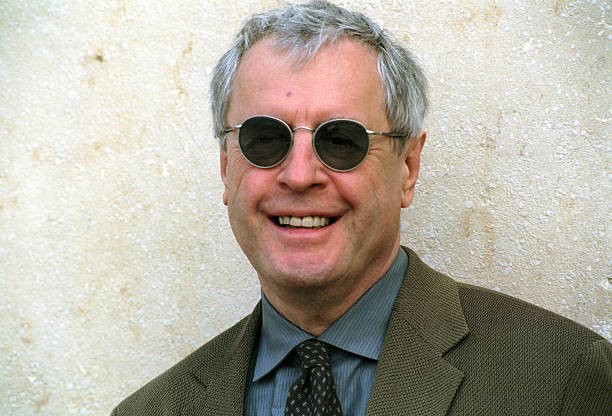
Author of dozens of books, Simic was ranked by many as among the greatest and most original poets of his time, one who didn’t write in English until well into his 20s. His bleak, but comic perspective was shaped in part by his years growing up in wartime Yugoslavia, leading him to observe that “The world is old, it was always old.” His poems were usually short and pointed, with surprising and sometimes jarring shifts in mood and imagery, as if to mirror the cruelty and randomness he had learned early on.
His notable books included The World Doesn’t End, winner of the Pulitzer in 1990; Walking the Black Cat, a National Book Award finalist in 1996; Unending Blues and such recent collections as The Lunatic and Scribbled in the Dark. In 2005, he received the Griffin poetry prize and was praised by judges as “a magician, a conjuror”, master of “a disarming, deadpan precision, which should never be mistaken for simplicity”. He was fluent in several languages and translated the works of other poets from French, Serbian, Croatian, Macedonian and Slovenian.
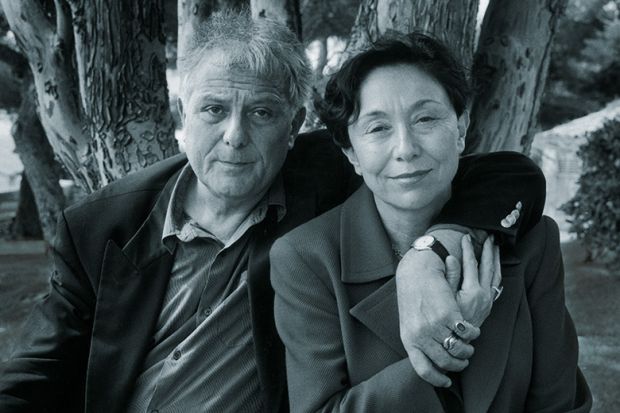
In 1964, Simic married the fashion designer Helene Dubin, with whom he had two children. He became an American citizen in 1971 and two years later joined the faculty of the University of New Hampshire, where he remained for decades.
His first book, What the Grass Says, came out in 1967. He followed with Somewhere Among Us a Stone is Taking Notes and Dismantling the Silence, and was soon averaging a book a year. A New York Times review from 1978 would note his gift for conveying “a complex of perceptions and feelings” in just a few lines.
“Of all the things ever said about poetry, the axiom that less is more has made the biggest and the most lasting impression on me,” Simic told Granta in 2013. “I have written many short poems in my life, except ‘written’ is not the right word to describe how they came into existence. Since it’s not possible to sit down and write an eight-line poem that’ll be vast for its size, these poems are assembled over a long period of time from words and images floating in my head.”
Also A Poet
Frank O’Hara, My Father, and Me
“Also a Poet is packaged as a love triangle: father, daughter and O’Hara. It’s actually a tetrahedron from which all kinds of creative characters pop forth. It’s a big valentine to New York City past and present, and a contribution to literary scholarship, molten with soul.” — New York Times
Ada Colhoun was named after Ada Katz, wife of Alex Katz who painted many portraits of Frank O’Hara and his wife.
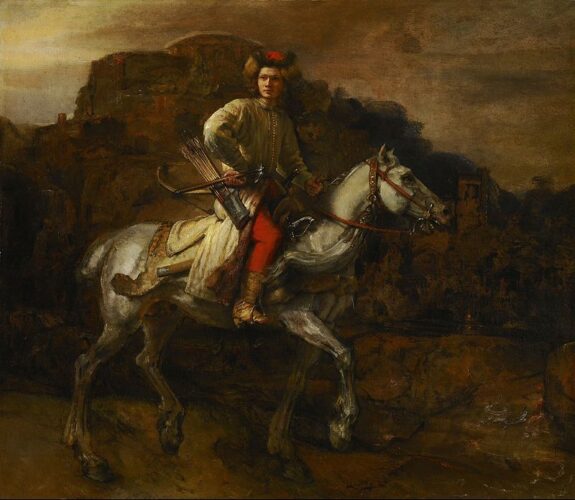
(Rembrandt Polish Rider was Frank O’Hara’s favorite painting)
In “Having a Coke with You,” as in much of his work, the poet admixes life and art. Here, life seems to come out on top: person over portrait (except maybe Rembrandt’s Polish Rider in the Frick). Scroll down to see a video of Frank O’Hara reciting “Having a Coke with YOu’
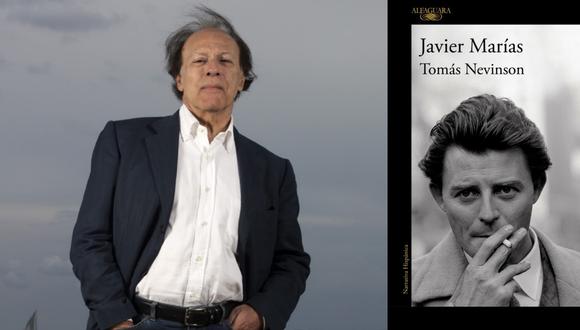
Spanish novelist Javier Marías dies at home in Madrid aged 70 (Guardian)
Marías, also a translator and columnist, was described as ‘one of Spain’s greatest contemporary writers’
“The Man Who Would be King” was the favorite book of both Faulkner and Proust, so we learned from Javier Marias.
28 snippets of writer’s lives are told according to this author with a mixture of affection and humor, except for three; Joyce, Mann and Mishima, who took themselves too seriously.
“The idea, then, was to treat these well-known literary figures as if they were fictional characters.
“Spanish writer Javier Marias’s parallel career as a translator taught him how to be a novelist, he tells Aida Edemariam.”
Marias has said that “in the intellectually mediocre country I grew up in, in which everyone thought Franco was eternal, people like me took shelter in the movies. The American pictures of the ’40s and ’50s were our stimulation”.
The summer he was 17, Marias saw 85 films in six weeks.
J. Marias described Laurence Sterne whose novel he has translated thus “He was a kindly, easy-going man, who once tried to “inherit” two children left behind by a poor widow on her death” ” He included a few pages speaking against slavery in the later volumes of Tristram Shandy.”
“As of Nobakov, he is a joker who prefers not to aknowledge this openly, which is why his expression is one of passion and discovery. ”
Djuna Barnes in Silence – “in her youth when she worked as a journalist, it was the activity to which she devoted most of her time – well, that and maintaining prolonged silences. Her silences were both written and verbal.
“This habit of choosing is central to the kind of writer Marías has become, and explains much of what is unique about his work: he has made indecision—the space between two alternatives—the center of his stories. And this indecision is conveyed in the equivocations and qualifications of the narrative voice.” (A MAN WHO WASN’T THERE The clandestine greatness of Javier Marías. by WYATT MASON – from the New Yorker)
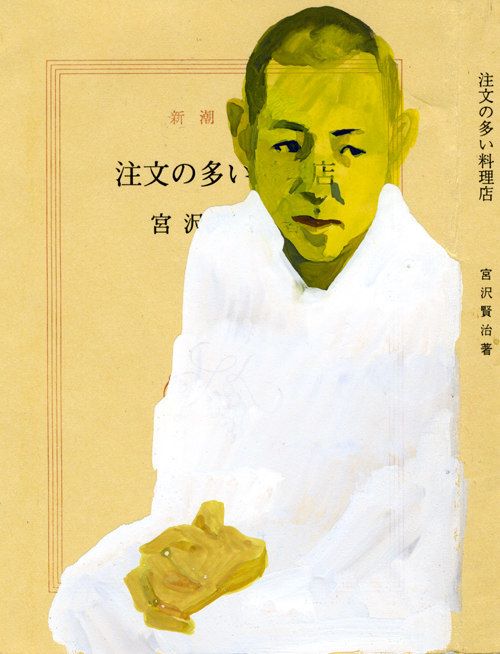
In the introduction to his collection of short stories, The Restaurant of Many Orders, he set himself up as an experimental medium for the chaotic processes of natural phenomena. Kenji Miyazawa was born on Aug 27, 1896. Today he is known mostly for writing children’s stories.
He saw himself as a simple vehicle for reprocessing nature itself. “These stories of mine,” he wrote in 1923, “all came to me from moonlight and rainbows, at places like railroad tracks and fields and forests.” Kenji Miyazawa, Rebel with a Cause (collection of essays)
He was 37 when he died. (wiki)
Almost totally unknown as a poet in his lifetime, Miyazawa’s work gained its reputation posthumously,[2] and enjoyed a boom by the mid-1990s on his centenary.[3] A museum dedicated to his life and works was opened in 1982 in his hometown. Many of his children’s stories have been adapted as anime, most notably Night on the Galactic Railroad. Many of his tanka and free verse poetry, translated into many languages, are still popular today.
Kame neko (oven cat- a sample story by Kenji Miyazawa)
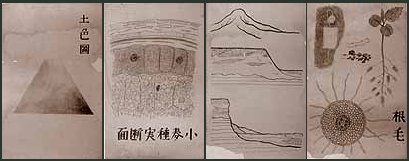
Drawings by a buddhist/poet/geologist/agronomist/socialist
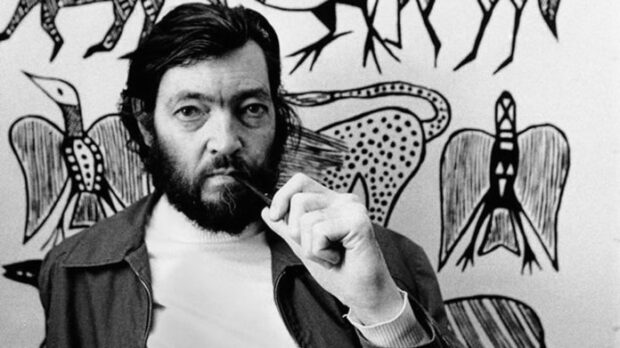
Mexico – high in Julio Cortazar’s list
(“Mexico is one of the countries on my list, but the years go by without me having time to visit it,” Julio Cortázar.)
Julio Cortázar or the writer who saw the world turn upside down
He is considered one of the most innovative and original authors of his time, a master of history, poetic prose and short story in general and a creator of important novels that inaugurated a new way of making literature in the Hispanic world by breaking the classical moulds through narratives that escaped temporal linearity.
Julio Cortazar
(“I love Hopscotch.and a film Antonioni made based on my story.. how cool is that.”)
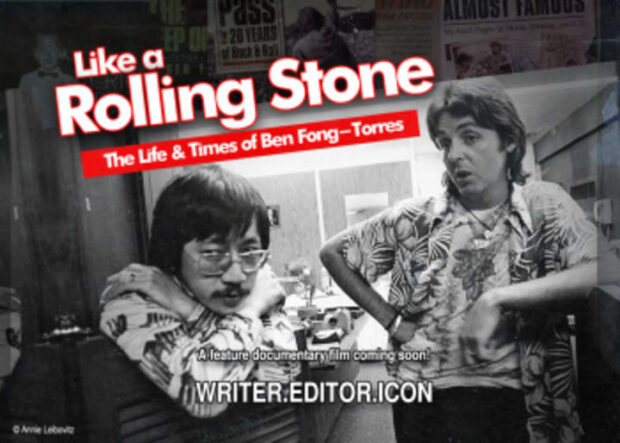
One of the most captivating documentaries about a journalist I’ve seen in a long while. If you are parents of teenagers, show this film, they can learn important history of America, not just Rock’n Roll.
<> <>
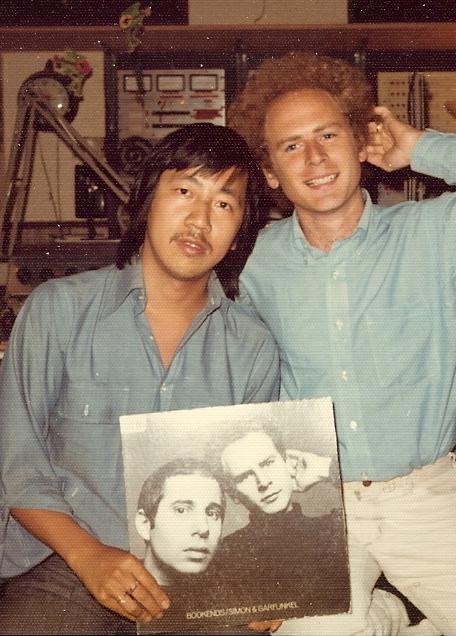
(Ben Fong-Torres (left) and Art Garfunkel (right) mimic a famous album cover)
He conducted interviews for Rolling Stone of entertainment figures including Bob Dylan, the Rolling Stones, comedian Steve Martin and Linda Ronstadt’s first cover story in 1975. He also profiled Marvin Gaye, Sly and the Family Stone, Bonnie Raitt, Paul McCartney and Rodney Dangerfield. A Fong-Torres interview with Ray Charles was awarded the Deems Taylor Award for Magazine Writing in 1974.
Fong-Torres was also a rock DJ for San Francisco radio station KSAN-FM in the 1970s. He later hosted a live, weekly entertainment and talk show, Fog City Radio, on NPR affiliate KQED-FM. On television, he is the five-time Emmy Award-winning co-anchor of the Chinese New Year Parade broadcast on KTVU (Fox) in San Francisco.
“We tell ourselves stories in order to live” is the first sentence of this collection of essays written by Joan Didion.
“The White Album” includes her essays on Doris Lessing and Georgia O’Keefe.
“I WILL BE HER WITNESS.
That would translate sere su testigo, and will not appear in your travelers’ phrasebook because it is not a useful phrase for the prudent traveler.’ Another beginning sentences from her novel “A Book of Common Prayer”.
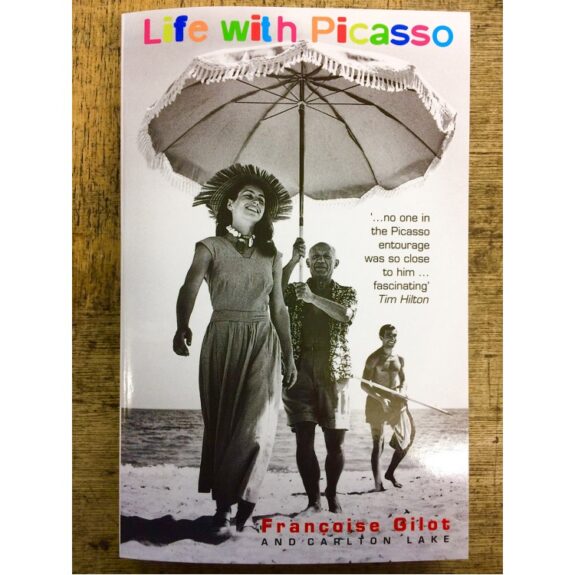



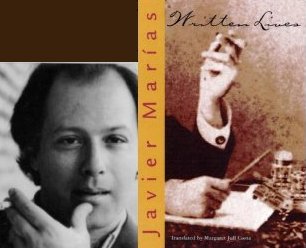 Detail of R. Kipling’s hand on the cover of book “Written Lives”