+

Settai Komuro & Oshidori

February 18th, 2010

kosyo_29_01

An embarrassment of riches – Andrew Pothecary’s new blog post.

an art magazine feature about the show had the coverline “Do you know Settai Komura?” I’d guess that for most people, like me, his work is something of a revelation.

The exhibition shows that his talent was exceptional – his rough sketches still showed quality, his finished pieces were often superby realised.

Settai Komuro settai4

Osen settai044

  • Shiseido images and a charming illustration here.

  • Oshidori

    鴛鴦歌合戦/ Singing Lovebirds 1939 directed by Masahiro Makino. There’s a lovely taste in a musical comedy of the Jidaigeki. It seems like every actor was enjoying singing and playing in the film. I also enjoyed it.

    Thank you Miyuki Kobayashi for this clip.

    Takeda Shingen & Kagemusha

    December 1st, 2009

    Kagemusha (影武者?) is a 1980 film by Akira Kurosawa. The title (which literally translates to “Shadow Warrior” in Japanese) is a term used for an impersonator. It is set in the Warring States era of Japanese history and tells the story of a lower-class criminal who is taught to impersonate a dying warlord in order to dissuade opposing lords from attacking the newly vulnerable clan. The warlord whom the kagemusha impersonates is based on daimyo Takeda Shingen and the climactic 1575 Battle of Nagashino.

    Kagemusha 1980 trailer here

    Shingen Takeda kuniyoshi2 by Kuniyoshi

    More image of Shingen

    Takeda Shingen (武田信玄?) (December 1, 1521 – May 13, 1573) of Kai Province was a preeminent daimyo in feudal Japan with exceptional military prestige in the late stage of the Sengoku period.

    During Edo period, 24 retainers who served under Shingen were chosen as a popular topic for Ukiyo-e and Bunraku.

    Who is Utagawa Kuniyoshi?

    First Manga – Choju Giga

    July 22nd, 2009

    Two delightful comic illustration from Fay Ryu.
    faycat

    <> faycat21

    CHOJU GIGA (鳥獣戯画) “, the first manga in Japan. It was written 900 years ago by TOBA-SOJO. Rabits, monkeys, frogs, foxes behave like human.

    118bd3fa

    <> <> <> <> 9882

    What is Choju Giga?

    This youtube trailer for Choju Giga is accompanied by a sountrack from tap dancing finale of Zatoichi.
    Click to see this funky Happy Geta Feet - zatoichi finale. (repost)

    Thank you Tadano Kinshu for Choju Giga clip!

    The Face of Another – Hiroshi Teshigahara

    June 24th, 2009

    Pitfall pitfall
    Dan Harper (senses of cinema)

    Described by Teshigahara as a documentary–fantasy, the film is all the more unsettling for its matter-of-fact illogic. Typical of Abe’s other works, The Pitfall also employs a pulp-fiction framework—a ghost story—but only to throw into relief both our preconceptions of the genre and the underlying truths that it unearths (in this case, literally). Antonioni had already exploited a similar approach in L’avventura (1960), which spends much of its time engaged in a futile search for a missing person. For his efforts with The Pitfall, Teshigahara won the NHK Best New Director award and the film earned the rare honor—for a novice director—of being released abroad.

    <> <>

    One of the sixties’ great international art-house sensations, Woman in the Dunes was for many the grand unveiling of the surreal, idiosyncratic worldview of Hiroshi Teshigahara. Eija Okada plays an amateur entomologist who has left Tokyo to study an unclassified species of beetle that resides in a remote, vast desert; when he misses his bus back to civilization, he is persuaded to spend the night in the home of a young widow (Kiyoko Kishida) who lives in a hut at the bottom of a sand dune. What results is one of cinema’s most bristling, unnerving, and palpably erotic battles of the sexes, as well as a nightmarish depiction of everyday Sisyphean struggle, for which Teshigahara received an Academy Award nomination for best director.(Via Criterion)

    The Face of Another
    The Face of Another (1966) is both a psychological study and an existential allegory. The protagonist is again a scientist, “the section head of a respectable laboratory,” whose face has been disfigured in a chemical explosion. This disfigurement creates a rift between the scientist and everyone he encounters –particularly his wife. The source of this rift is due less to others’ repulsion at his face than to the scientist’s self-disgust, both physically and mentally.

    <> <> facebook
    Facebook Teshigahara (Fung Lin Hall copyafterfight image)

    Abe Kobo and Toru Takemitsu are two of Teshigahara’s collaborators.

    Yuichi Hibi – Film Noir & Neco

    April 16th, 2009

    Drinkers yuichi-hibi
    Yakitori sign on the noren.
    This image seems to be straight out of an Ozu film (see his posters and signs on youtube). Ozu films are more family and tradition than film noir, but Ozu’s sense of isolation and melancholy feelings are there in Hibi’s photographs as well.

    Reveling in the Dark (NYtimes slideshow)

    For him, the city was bleak, grimy and alienating, the New York of “Taxi Driver” and “Midnight Cowboy,” gritty films he had watched as a teenager in Japan. (NYtimes)

    Photographer Yuichi Hibi’s new monograph Neco published by Nazraeli Press, offers a look into the life of cats, exploring the meaning of existence.(via – with 3 Neco photographs)

    From Monograph Neco hibineko

    Born in Nagoya, Japan in 1964, Yuichi Hibi trained as an actor and filmmaker, achieving success in a broad range of film and theater productions before moving to New York in 1988.(via)

    <> <> <> <> yuichihibi

    Yuichi Hibi includes his own calligraphy in his books and photographs.
    His name in Japanese on the right and charcters Konseki means traces.

    Yuichi Hibi’s exhibiton is at Michael Dawson Gallery till May.

    Yayoi Kusama

    March 29th, 2009

    <> <> <>

    Happy Birthday Yayoi Kusama!kusama1 (via)
    She is 80 years old. (Two dates for her birthday, March 29 or March 22)

    Kusama and Joseph Cornell

    In 1972, American assemblage and collage artist Joseph Cornell died. Twenty-six years her senior, Cornell had been Kusama’s closest friend. New York was by this time home to a community of Japanese artists, but Kusama had avoided the associations many of her compatriots formed with groups such as the anti-art happening bunch in the neo-Dada group Fluxus.
    “I had gone to New York to be independent,” she says, “Not to join a group.”
    Cornell’s death left Kusama dangerously isolated, and her mental condition began to deteriorate. She experienced frequent hallucinations and bouts of severe depression and developed heart problems. Heeding her parents entreatments, Kusama returned to Japan. Her father died two years later, and despite out-patient psychiatric treatment, Kusama’s anxiety neurosis was now unmanageable. In 1977 she entered the psychiatric institution.
    Kusama has lived in the same hospital for over 20 years. There is no furniture, save a bed. Her 12 square-meter room has a big, French-style bay window that looks out onto a small garden. Kusama sometimes watches people playing tennis in a court that lies behind the garden.
    Every morning after breakfast, Kusama walks five minutes up Gaien Higashi street to her studio to paint. She walks back to the room for lunch, then returns to her studio and works through the afternoon. Kusama takes her dinner at the hospital before retiring each evening.
    “It’s very comfortable, very private” says Kusama, “And very simple, I like it.”

    <> <> <>

    Captive Girls

    March 3rd, 2009

    Introducing Catinca Untaru from the film The Fall

    Read Catinca‘s bio, an amazing child actress from Romania.

    As the shooting took place in more than 20 locations around the world, Catinca was most impressed with India. Upon her return in Romania, she said, “India is like a beautiful woman whose eyes you can’t see.”

    Additional links for “The Fall’, a film directed by Tarsem Singh
    Gorgeous title sequence of the Fall on youtube (this film was rescued by David Fincher and Spike Jonz)

    Today is March 3rd Hinamatsuri – a day to celebrate all girls in Japan.

    The custom of displaying dolls began during the Heian period. Formerly, people believed the dolls possessed the power to contain bad spirits. Hinamatsuri traces its origins to an ancient Japanese custom called hina-nagashi (雛流し, lit. “doll floating”), in which straw hina dolls are set afloat on a boat and sent down a river to the sea, supposedly taking troubles or bad spirits with them.

    Takeshi Kitano’s Dolls still image <> <> Puppet “Dolls” on youtube <> <> Hinamatsuri Sushi

    Meet Jesse, a California girl.
    jessejesse21
    Jesse at Venice Beach California August, 2008. Jesse is a photographer and a performance artist.

    Kaitlyn kaitlynet at Kiwanis Park

    Kaitlyn likes books. kateread

    Two Old Photos

    January 5th, 2009

    <> <> kurokawa1906Japan Photo Info

    He went into the woods and came back with the goods. Whoa!

  • hoki(Via)

    Happy Shichimencho Day

    November 27th, 2008

    <> <> <> <>turkey
    <> <> <> <>tsuru
    The Crane and the turkey by Kokei Kobayashi 1928.

    Turkey in Japanese is called Shichimencho(七面鳥) meaning seven faced.
    Seven faced turkey is chilmyeonjo(칠면조) in Korea.
    “In german it’s Truthan for male and Pute for female turkey.” (Jtwine)
    See the list here for wild turkey in different languages.

    In Turkish, the bird is called hindi which means “from & related to India”.
    In Vietnamese, it is called gà tây, meaning “Western chicken”.
    In Urdu, it is called feel murgh, meaning “elephant chicken”.

    Hear these vegetables play the music on youtube.

    Where is the Turkey Alan Sondheim saved?

    We save, not eat, a turkey on Thanksgiving! – Alan

    (via email)

    <> <> thanksgiving08

    R.I.P. Jun Ichikawa 1948 – 2008

    September 19th, 2008

    Jun Ichikawa who directed “Tony Takitani” an adaptation of Haruki Murakami’s short story, passed away. (Read more here)

    Ichikawa: In Tony Takitani I was thinking about flipping a page from left to right as if I was reading the novel. (via Master class)

    Tony Takitani

    From Master class by Jun Ichikawa,
    Jun Ichikawa loved Ozu films, wanted to make his “Wild Strawberries” (Ingmar Bergman).
    Like Akira Kurosawa who started out with painting, Jun Ichikawa was doing oil painting as a student.

    Q: Did you always know you wanted to go into film?
    Ichikawa: I was doing oil painting as I wanted to stufy in the National Art University. I drew a lot and tried to enrol but failed each time. A friend discovered that I can draw good storyboards for commercials, and I joined a commercial production company, which started to employ me to make commercials. The commercials I made were well accepted by the public, and one day someone came and approach me to make movies. So in a sense I was fortunate.

    Loneliness is a condition to have a good movie. I watched a lot of 70s American movies like Taxi Driver, and I was influenced by those movies made after the Vietnam War, which has a lot to do on loneliness inside.

    Tokyo Marigold

    Yoko Ogawa

    September 17th, 2008

    Yoko Ogawa BOOK REVIEW THE DIVING POOL
    You can read a short story by her today in English. (I did yesterday).
    Click here, Pregnancy Diary – New Yorker, her short story published in 2005.

    She has won every major awards in Japan. Here is high praise from Kenzaburo Oe:

    ‘Yoko Ogawa is able to give expression to the most subtle workings of human psychology in prose that is gentle yet penetrating.’ The subtlety in part lies in the fact that Ogawa’s characters often seem not to know why they are doing what they are doing. She works by accumulation of detail, a technique that is perhaps more successful in her shorter works; the slow pace of development in the longer works requires something of a deus ex machina to end them. (Wiki)

    The Diving Pool, her first book translated to English, is not a novel but a collection of three novellas from early in her career, of about fifty pages, loosely connected by their content. All three are told by young women with a skewed outlook on reality relating stories about family members. In each, Ogawa deploys an precise style that maintains an eerie distance between the narrator and event, her words clinical and charged with meaning, always leading with a slow build that concludes with a twist – although backstroke is probably more apt. – Diving Pool

    This sounds intriguing,

    Her novel “The Professor and his Beloved Equation” has been made into a movie. In 2006 she co-authored “An Introduction to the World’s Most Elegant Mathematics” with Masahiko Fujiwara, a mathematician, as a dialogue on the extraordinary beauty of numbers.(Wiki)

    I hope to be able to see this film.

    List of Books by Yoko Ogawa

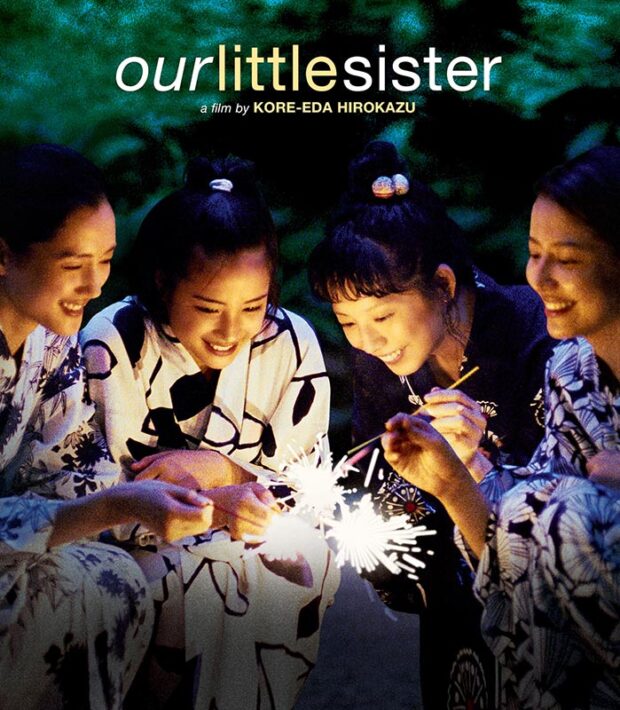
    Kore-eda – Still Walking

    September 10th, 2008

    <> <> aruitemo

    Engraved onscreen with the intense luminosity of a bright summer day, Hirokazu Kore-eda’s latest meditation on family drama is a quiet masterpiece that seems to originate from a deeply personal yet universal experience of regret. (Toronto Int’l Festival)

    Still Walking conjugates the languages of poetry and documentary into a compelling account of modest joys and gentle resentments. Draped in the colours of memories that will not fade, the film keeps a slightly off-centre focus on echoes of the past, and concentrates on recording, with genuine simplicity, the mundane events of a family reunion.

    <> <> stillwalking
    Aruitemo Aruitemo (Still Walking) website here

    I lost track of the number of times I smiled or laughed in recognition during Hirokazu Kore-eda’s latest film entitled “Still Walking”. (A review by Bob Turnbull )

    Kore-eda directs documentary for Japanese singer Cocco
    Cocco is a singer from Okinawa – see her on youtube

    An opera was created by a Dutch composer, Michel van der Aa based on Kore-eda’s “After Life”. (Read more here)
    The youtube trailer for After Life – Opera

    Nobody Knows trailer (YOU – the actress who portrayed an irresponsible child mother in Nobody Knows also appears in this new film Still Walking).

    Previous post on Kore-eda and Haruki Murakami

    Update: Hirokazu Kore-Eda’s “Still Walking,” from Japan, was selected as the best film at the Toronto International Film Festival in a poll of film critics and bloggers conducted this weekend by indieWIRE.